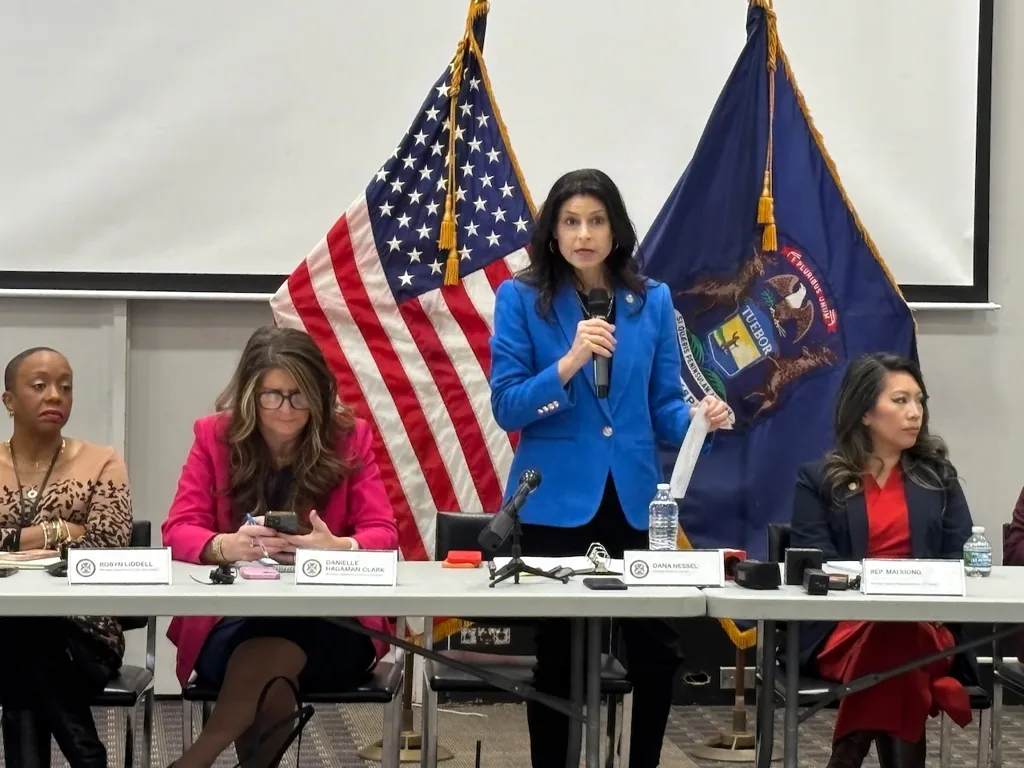
DETROIT, MI - Michigan Attorney General Dana Nessel rolled out a new "Federal Agents Tracker" on Wednesday, Feb. 4, urging residents to document ICE and Border Patrol activity while warning that some federal immigration operations are endangering people in Michigan.
"In Michigan, we do not and we will not tolerate illegal actions against our state residents," Nessel said. "I will not hesitate to uphold the law, and that includes prosecuting unlawful actions perpetrated by federal officers."
Nessel made the remarks during a two-hour roundtable discussion Feb. 4 at Cadillac Place in Detroit's New Center area, where elected officials, law enforcement leaders, and immigrant advocates described fear, confusion and legal risk stemming from stepped-up deportation efforts under President Donald Trump.
Among those addressing the group was Maria Klosowski, a Detroit resident and Sister of Mercy who volunteers with an interfaith group that visits immigration detainees at the Monroe County jail.
Klosowski said conditions inside the jail and access to detainees have changed as detention numbers have increased.
"These are people who have been here 30, 35 years," she said. "They're business owners, parents of U.S. citizens. They feel powerless."
Klosowski said detainees are harder to reach, religious materials are now limited or require payment, and many of the men she meets are longtime Michigan residents caught up in the immigration system after routine check-ins or paperwork issues.
Nessel said escalated immigration enforcement is making communities "fundamentally less safe" by discouraging people from reporting crimes, seeking medical care or cooperating with police. She reiterated that residents have a legal right to document ICE activity from a safe distance, but not to interfere.
Several law enforcement leaders at the roundtable said their agencies do not enforce federal immigration law and are focused on maintaining public trust.
Chris Swanson, the Genesee County sheriff, said immigration detainers are not judicial orders and his office does not hold people solely on that basis.
"I don't enforce federal law. A detainer is not an order signed by a judge," Swanson said, who is also running for Michigan Governor as a Democrat. "If there's a state charge, we deal with that. If ICE doesn't pick them up, they're released."
Swanson added that law enforcement must play a central role in restoring trust.
"The profession that caused this is the profession that can fix it," he said. "It's up to law enforcement."
Washtenaw County Sheriff Alyshia Dyer said her department does not ask about immigration status during traffic stops and does not cooperate with ICE operations.
"Our job is to protect people," Dyer said. "We are not immigration enforcement."
Michigan State Police Lt. Col. David Sosinski said troopers do not enforce civil immigration law and have a duty to intervene if excessive force occurs in their presence.
Detroit City Council member Gabriela Santiago-Romero said residents in southwest Detroit are afraid to leave their homes because of deportation efforts, describing widespread fear tied to federal actions.
She referred to the president using inflammatory language during the discussion, comments that underscored the emotional intensity of the debate.
The roundtable took place as a group of Michigan religious leaders publicly condemned ICE for the deaths of Renee Good and Alex Pretti in Minnesota.
For Klosowski, the policy debate ultimately comes back to the people she meets inside the jail.
"They embrace us," she said. "They tell us their stories. They pray. They sing. Sometimes just being listened to is the only hope they have."