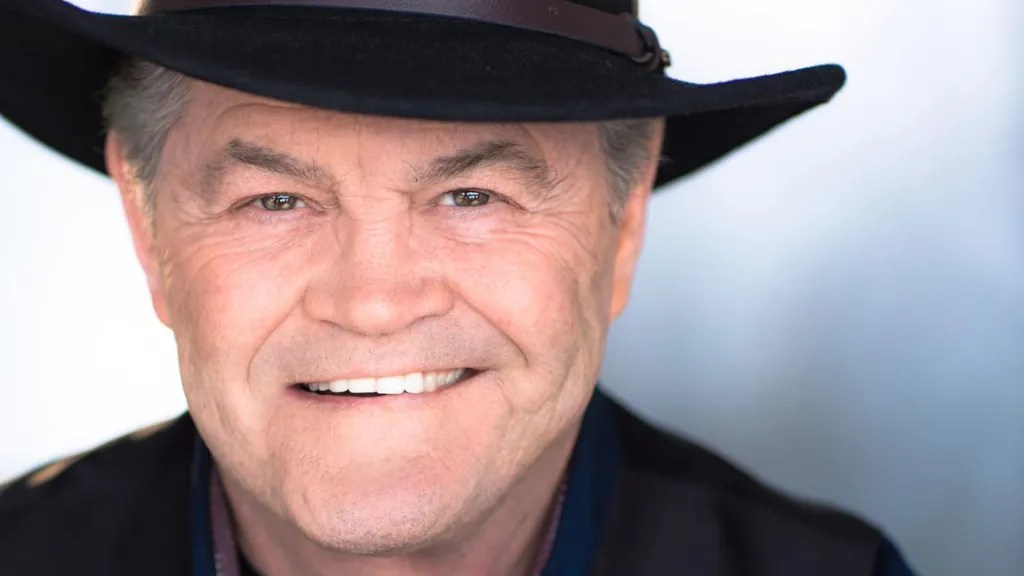
Bobby Hart, one half of the Boyce and Hart songwriting duo, who penned some of The Monkees' hit songs, died at 86.
Micky Dolenz knows you don't want a new version of "Last Train to Clarksville." The Monkees star gets you just want the original because that's what he wants, too.
"I was a huge Everly Brothers fan. They were my Monkees," says Dolenz. He recalls sitting eighth-row center at the duo's 1983 reunion concert at Royal Albert Hall, hoping Phil and Don would sing his favorites. "I'd been to some very disappointing shows where the headliner doesn't do anything except maybe one big hit."
The Everly Brothers played their hits and as Dolenz sang along on "Wake Up Little Susie" and "Cathy's Clown" ("Don't want your love-uv-uv-uv-uv anymore"), he thought, "If I ever do go back and am asked to sing (the Monkees') songs, I'm going to make sure I sing every one in their entirety, no melodies and no screwing around," he tells USA TODAY. "I've stuck with that, including arrangements and opening licks and hooks."
At 80, he's the last Monkee here to absorb the outpouring of love from fans as the made-for-TV group turns 60. Davy Jones, the band's baby-faced, percussion-shaking frontman, died in 2012 at just 66, sending shockwaves through the Monkees' once-preteen admirers. Bass and keyboard player Peter Tork, 77, and guitarist and songwriter Michael Nesmith, 78, died in 2019 and 2021 respectively.
The anniversary is being celebrated with Rhino's just-released "The A's, The B's & The Monkees," a new compilation of their singles released between 1966 and 1970, and Dolenz's 60 Years of the Monkees tour, which launches Feb. 12 in Solana Beach, California. A stop in LA on Sept. 12 marks the 1966 premiere date of the innovative NBC sitcom, and Dolenz promises storytelling and a chronological performance of the hits (a Monkees Eras Tour, if you will).
"All the music is always there, that's the meat and potatoes," he says. "This time, it's going to be a lot of video, talking about the genesis, the genetics of the show."
He acknowledges it can be emotional being the only Monkee on stage.
"Of course I went through the whole grieving thing, but in some ways, they've never left. Every time I do a show, they're there," Dolenz says. If he catches a video glimpse of his bandmates during a performance, "It can still kind of choke me up."
Dolenz remains both pragmatic and romantic about the group and its legacy.
For years, "I have tried to clear up the misconception that the Monkees was a band. It wasn't, it was a musical comedy sitcom." He says he had no issue with being cast as the drummer (at the time, he wasn't one). Though Dolenz is the voice of the bulk of the band's hits, it wasn't the music he was listening to at the time: "I was not a 10-year-old girl or boy."
"I was a humongous Beatles fan; I was a fan of the Animals; the Stones; Otis Redding," he says. "I was a bluesy-rocker kind of guy."
Yet "to this day, I love singing them," he says of beloved Monkees tunes such as "I'm a Believer" and "Pleasant Valley Sunday."
"I've learned to appreciate what makes a really good song. I would wonder: Why do I still love this song? Because it was f------ written by Carole King and Neil Diamond and Boyce & Hart and Harry Nilsson and Paul Williams and David Gates."
He shrugs off the Monkees' continued exclusion from the Rock & Roll Hall of Fame, despite the band's commercial success, cultural impact and longevity. Could it ever happen, maybe in the musical influence category?
"It started out as a private country club," he says of the Rock Hall's launch, which coincided with the Monkees' improbable '80s MTV rebirth. "And like a private country club, they are allowed to have anybody in it they want and not have anybody in it they don't want." At this point, "I just don't know. It isn't on my radar that desperately."
He's prouder of the Monkees' two 1967 Emmys, for outstanding comedy series and comedy director: "To me, it doesn't get better than that."
Though Tork and Nesmith were often visibly chafed, Dolenz says he has "never" been unhappy being a Monkee.
"Well, there were times when I did not like being famous and a celebrity and being harassed and followed and sued and threatened," he says, laughing. "There are times I'll be in a restaurant to this day and somebody yells at me across the room, 'Hey, Monkee, come here! Sign my wife's napkin.' "
He's happy performing and recording (2021’s “Dolenz Sings Nesmith” was produced by Christian Nesmith, Mike’s son), and says he won’t ever get off the road, though he’s being “more selective” these days. “It’s 22 hours of commuting for a two-hour gig, essentially. I hate the travel, but they pay me to travel; I sing for free. When I came to that realization, it made it easier to amortize. The show is the easy part; that’s why they call it playing.”
The fandom longs for more. “People call me all the time: ‘There should be a Monkee movie; there should be a documentary,’ ” Dolenz says, though the quartet had “absolutely no ownership” of the brand.
Still, “I am incredibly appreciative” to have been a part of it, he says. “It has given me a great frigging life.”