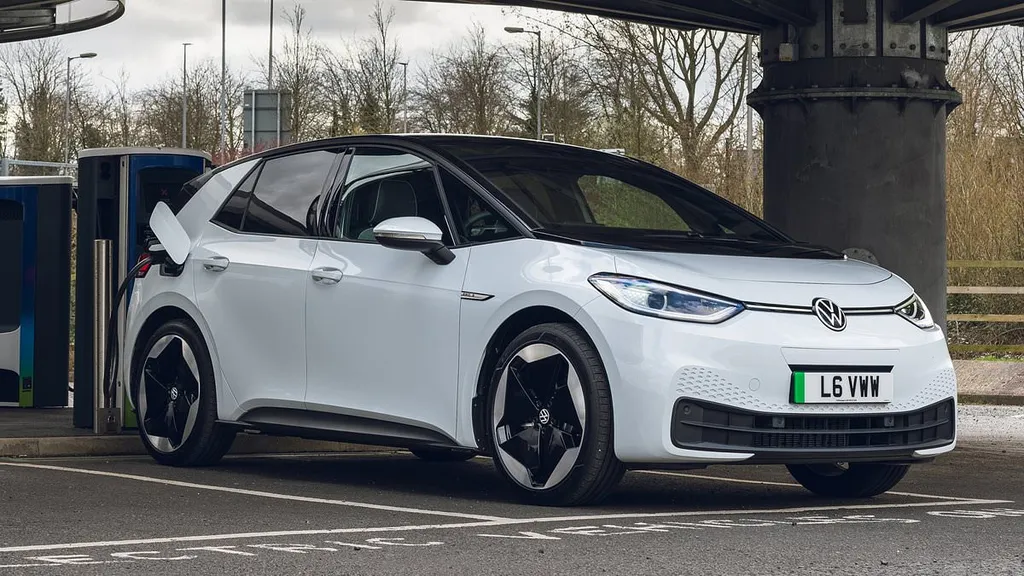
The Volkswagen Group has launched a global recall of more than 100,000 electric cars over an identified issue within the battery modules that could potentially trigger fires.
The recall notice affects nearly 75,000 vehicles from Volkswagen's 'ID' EV range as well as nearly 20,000 Cupra Borns that rolled off the production line between February 2022 and August 2024.
However, of all the cars impacted, just over 2,000 are UK registered - and only one very specific model.
According to notices issued earlier this month, a fault within the modules in the high-voltage battery could cause reduced range and even fires breaking out.
A free-of-charge software update will be run on the vehicles brought back to dealers. There too will be an inspection of the high voltage battery and, if needed, individual modules of the battery will be replaced, the notices said.
A Volkswagen Group spokesperson said: 'We have identified that in vehicles from the ID. series produced during a limited period, one of the modules in the high-voltage battery may not fully meet our technical specifications.'
VW UK said the recall impacts 2,261 EVs in Britain. All are the Volkswagen ID.3 Pro S models produced between February 2022 and August 2024
Speaking to Auto Express, a VW representative added: 'As a result, there may be a reduction in electric driving range or the illumination of a yellow warning indicator in the vehicle.
'In very rare cases, there is also a possibility of thermal overload within a battery module, which in extreme situations could lead to a fire.'
While the issue affects various Volkswagen ID cars and the Cupra Born worldwide, VW UK said the recall is going out to just owners of the Volkswagen ID.3 Pro S models produced in the 18-month window previous stated.
It said this should 'only' implicate 2,261 drivers in Britain.
VW's massive global callback of EVs comes just a month after Volvo initiated its own recall of 40,000 EVs, also over battery fire concerns.
Volvo Cars UK confirmed to Daily Mail and This is Money that 10,440 examples of the £33,000 EX30 SUV on Britain's roads are involved in the recall - specifically the Single Motor Extended Range and Twin Motor Performance versions.
Like the VW recall, battery units may need to be replaced if found to be faulty.
A spokesperson for Volvo - which is now owned by Chinese giant Geely - told us in February: 'We will inspect and replace affected battery modules, free-of-charge, on all cars within the scope of the recall. We aim to fix all affected cars as soon as possible.'
Both recalls, which could come at a significant cost to the popular car makers, will also put a severe dent in both brands' reputation for vehicle safety and potentially become another barrier for EV adoption.
However, while EV fires have been found to be far more difficult to control and extinguish than those suffered by conventional petrol and diesel cars, records show they are far less common than blazes involving combustion engine vehicles.