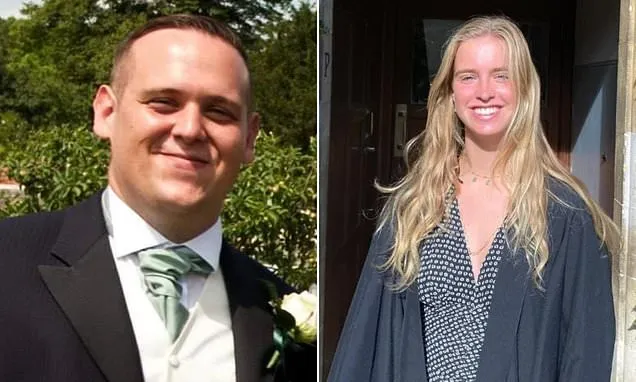
A devastated mother whose 'fit and healthy' son died suddenly in his sleep at the age of 31 has said a simple test could have saved his life.
Nathan Bryan was found dead in his bedroom by his parents, Gill and Steve Ayling, in February 2019 after a heart condition he had suffered from all his life went undetected.
The couple from Swaby, North Lincolnshire, believe their son was failed by the NHS as he was not offered a cardiac screening, despite his sister being diagnosed with a heart problem when she was a child.
They have set up a charity called The Beat Goes On 31 which is calling on the government to fund heart tests for all young people from the age of 14.
It is estimated around a dozen Brits aged 35 and under die suddenly from previously undiagnosed heart conditions in the UK every week.
In 2023, Cambridge University student and keen athlete Clarissa Nicholls, 20, tragically died while hiking in the south of France from an undiagnosed heart condition.
She had arrhythmogenic cardiomyopathy, a condition where the heart muscle is replaced by fat and scar tissue - and one of many heart conditions that could be spotted from a simple test, according to experts.
Teenage footballer Adam Ankers also died in January 2024 after he collapsed on the pitch while playing for Wycombe Wanderers' Foundation U19 team.
The 17-year-old was rushed to Harefield Hospital in Uxbridge where he was pronounced dead a few days later after suffering unsurvivable brain damage.
Nathan Bryan (pictured with his mother Gill) was found dead in his bedroom by his parents in February 2019 after a heart condition he had suffered from all his life went undetected
Clarissa Nicholls (pictured) was a Cambridge University student who suddenly died aged 20 from an undiagnosed heart condition
Adam Ankers, 17, was playing for the Wycombe Wanderers' Foundation U19 team on January 31, 2024, when he shouted 'my chest is tight' before falling unconscious
Mrs Ayling said: 'Nathan had absolutely no symptoms at all, he was a fit and healthy young man. [The day he died] was absolutely horrendous as you can imagine.
'He had rung me in the morning, and I was chatting to him, and I said, 'I'll see you later'.
'But he never picked up and I don’t know if it was a mother’s intuition but there was something about that day.
'I said to my husband ‘Nathan is not responding’ so we went around to his house.
'He lived in a bungalow and his bedroom faced the patio. I climbed onto the patio chairs, looked through his window and I just knew he was dead on the bed.
She added: 'He was in good physical shape or at least we thought he was and he should be here today.'
Mr and Mrs Ayling now fundraise to provide free cardiac screenings for young people over the age of 14 in the hope of preventing other families from losing a loved one.
They also launched a government petition calling on ministers to fund such procedures, which involve an ECG and a review of family history.
The campaign has already attracted more than 34,000 signatures.
But the couple say ministers have so far taken 'no notice' - branding the lack of action a 'national scandal'.
The government responded to the petition last month, claiming the evidence remained inconclusive with regard to whether screenings could reliably detect hidden heart conditions in young people.
They also warned that false diagnoses could lead to unnecessary treatment - including medication or even implantable defibrillators - and risk causing needless anxiety about sudden cardiac death.
Mr Ayling, however, said that nearly every day he is receiving some sort of notification that a young person aged under 35 has died from an undiagnosed heart condition.
What is arrhythmogenic cardiomyopathy?
Arrhythmogenic cardiomyopathy is a medical condition where the heart muscle is replaced by fat and scar tissue.
It can be identified though a simple screening - an electrocardiogram.
Once identified, it can be treated by antiarrhythmic medication, ICDs (implantable cardioverter-defibrillators) or lifestyle changes to prevent it worsening, including restricting intense cardio workouts.
Between one in 1,000 and one in 5,000 people in the general population are believed to have the disease.
It is a leading cause of sudden cardiac death in people under 35 and has a slight male predominance.
He said: 'We are just getting notified of these tragic circumstances on a near daily basis.
'It just seems like the government does not take any notice.
'We've been to meetings and told them things but they don't take anything on board.'
Ms Ayling added: 'It's like if every four weeks a double decker bus set off and crashed and everybody on board died.
'Then the next four weeks another double deck bus with 64 people on board crashed and everybody died.
'If this was the case, the government would have done something about that bus, they have known about this problem for 25 years.
'The response from the government on our petition has been absolutely atrocious.
'It was just totally wrong. It was ignorant.'
The Beat Goes On 31 has so far funded cardiac screenings for more than 600 people between the ages of 14 and 35.
Forty-five of them were referred for extra tests.
According to the national charity Cardiac Risk in the Young, around 12 young people die every week in the UK from previously undiagnosed heart conditions.
A spokesperson for the Department of Health and Social Care said: 'We would like to express our heartfelt sympathy to Gill and Steve following the tragic loss of Nathan.
'The UK National Screening Committee is currently reviewing the evidence for a Sudden Cardiac Death screening programme and will open a public consultation in due course.'