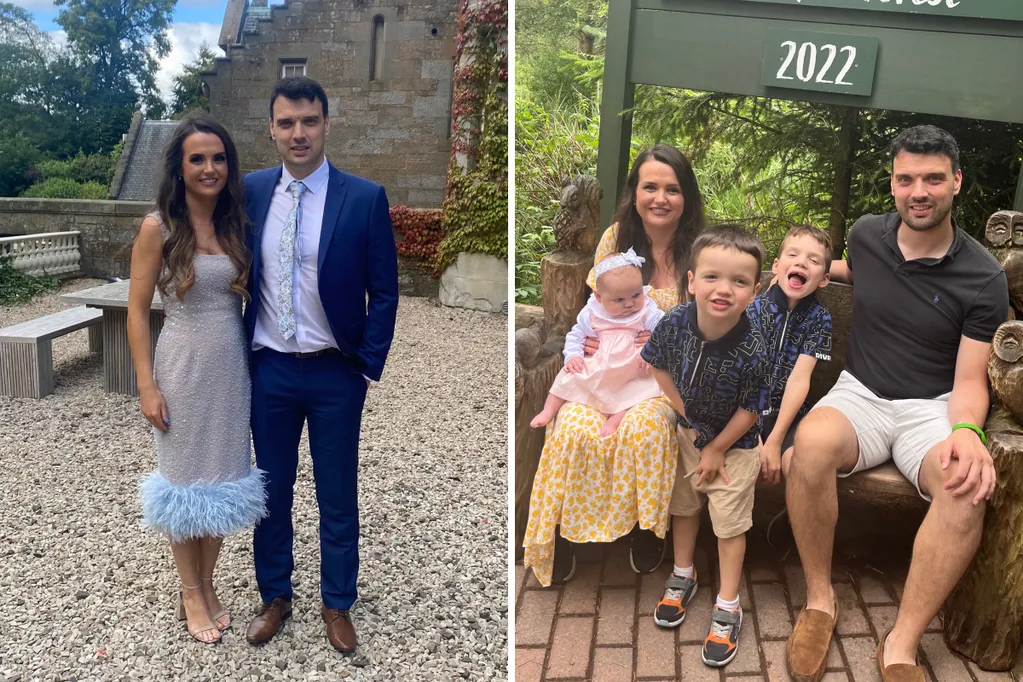
People always ask me if there were any signs leading up to my husband's death, but the truth is, there were none. He went to work as normal that day and never came home.
I was putting our three children to bed on March 7, 2023, when the door went. I presumed Alan must have finally got back from work, but when I saw police officers waiting outside our home in Scotland, I knew something terrible happened.
Alan and I met in a club in 2011, and we got married in 2016. We had so many happy years together and welcomed two sons and a daughter. As we were both dentists, Alan and I had busy careers that we had to juggle with family life, but there didn't seem to be anything out of the ordinary. We were both tired, but what parent isn't?
Alan was like no one else I've ever met. He was full of character and was always laughing. He had this natural way of making everyone feel so at ease. He was the life and soul of any room and someone who just lit other people up.
I had no idea that internally, he was really struggling.
There were no warning signs and that's been one of the hardest things to process because he seemed completely himself. Only one day he was by my side, the next he was gone.
When I found out that Alan had taken his life, it felt like mine and my children's lives were over. I felt physically sick and the shock was overwhelming.
I couldn't sleep, couldn't eat, and all I kept thinking was that I had failed as his wife. There was no note and certainly no clues as to why, although Alan did try to phone me about an hour before making that decision and I missed it. That's something I have to accept and live with forever.
Once I started to process that Alan was gone, my confusion turned to panic. How were my children going to handle this? How would I cope as a single mom of three? What would our future look like? How would we manage financially? There were so many what ifs running through my mind and I didn't have answers to any of them.
I'd often lie awake at night wondering if I missed something. I would scroll through old photos from the months, weeks and even days before his suicide in search of clues. I looked closely at his eyes and his smile, analyzing every family picture to see if I could gain insights.
Truth be told, there were none.
After a while, I couldn't even look at the photos anymore because it was too painful. I didn't want the memories of what we once had. We had a happy life; family, friends; three healthy children; stable careers. I never thought this would be my reality now.
I found myself replaying every conversation and moment throughout those final days of his life. Looking back, I felt anxious during that week, and I just put it down to nerves about returning to work from maternity leave. Now, I wonder if it was more than that, like a warning that my body could sense impending trauma.
For a long time after, I stayed silent. The first 18 months were just pure shock; I went through the motions but wasn't truly processing anything. I couldn't say his name or the word "suicide" for almost two years and I was diagnosed with complex PTSD. It was only after I attended a suicide bereavement group that I realized how much I had been avoiding my grief.
I tried to do everything by myself for so long, but it just led me to emotionally spend money and to drinking socially. I wanted to escape my reality with those quick dopamine fixes, but that didn't help me heal.
Since then, I've started counseling, exercising and accepting help from family. I've also connected with so many others who understand what I'm going through, and that also helped me turn to the internet for help. I started speaking out online (@the_widowdiaries on TikTok and Instagram) and that helped me turn the worst pain into something meaningful.
If sharing my story encourages even one person to seek help, then it matters.
There are still ups and downs and I don't believe that time heals. In some ways, it makes things harder because every milestone feels like something is missing. I didn't cry for nearly a year because the numbness protected me, but I've learned that you have to feel your emotions to heal.
I encourage my children to talk about their feelings, but I don't take them to visit his grave. My sons understand what happened and they know it was suicide. Whereas my daughter was just 10 months old when Alan died so she cannot comprehend that yet.
I want people to know that suicide can affect anyone -- there is no stereotype. It's so important to check in on people and to reach out for help. My children would give anything to see their dad again, but the person who has missed the most is Alan.
It's vital to remember that there is always hope, even in the darkest moments.
My life looks very different to the future I once envisioned with Alan, but I am determined to make it a happy one for our children. I'm now preparing to return to work part-time as a dentist. It feels like the next step in rebuilding our lives, and I want to show my kids that you can get back on your feet again.
The devastation left behind from a suicide is unimaginable, and it might seem like you can never be happy again but just remember that there can be joyful moments.
Lisa Marshall documents her life and grief journey online (@the_widowdiaries) to share the reality of becoming a widowed mother-of-three. She has become a vocal advocate for open conversation about mental health, especially among young fathers.
If you or someone you know is considering suicide, contact the 988 Suicide and Crisis Lifeline by dialing 988, text "988" to the Crisis Text Line at 741741 or go to 988lifeline.org.