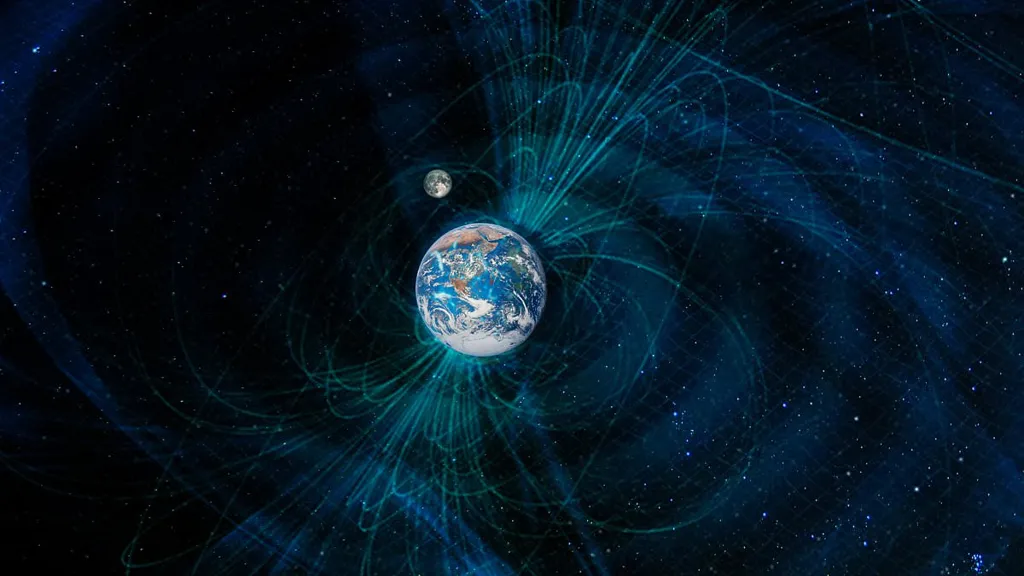
Earth's natural 'humming' vibration has experienced a series of unusual spikes in recent weeks, raising questions about whether the phenomenon could influence mood and cognition.
Known as the Schumann Resonance, this vibration is often described as the Earth's 'heartbeat,' a steady electromagnetic rhythm generated by lightning and trapped between the planet's surface and the ionosphere.
A space weather monitoring app called MeteoAgent has reported elevated Schumann Resonance readings throughout February, labeling them 'high' and potentially disruptive, although experts caution that such measurements can fluctuate naturally.
The main frequency typically pulses around 7.83 cycles per second, measured in Hertz (Hz), with several higher-frequency bands also detected.
Some researchers and wellness advocates believe that these frequencies overlap with human brain wave patterns associated with sleep, relaxation, and concentration.
However, mainstream scientists argue that research on their biological effects is inconclusive.
Chaotic events such as solar flares, geomagnetic storms and other space weather can disturb Earth's magnetic field and alter the resonance, though the extent to which this impacts human health remains debated.
Anecdotal reports online have linked resonance spikes to symptoms such as ringing in the ears, muscle tension, fatigue and brain fog, but medical experts warn that such claims are not backed by robust clinical evidence.
On Thursday, MeteoAgent reported that Earth's Schumann resonance was still registering as high because of a moderate solar flare that had caused Earth's magnetic field to become unsettled.
Scientists track these disturbances using an index that measures how much the planet's magnetic field is being shaken by space weather.
The scale runs from zero to nine, with zero meaning calm conditions and anything above five indicating a geomagnetic storm that can disrupt satellites, power grids and radio signals.
This measure, known as the K-index, fell to 3.7 on Thursday, meaning Earth's electromagnetic activity was higher than normal but not as intense as earlier spikes seen throughout February.
There have already been four days this month where the K-index rose above 5.0, meaning serious spikes could likely be felt by many people who are sensitive to these wave frequencies.
When people are trying to relax or fall asleep, the brain produces slow 'theta' brain waves, typically between four and eight cycles per second, similar to the main frequency of the Schumann Resonance.
Some researchers and wellness advocates suggest overlaps like this could influence mood or sleep, but scientific evidence is limited.
Supporters of this theory say spikes in Earth's electromagnetic activity may contribute to anxiety, trouble sleeping, difficulty concentrating, or a high-pitched ringing in the ears, though medical experts say these symptoms have many more established causes.
The Schumann Resonance is generated largely by lightning strikes around the world; thousands occur every second, especially in tropical regions.
These lightning strikes create electromagnetic waves that bounce between Earth's surface and the ionosphere—a layer of the atmosphere about 60 miles above the planet—forming a global 'echo chamber' that produces the steady background frequency.
For those trying to sleep or relax, the brain begins to produce Theta waves, ranging between four and eight Hz, right in line with the Earth's natural humming vibration.
This bouncing between the ground and atmosphere acts like an echo inside a hollow space, building up into a steady rhythm of invisible waves all around the planet.
However, several factors can disturb this calm and steady heartbeat, including severe weather and charged particles from the sun shooting out and striking Earth.
Both solar wind and solar flares—which send super-hot gas made of electrons and protons hurtling across the solar system—compress and ripple across Earth's magnetic field upon impact.
This extreme space weather impacts the ionosphere by suddenly adding more charged particles to its composition, throwing off its normal electrical conductivity, and making Schumann resonance waves bounce more intensely.
Human brains produce their own electrical waves which change based on what you're doing. Since Schumann resonance wave frequencies match up with brain patterns, major atmospheric disturbances can produce waves that clash with our body rhythms.
It's not just humans that are affected by major disruptions in the atmosphere; extreme space weather could also put air travel and entire cities in danger.
Airbus, one of the biggest aircraft makers globally, revealed in November 2025 that severe exposure to solar radiation caused one of its passenger airliners to fall uncontrollably for thousands of feet.
In May 2025, experts revealed they conducted an extreme space weather scenario and found Earth may not survive the impact of a major solar flare.
They conducted a 'solar storm emergency drill,' simulating what would happen if a major geomagnetic storm hit our planet.
Results showed power grids failed, blackouts were triggered and communication broke down across the US.