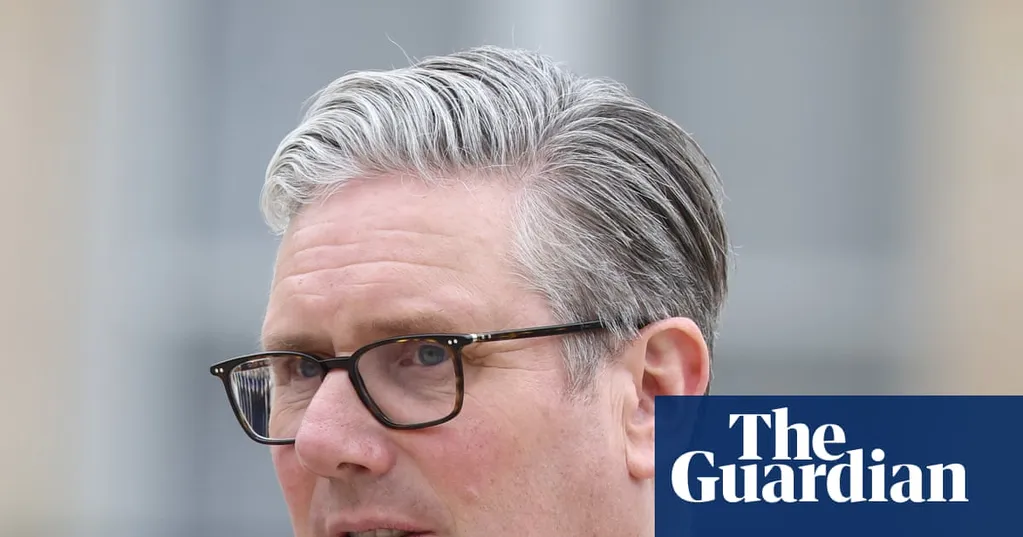
It was a mistake to announce Peter Mandelson as the UK's ambassador to the US before he was security vetted for the role, one of Keir Starmer's senior ministers has said before the prime minister's statement to MPs about the scandal.
With Starmer aiming to explain to the Commons on Monday afternoon why he did not know the Foreign Office had overruled a decision to refuse Mandelson vetting, some senior government figures believe the coming week could decide whether or not he remains in No 10.
Douglas Alexander, the Scotland secretary, sent out by Downing Street on the Monday morning broadcast round, said when asked if Starmer would lead Labour into the next election: "I expect so."
He added: "Yes, I think he will. There are no certainties. But of course I think he will lead, and I think he should."
Questioned by Sky News as to why Mandelson was publicly named as ambassador before vetting had happened, particularly when many controversies about him were already known, Alexander said this was in part because of an existing protocol for such political appointments. This would most likely now change, he said.
"It is possible that as well as the error in terms of the appointment of Peter Mandelson, there are significant lessons that need to be learned on process," he said. "One of those lessons that's already been learned is the need to make sure that this deep vetting is undertaken prior to the appointment and announcement of the ambassadors."
The established process "in retrospect was inadequate", he said. "That's why, already, even before the events of the last few days, the government has moved to change that process to make sure that vetting precedes appointment."
Alexander defended Starmer's decision on Thursday to remove Olly Robbins, the top civil servant at the Foreign Office, after the Guardian revealed that Robbins' department had not passed on the fact that Mandelson initially failed vetting.
Writing in the Times on Monday, Gus O'Donnell, the former head of the civil service, said Starmer and his ministers had unfairly blamed Robbins and did not appear to understand how vetting worked.
"The dismissal of Sir Olly risks having a serious and sustained chilling effect on serving and prospective civil servants," O'Donnell wrote. He said Starmer "now faces one of the worst crises in relations between ministers and mandarins of modern times".
But Alexander said that given the vetting process had come up with concerns about Mandelson, "rightly and reasonably that would be flagged to the ministers concerned".
This was the case not only at the time of the appointment but also when Starmer was asked about it subsequently, including in the Commons, after Mandelson was sacked due to his links with the late sex offender Jeffrey Epstein.
"Ministers rely on the civil service being candid and open with us in terms of where there are any questions in relation to the full information around any statements that we're making, whether in parliament or elsewhere," he said.
Ministers spent the weekend trying to shore up Starmer's position after opposition party leaders called for him to quit over the affair. Senior government figures are concerned that this week could be make-or-break for the prime minister if more damaging information should emerge or if sceptical Labour MPs finally lose faith.