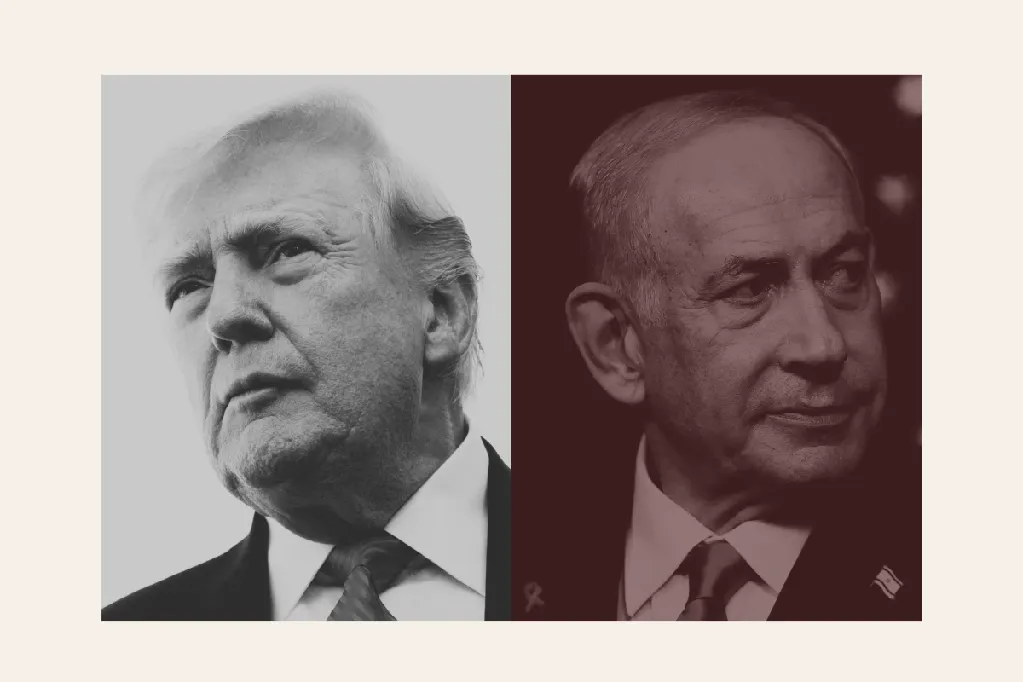
Israel's air campaign over Iran is intensifying again, with strikes in and around Tehran on Tuesday, even as U.S. President Donald Trump says a diplomatic off-ramp is emerging, and with it a core tension in the alliance.
Jerusalem is committed to sustained military pressure on the Iranian regime, while Washington, burned by spiraling oil prices, has signaled a desire for negotiations and a path toward de-escalation.
The conflict began as a joint U.S.-Israeli effort, but it could end as a test of who really sets strategy when allied priorities diverge.
With Trump publicly touting talks as Israel escalates, the question is whether Washington is directing events or being carried along by them.
At the heart of the divergence is a basic question: What does success look like in Iran?
Israeli Prime Minister Benjamin Netanyahu has long framed Iran as an existential threat that requires sustained military pressure. His position has been consistent: Weaken Iran's capabilities over time, even if that means repeated rounds of escalation.
On Monday, Netanyahu reiterated that strikes would continue in Iran and Lebanon, saying "there's more to come," even as talk of diplomacy gathered pace in Washington.
Trump, by contrast, has signaled a preference for coercive diplomacy.
He postponed strikes on Iranian energy infrastructure while citing "productive conversations" and suggesting there had been contact with senior Iranian figures, claims Tehran publicly denied.
Even so, the sequencing is clear. Trump wants to maintain pressure but avoid steps that could close the door to negotiations or trigger a wider economic shock that would blow back hard on American voters through inflation.
It reflects a structural divide. Israel's approach resembles what analysts often describe as "mowing the grass," periodic strikes designed to keep adversaries off balance.
The United States, with broader global commitments and exposure to energy markets, is more inclined to look for an exit once core objectives are met or risks begin to outweigh gains.
Coordinating how a war begins is one challenge. Agreeing on when to stop is another altogether.
The concept of entrapment helps explain the tension. In alliance theory, it refers to the way a smaller partner's threat perceptions and decisions can constrain a larger ally's choices, making continued involvement feel difficult to avoid.
In this conflict, that dynamic has been visible from the outset. U.S. participation has often been characterized less as a response to a direct American casus belli than as a consequence of Israel's actions and the retaliation they provoked.
The White House and Tel Aviv have denied such claims.
Once Washington signals it will stand firmly behind Israel, it reduces Israel's fear of abandonment but also weakens the incentive to calibrate escalation in line with U.S. preferences.
That creates a dilemma for Trump. His current posture, delaying certain strikes while promoting negotiations, can be read as an attempt to reassert control over escalation.
Yet the battlefield is shared, and so are the consequences. Iranian retaliation has already reached Israel and parts of the Gulf, while threats to shipping through the Strait of Hormuz continue to unsettle global energy markets.
The Israeli strikes on the South Pars gas field, which prompted Trump to secure Netanyahu's assurance that it wouldn't happen again, were a case in point.
The trap for the U.S. is in how difficult it may be to exit if Israel defines victory more expansively than Washington does, and thus takes actions to prolong the war, possibly leading to Trump remaining a participant longer than he would like to.
The Trump-Netanyahu relationship has always mixed alignment with friction.
Trump has described Netanyahu as "not easy," though he has also praised that as the source of his greatness as a leader.
Netanyahu has often pushed Washington toward harder lines on Iran, while Trump has balanced shows of force with a desire to claim diplomatic wins.
That tension is playing out again in the war. Netanyahu's approach prioritizes sustained pressure, while Trump's emphasizes leverage and timing, seeking opportunities for diplomacy when they arise.
Both men see themselves as decisive actors, but their definitions of success are not always the same.
Recent history offers clues to how this might unfold.
During the 12-day war in 2025, Trump publicly rebuked Israel after apparent ceasefire violations, warning against renewed bombing and expressing frustration in unusually blunt terms.
He intervened directly with Netanyahu as the truce faltered, then declared the ceasefire intact.
The episode revealed Trump's hierarchy of priorities.
When he announces a diplomatic opening, he expects allies to align, or at least not undermine it. It also showed he is willing to apply both public and private pressure on Israel when he believes it is necessary.
Now, in March 2026, the same pattern is unfolding. Trump is positioning himself as a dealmaker, while Israel's continued strikes risk complicating that narrative.
If diplomacy falters, Trump could look ineffective. If Israel pulls back too soon, Netanyahu risks leaving Iran insufficiently weakened.
The next phase of the conflict will hinge on a simple question: Who sets the tempo?
Alliance theory suggests smaller allies can exert outsized influence, especially in the early stages of a conflict. But the balance of power still matters.
The U.S. retains overwhelming military, financial and diplomatic leverage and ultimately controls its own level of engagement.
Netanyahu can prolong the campaign and shape its immediate direction. But he cannot dictate how long the United States remains committed to escalation.
If Trump concludes that diplomacy better serves U.S. interests than a prolonged air campaign, he has the tools to force a shift, whether through pressure, restraint or a redefinition of objectives.
That does not guarantee a clean outcome. Diverging endgames rarely resolve without friction. But it does suggest that, despite the risks of entrapment, Washington is not without agency.
In that sense, this war may yet follow a familiar pattern. It may begin with Netanyahu's war, shaped by Israel's threat perception and urgency.
But it is likely to end, if it ends soon, on Trump's terms, not because the two leaders agree on Iran but because only one ultimately decides how far the U.S. will go.