This is the online version of From the Politics Desk, a daily newsletter that brings you the NBC News Politics team's latest reporting and analysis from the White House, Capitol Hill and the campaign trail.
In today's edition, Steve Kornacki previews this week's special House primary election in New Jersey. Plus, our Capitol Hill team reports on the fallout from Bill and Hillary Clinton agreeing to testify before the House Oversight Committee.
This Thursday is primary day in New Jersey's 11th District, with voters in both parties nominating candidates for the seat that Democrat Mikie Sherrill vacated after being elected governor in November.
On the Republican side, Joe Hathaway, who is the mayor of suburban Randolph, is running unopposed. In the general election -- which will be held in April -- he will be the prohibitive underdog.
The 11th District, which takes in parts of three North Jersey counties, backed Kamala Harris by 9 points in the 2024 presidential election and went for Sherrill by 15 in the governor's race. Add in the fact that Democrats have been consistently and significantly overperforming in special elections since President Donald Trump returned to the White House, the odds are that it will be Thursday's Democratic primary where the district's next representative will be chosen.
A dozen names will appear on the Democratic ballot, but only a few are seen as having a realistic chance. The official Democratic organizations in the district's component counties have all opted to back different candidates.
Machine politics have long been a driving factor for New Jersey Democrats, with strong county party organizations endorsing candidates and muscling them to victory with turnout armies and choice positions on the ballot -- known as "the line." That power was weakened considerably when a court struck down that ballot design two years ago. Now, all candidates are grouped together on the ballot, though county parties can still designate their endorsed candidate.
Exactly how much sway organizational endorsements still carry in New Jersey is unclear -- and this primary will provide a useful data point.
In the old days, Brendan Gill, an Essex County commissioner, would be the clear favorite, with official party support in what is the district's largest component county. He still has some significant advantages, with a host of local Essex leaders backing him and experience winning countywide elections. He also chairs the local Democratic Party in Montclair. A bastion of liberal activism and the single largest vote-producing municipality in the district, it should account for close to 10% of all votes cast.
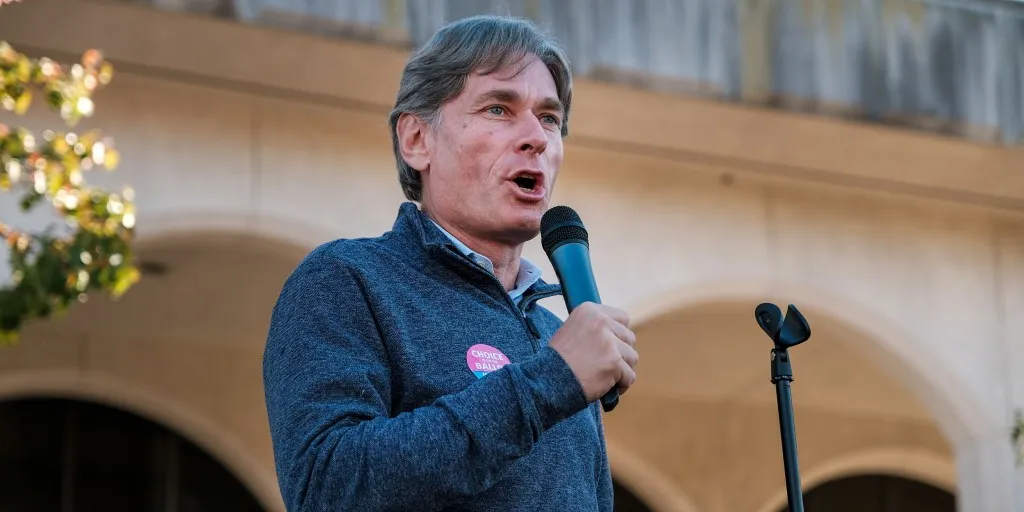
Then there’s Tom Malinowski, who represented the neighboring 7th District in Congress from 2018 to 2022, when he was defeated by Republican Thomas Kean. Malinowski could have sought a rematch this year with Kean but was attracted to the more solidly Democratic 11th District. Malinowski has the party organization’s support in Morris County, although even in the heyday of party machines, Morris had a weak Democratic infrastructure. Until recently, it was a strongly Republican county.
What Malinowski really has going for him is broad name recognition and particular appeal to the highly engaged and machine-phobic professional class that is ascendant in the Democratic Party. An endorsement from Sen. Andy Kim, who filed the lawsuit that killed off the state's old ballot design two years ago, has only burnished those credentials. In a nod to Malinowski’s strength, both outside groups and Gill’s campaign have targeted him with negative ads and phone calls.
By far the smallest part of the district is in Passaic County, where the Democratic organization essentially decided to punt, offering its support to both Tahesha Way, who had been lieutenant governor under former Gov. Phil Murphy, and John Bartlett, a Passaic County commissioner. That joint endorsement may not help either much, but Way is also benefitting from a flood of outside spending, especially from the Democratic Lieutenant Governors Association, which has spent well over $1 million on TV ads for her. The large-scale outside expenditures against Malinowski and for Way have added uncertainty to the race.
The wild card in the race is Analilia Mejia, a progressive organizer who was the political director for Bernie Sanders' 2020 presidential campaign. She has the backing of both Sanders and Rep. Alexandria Ocasio-Cortez. Mejia is positioning herself as an outsider, and her left-wing brand of politics could have considerable resonance with the Trump-era Democratic base.
Facing the threat of being held in contempt of Congress, Bill and Hillary Clinton agreed to testify before the House Oversight Committee about convicted sex offender Jeffrey Epstein.
Democrats now say Republicans have established a new precedent when it comes to Congress' ability to subpoena and haul in past presidents, first ladies and family members under threat of criminal charges if they refuse -- a precedent they warn the GOP and Oversight Chairman James Comer, R-Ky., will soon regret.
"We are absolutely going to have Donald Trump testify under oath" when Democrats take back power, California Rep. Ted Lieu, a member of Democratic leadership, told NBC News.
Rep. Maxwell Frost, D-Fla., a young progressive who serves on the Oversight panel, said Democrats "100%" will take advantage of the new precedent set by Republicans.
"It does set a precedent, and we will follow it. ... Donald Trump, all of his kids. Everybody," Frost said.
Rep. Mark Pocan, D-Wis., agreed with his colleagues: "This will make Donald Trump happy in the short term, but in the long term, a year from now, we have subpoena power."
He warned: "What goes around comes around."
The background: The House was set to move forward this week with a vote to hold the Clintons in contempt of Congress after they refused to comply with a subpoena for their testimony in the panel's Epstein investigation. The vote was expected to be bipartisan, with some Democrats saying they would vote alongside Republicans.
Seeing the writing on the wall, the Clintons agreed to testify before the committee. Comer said the Clintons will appear before his committee Feb. 26 and 27 "for transcribed, filmed depositions," though the Clintons' attorney said the former first couple would prefer to appear in public. The two sides are engaged in a standoff over the format of the interview.