A new bill pushed forward by a group of Kansas Republicans would allow renters in the state to pay their monthly rent in multiple installments as long as it is paid in full and on time, in a move that could improve affordability for struggling tenants.
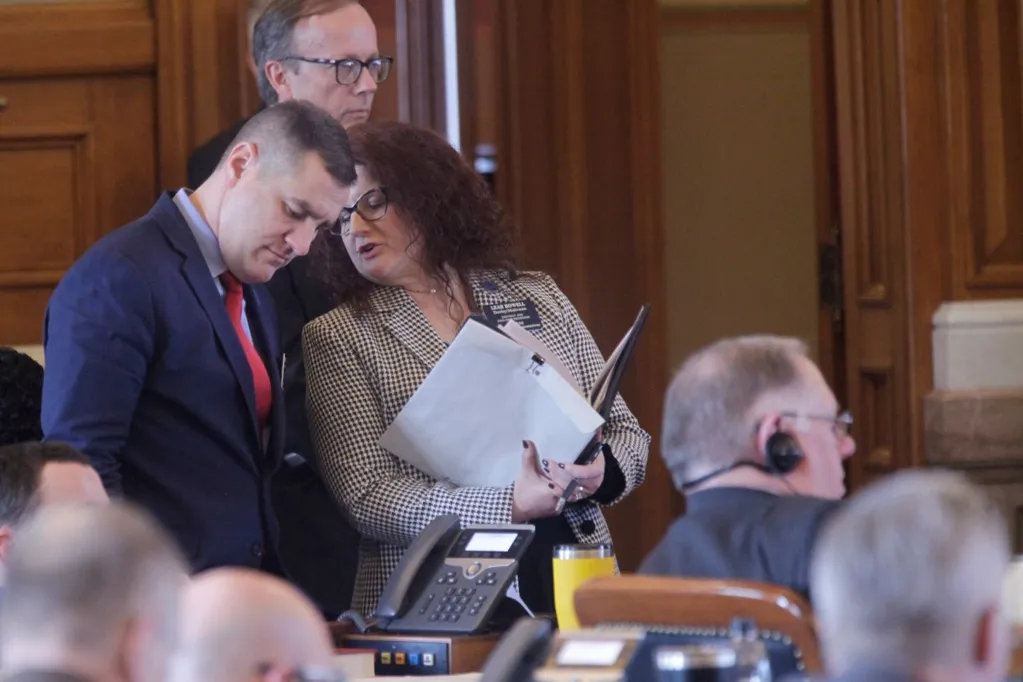
State Representative Leah Howell, one of the four sponsors of the measure, said the proposal would give renters the same flexibility granted under federal law to homeowners who already pay their mortgages in multiple payments. But other Kansas Republicans fear the change.
While the cost of renting in Kansas is relatively low compared with much of the rest of the country, it has increased significantly over the past few years, especially in Topeka. Between October 2024 and October 2025, apartment listing prices in the Kansas capital climbed by 14 percent to $950, according to Zumper data.
Zillow reports that the average rent for all bedrooms and all property types in Kansas is currently $1,295, up by $49 from a year earlier. In 2024, according to USA Facts, Kansas tenants paid 27.1 percent of their income, or $1,079 in rent -- a share that would put them close to being cost-burdened.
House Bill 2768 was introduced on February 10 and was discussed in the Kansas House at a February 24 hearing.
The bill, co-sponsored by State Representatives Howell, Cyndi Howerton, Robyn H. Essex, and Sean Tarwater, would force landlords "to accept multiple payment amounts as long as rent is paid on time and in full," and require them to take into account "all income when considering a tenant or prospective tenant's qualifications for housing."
That includes any "lawful" source of money paid directly or indirectly to a renter or buyer of housing, including, but not limited to, any wages or compensation from any lawful profession or occupation; government or private income, assistance, grant or loan program; pension, annuity, alimony, child support or other consideration or benefit; and the sale or pledge of property or interest in property.
The inclusion of these sources of income, according to Howell, would help renters whose main income come from veteran disability or retirement benefits, the Kansas Reflector reported.
Federal housing assistance, on the other hand, cannot be considered as part of the prospective tenant's income.
Under the proposed bill, landlords found to have violated these requirements would face penalties, including paying damages to tenants and prospective tenants.
Kansas State Representative Howell said the bill was rooted in "principles of individual liberty, contractual fairness and equal treatment under the law," as reported by the Kansas Reflector.
Kansas State Representative Ken Corbet, a Republican, said in a statement reported by the Kansas Reflector: "It might be tough for the landlords to meet their financial obligations if they've got 20 or 30 people or 100 people strung out here trying to get the rent paid to maintain the apartments he might have."
Kansas State Representative Barb Wasinger, a Republican who opposes the measure and owns rental units near Fort Hays State University, said: "It would scare me to death if they were making payments every day for 30, 31, 28 days. That just can't happen."
If passed by the Kansas legislature, the proposed bill would take effect and be enforced from and after January 1, 2027, and its publication in the statute book.