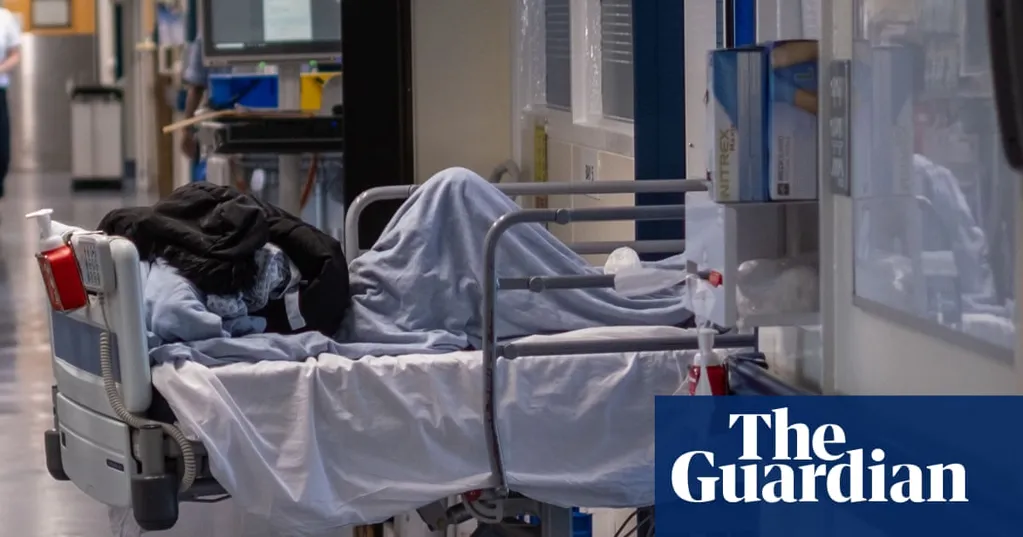
Corridor care is "a type of torture" that is leading to patients dying and causing NHS staff to have nightmares, the UK's nurses union has warned.
In one case, an elderly patient choked to death in a corridor, unseen by staff, according to a new dossier of evidence highlighting the problem published by the Royal College of Nursing (RCN).
Demand for care is so intense that hospitals are having to turn dining rooms, staff kitchens and rooms for viewing deceased people into overspill care areas, the RCN reveals.
Wes Streeting, the health secretary, has pledged to end the use of corridor care in England by 2029, if not sooner. However, NHS staff groups are sceptical that he can fulfil that promise, given that many hospitals are overloaded so often, and not just during the winter.
The RCN's dossier is based on testimony from 436 nurses around the UK between 2 and 9 January. One, in the south of England, was "having nightmares" after a patient died in a departure lounge that had been turned into a makeshift ward.
Another, in Yorkshire, relayed how a terminally ill patient had spent a week in an overflow area before being moved to a side room, where they died. "I won't ever forget that," the nurse said. A third, in the north-west of England, said it had become "routine" for 26 patients to be stuck in a corridor awaiting a bed, even though their hospital said no more than six should be left there.
Prof Nicola Ranger, the RCN's general secretary, said: "This testimony from nursing staff reveals once again the devastating human consequences of corridor care, with patients forced to endure conditions which have no place in our NHS."
Nurses' experience "shows the unacceptable practice of corridor care is spreading beyond emergency departments, including acute assessment units, respiratory wards and elderly care wards", she added. In June 2024, the union declared corridor care a "national emergency".
The NHS's safety watchdog in England warned last week that "temporary care environments" in hospitals posed serious risks to patients, including infection, lack of call bells and problems monitoring them. Some patients have died, undetected by staff, while in such areas, the Health Services Safety Investigations Body added.
A Department of Health and Social Care spokesperson said: "No one should receive care in a corridor. The situation we inherited is unacceptable and undignified, and we are determined to end it.
"We have taken immediate steps to address these issues, including investing £450m to expand urgent and emergency care services, expanding vaccination programmes, preparing for winter earlier than ever before, and building 40 new same-day emergency care centres and 15 mental health crisis centres."
About 16,600 people a year - 320 a week - in England die as a direct result of delays in accessing A&E care or a bed on a ward, according to estimates by the Royal College of Emergency Medicine, which represents A&E doctors.
Meanwhile, initiatives such as "super clinics" and using AI to help assess patients had helped hospitals in areas with high unemployment treat patients more quickly and get them back to work, Streeting said.
Waiting lists had fallen three times faster at 20 NHS trusts in places with significant economic inactivity locally than across the service as a whole after NHS "crack teams" of senior doctors worked with hospital bosses to tackle backlogs of care, he added.
The results of the NHS's "further faster 20" programme showed what NHS trusts could achieve if they adopted innovative methods to cut backlogs, the health secretary said.