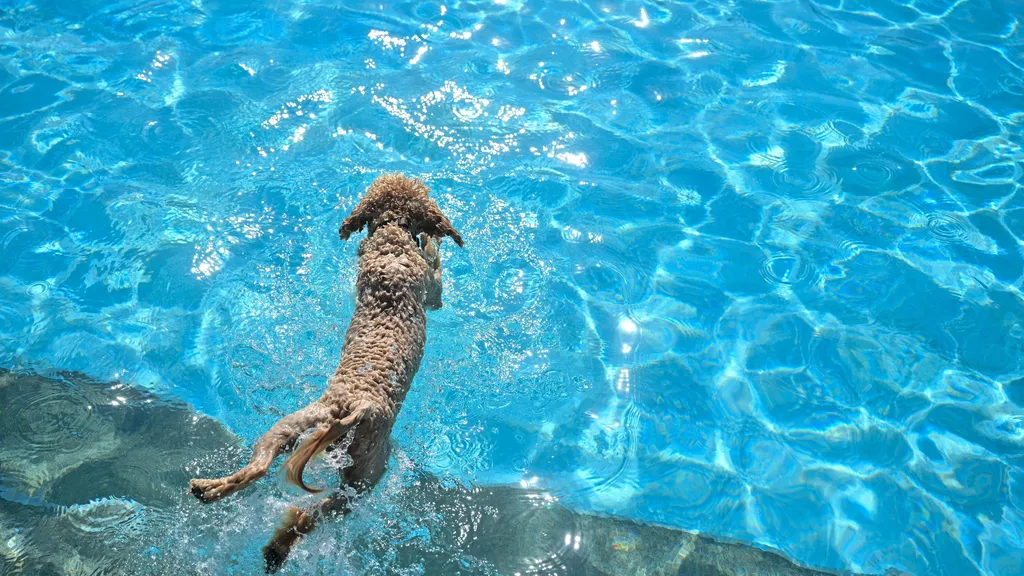
Don't let Katie Hoody's themeless puzzle make you hot under the collar.
SATURDAY PUZZLE -- This is the fifth consecutive time Katie Hoody has made a grid that lands on Saturday, and they have all been fun and challenging. I always count on her for true "thinkers," clues that fly right over my head the first few times I read them, and a general air of subtlety: lots of wordplay that's quietly funny rather than obvious. One thing I often fail to notice is the symmetry of a grid, something that she mentions in her notes below (and credits to her husband, Fritz Juhnke, whose first Saturday puzzle ran just a few weeks ago). Even if more complex geometry doesn't make a solve more difficult, it takes artistry and sometimes helps guide the eye to unusual crossing and neighboring entries, a few of which I noticed today.
Tricky Clues
22A/20D. These two entries don't actually share a letter, but they and their clues share common threads in an interesting way. 22A, [Common sight at an airport drop-off, in brief], solves to PDA -- short for "public display of affection," not "personal digital assistant" (a throwback to devices that preceded smartphones). The clue at 20D is cunning, and solves to an entry I had trouble figuring out: [Program for those trying to reduce screen time, familiarly?] is not a reference to your doomscrolling addiction, but to your desire to get on a plane. It solves to TSA PRE, short for "precheck"; it has been in the crossword a couple of times recently.
32A/12D. If these two intersecting clues didn't lift your spirits even a little, I'm so sorry. 32A is deducible with a few letters, although its clue is vague: The ["Weapon" used in some playful jousts] is a POOL NOODLE. I, brotherless, think of this solely as a flotation device, but it has been used in aquatic battles since it was first repurposed from expansion joint construction material. At 12D, [It's smaller than its miniature relative] is a reference to a TOY POODLE, which is a puzzle debut, strangely, since the breed has a long history.
35A. I'd say I misread this clue, [Members of a kitchen cabinet], because I was wondering for a minute how "cronuts" might possibly be correct here. "Kitchen cabinet" here is a political reference that originated with President Andrew Jackson, whose advisers were all friends, toadies and CRONIES.
51A. The [Pokémon who wakes only to eat] here is a SNORLAX, which is a New York Times puzzle debut. It sounds like a Jabberwock or a Dr. Seuss character and looks like a bear in a cat suit.
8D. This [Short addition above or below a musical staff] is a LEDGER LINE, which goes with a musical note to signify that it ranges beyond the notes contained in the staff's standard rules.
39D. I got this entry before I "got" it: [Product of some grapevines] solves to HEARSAY, legalese for testimony obtained indirectly, or rumor. The "grapevines" in question probably describe the first telegraph lines, which stretched across the countryside like trellis supports in a vineyard and, during the Civil War, were sometimes co-opted by opposing forces to convey misinformation.
Constructor Notes
I enjoy working with grids that have an extra symmetry. Traditionally, the most common type of crossword grid symmetry has been 180-degree rotational symmetry, meaning that if you turn the grid upside down, the placement of the black squares remains the same. My previous three New York Times puzzles have 90-degree rotational symmetry, so the placement of the black squares remains the same with every 90-degree rotation. Today's puzzle has what might be called "double diagonal" symmetry, i.e., if you fold the grid in half along either diagonal, the black squares match up. It also incidentally has the more typical 180-degree symmetry.
Credit for the grid design of this puzzle (as well as my previous three puzzles) goes to my husband, Fritz Juhnke. He generally has a better eye for this sort of thing than I do. I know what I like when I see it, but actually creating the designs is the element of crossword construction that is least well suited to my natural mental strengths. I like learning new things though, so I have been challenging myself to improve my grid design skills, building upon what I've learned from Fritz.
I suspect that to most solvers, the shape of the grid matters little (if at all) relative to the words and phrases it contains. I hope the entries I've chosen for today's puzzle make for a fun solving experience! I do apologize to all the fisherpeople in my family for including the dubious plural TROUTS. Overall, I'm happy with the choices I made in that corner given the constraints I was working with (it was the last section of the grid to be filled), but I nevertheless concede that TROUTS deserves every side-eye it receives.