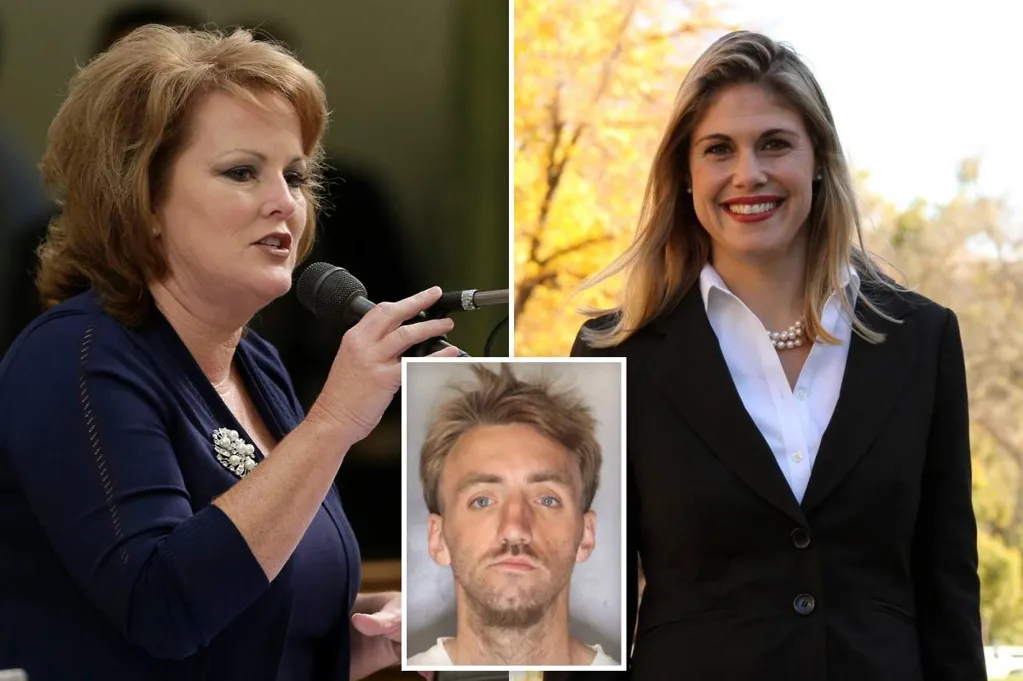
A bipartisan group of California legislators is calling for stricter limits on California's mental health diversion programs, saying a well-intended reform has given criminals a "get out of jail free card" to wipe their records clean.
Senate Bill 1373, by state Sen. Shannon Grove (R-Bakersfield), would scale back the scope of mental health diversion created under Assembly Bill 1810 in 2018.
"I believe this program was created with good intentions, to divert those low-level crimes and benefit," Grove said at a press conference Tuesday. "However well-intended this program was and might have been, in reality it did not come with enough guardrails and has become a get-out-of-jail-free card."
AB 1810 allows defendants with qualifying mental disorders to enter diversion programs for treatment in lieu of traditional prosecution. If a defendant successfully completes a court-approved program, their charges can be dismissed and the arrest sealed.
But criminal suspects have been recorded in jail phone calls talking about citing the law in their cases to avoid jail time, Grove said.
"Perpetrators are returning to communities without projections and reoffending habitually," Grove said. "Victims are left alone with no resources, no justice and no punishment for the perpetrator."
SB 1373 would tighten eligibility for mental health diversion by requiring that a defendant's mental disorder be diagnosed within five years of the charged offense.
It would also expand the list of disqualifying crimes to include attempted murder, kidnapping, carjacking and human trafficking, and it would bar diversion for defendants with two prior felony convictions or a prior strike under California's Three Strikes law.
On Tuesday, Grove was flanked by law enforcement and other lawmakers, including Democratic Assemblymember Maggy Krell, a former Sacramento County district attorney and co-author of SB 1373, who cited several cases they say demonstrate unintended consequences of AB 1810.
Krell said nearly half of criminal cases in Sacramento involve petitions for diversion and that the state lacks sufficient treatment placements for those who qualify.
"All of us believe in mental health diversion, that it can be effective and some defendants should get a chance," Krell said. "However, the floodgates have been open and some of the crimes where people are being diverted are too serious."
Sen. Roger Niello (R-Fair Oaks) pointed to the 2023 killing of Carlos Romero by Jordan Murray in Sacramento County as a perfect example of why the laws need to be changed.
According to court records and local media reports, Murray had previously been arrested in separate theft cases that involved assaults and was granted mental health diversion before the homicide. About a year after receiving diversion, Niello said, Murray committed the stabbing.
"There was space between the stabbing and [a past] altercation. It was not a crime of passion," Niello said. "This is a perfect example of the unintended consequence of this bill and it absolutely has to be reformed."
Just three days after being granted immunity from prosecution under California's mental health diversion laws, Ramiro Ochoa Mendoza, of Napa, allegedly committed a brutal murder, prompting serious concerns about a system intended to protect public safety. He was found incompetent to stand trial in October.
Zack Scrivner, a former Kern County supervisor, was charged with felony child abuse last year after he was accused of inappropriately touching one of his children in 2024.
But because of a December court ruling, Scrivner will avoid a trial and instead be funneled into a mental health diversion program.
"He never had to enter a plea, never had to serve a day in jail, but after community services his record will be wiped clean and he could work in schools," Grove said, noting that her bill also has the support of Democratic Sen. Susan Rubio (D-Baldwin Park).
San Francisco District Attorney Brooke Jenkins told The Post she has yet to endorse SB 1373 as the bill goes through amendments, but she supports efforts to reform the laws around mental health diversion.
"We have seen far too many serious and violent felonies make their way into mental health diversion, allowing dangerous people back on to our streets to reoffend," Jenkins said.
"Exclusions of certain crimes are a step forward and I support making changes, but again we are still going to have to push forward for full and comprehensive reform for public safety."