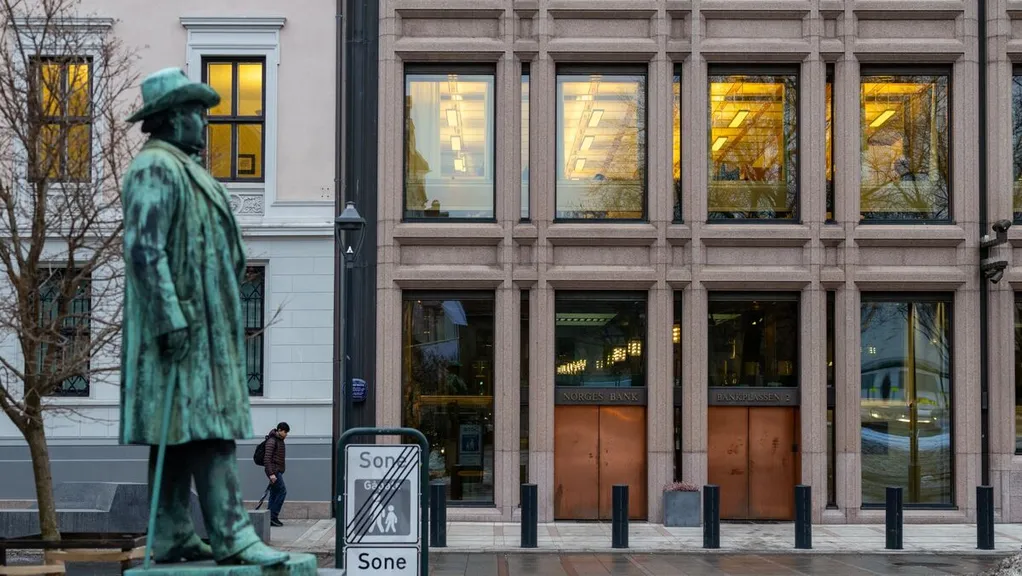
Norway's central bank raised borrowing costs for the first time in more than two years to stem stubbornly high inflation in western Europe's largest energy exporter.
Norges Bank increased its key deposit rate by a quarter point to 4.25% on Thursday, in its first tightening step since 2023. The move was predicted by five out of 17 economists surveyed by Bloomberg, while most had anticipated no change.
The Norwegian krone extended earlier gains versus the euro to rise as much as 0.6% to 10.8634.
Officials didn't offer any hints about future steps, saying that their hike reflected the outlook of one increase this year that was shared with investors at the last decision in March.
"Inflation is too high, and there are prospects that inflation will remain elevated ahead," policymakers led by Governor Ida Wolden Bache said in a statement. "The committee judges that a higher policy rate is needed to return inflation to target within a reasonable time horizon."
The decision places Norges Bank at the hawkish end of advanced-economy central banks, with regional peers in the euro zone and the UK opting to wait until June before any move, and those in neighboring SwedenBloomberg Terminal signaling no imminent change at all.
But while policymakers within Europe are mainly concerned about the energy price-risks emanating from the Middle East crisis, Norway's officials have been caught out by persistent domestic price growth. Core inflation exceeding 3% has been fueled by the lowest unemployment and stickiest wage costs in Scandinavia.
Investors had already boosted bets for a May hike, but the move still signals stronger resolve by Norges Bank to bolster credibility after persistently missing its 2% inflation target. That goal has eluded it ever since the start of 2021.
Earlier on Thursday, officials in neighboring Sweden kept their rate unchanged at 1.75% while sticking with a wait-and-see stance on policy.
By contrast, the Reserve Bank of Australia on Tuesday raised its rate for a third consecutive meeting, cementing its own stand-out status among rich-world central banks.
A summary of Norges Bank's deliberations suggested that there wasn't disagreement on the decision to hike, saying that officials "collectively judged" that there was a need to act now.