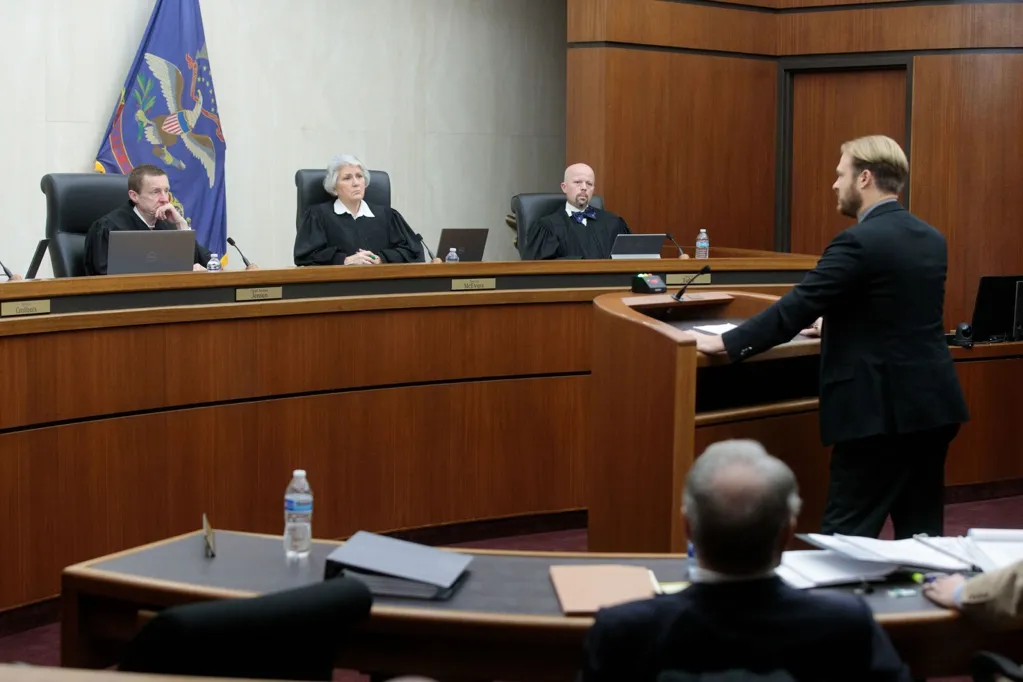
BISMARCK -- The North Dakota Legislature has asked the North Dakota Supreme Court not to block its election ballot proposal to change voter-approved legislative term limits.
The Legislature in 2025 adopted Senate Resolution 4008 with the goal of giving lawmakers more freedom over how they spend their terms.
The resolution refers a constitutional amendment to North Dakota voters on the 2026 general election ballot. If approved, the amendment would in part tweak legislative term limits established through the passage of Article XV in 2022, which stipulates that state lawmakers can serve no more than eight years in the House and eight years in the Senate.
The proposed amendment would change this to allow lawmakers to serve up to 16 years in either chamber. It would also make it so partial terms don't count against term limits.
"The people's right to vote on such proposals was established at statehood and remains an integral part of the Constitution," the Legislature wrote in court records filed with the Supreme Court earlier this week.
The proposal is in question after two backers of the term limits amendment earlier this year filed suit against the Legislature and Secretary of State's Office over Senate Resolution 4008.
Former Minot Republican lawmaker Sen. Oley Larsen and Grand Forks County commissioner Terry Bjerke in the lawsuit claim the measure is unlawful because a clause in Article XV bars the Legislature from proposing any constitutional amendments to term limits.
Attorneys for the Legislature argue in court filings that Senate Resolution 4008 addresses this problem by including a provision to repeal that clause.
Larsen and Bjerke also argue the proposed measure violates a separate part of the constitution in Article III, which states the Legislature must reach a two-thirds majority vote in each chamber to change constitutional amendments within seven years of their effective dates. Senate Resolution 4008 did not meet this threshold, Larsen and Bjerke claim, since it passed the Senate by a 24-23 vote and the House by a vote of 53-39.
The Legislature in court documents submitted this week say that proposing an amendment to the constitution is not the same thing as voting to change the constitution, so Senate Resolution 4008 does not violate this part of the constitution either.
The Legislature says Larsen and Bjerke's lawsuit seeks to "restrain the people's power to govern themselves through the voting process." It asks the Supreme Court to deny Larsen and Bjerke's request.
The Attorney General's Office, representing the Secretary of State's Office, also responded to the lawsuit in records filed this week.
In those documents, the Attorney General's Office argues that the Secretary of State's Office does not have the authority to judge whether or not a proposed constitutional amendment is lawful.
Article IV of the constitution directs the Secretary of State's Office to put any proposal approved by the Legislature on the election ballot, the agency argues in the filing.
Accordingly, the Secretary of State's Office writes it has no opinion on whether Senate Resolution 4008 violates the North Dakota Constitution, the records state.
The Secretary of State's Office in court documents requested that the Supreme Court make a final decision in the case by June 30 so that the agency has enough time to prepare for the 2026 general election.
Larsen and Bjerke filed the lawsuit directly with the North Dakota Supreme Court, arguing that the court has jurisdiction to hear the case because ballot measures that could change the constitution are of "substantial public importance," because the Supreme Court has a responsibility to settle questions about the Legislature's constitutional powers and because the general election is quickly approaching.
The high court has said it may hear arguments on the case this spring, though a hearing has yet to be scheduled.
Legislative leaders voted to hire outside attorneys to represent them in the lawsuit. According to court records, the Legislature has retained Bismarck attorneys Scott Porsborg and Brian Schmidt.
Both Bjerke and Larsen were members of the sponsoring committee to put the term limits amendment on the ballot, according to the lawsuit. The ballot measure passed with 63% approval from voters.