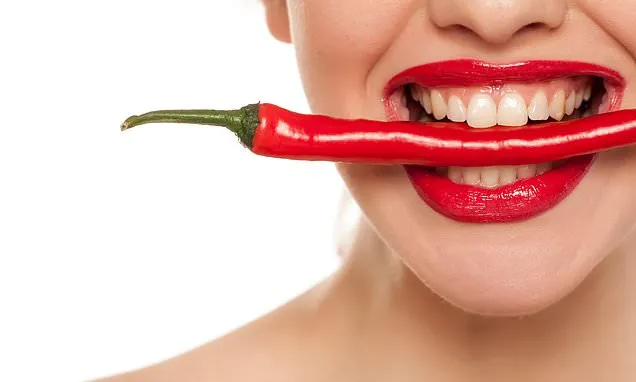
You've probably heard that oysters are an aphrodisiac, chocolate can help put you in the mood and chilli will spice up your sex life, but is it really possible to eat your way to a better orgasm?
Food probably isn't the first thing that comes to mind when you think about sex, but according to the experts, it does actually influence a lot of the biology - from blood flow to hormones - that makes arousal possible in the first place.
'There's not an instant food for fireworks,' nutritionist Natalie Rouse explains 'but it certainly plays a role in libido.
'Physiologically, what we eat influences our sexual wellbeing - from arousal to performance - through our hormones, circulation, energy levels and our nervous system.'
This is because when we're stressed, tired and running on empty, libido is one of the first things to go.
'Eating nitrate rich foods and healthy fats can help support circulation, which is essential for arousal, whilst zinc and magnesium are crucial for the production of sex hormones and keeping blood sugar levels stable which can affect mood and desire.
'When these systems are well-supported, the brain and body relax, putting us in a better position to experience desire and pleasure.
'Leading a healthy lifestyle, where you're not restricting food and putting your body under unnecessary stress, can have a major impact - not just by raising self-esteem and energy levels - but by supporting circulation and boosting sex hormones.'
Certain foods, nutrients and aphrodisiacs can help you get in the mood this valentine's
Despite what we may hear around Valentine's Day with PR teams and advertising agencies doing the most to convince you that everything from oysters to chocolate are the answer to your lack of sex drive - libido isn't driven by individual foods.
Rather, its influenced by overall health.
So addressing any nutrient deficiencies and eating foods that improve energy, stabilise blood sugar and support relaxation can help boost arousal and sex hormone production, Rouse said.
However, that isn't to say aphrodisiacs don't exist.
'There are definitely certain rituals, and therefore certain foods, that we associate with sex.
'We're all neurologically wired, and it is possible to rewire your brain to think in a certain way.
'If you're relaxed, the lights are dimmed and your eating chocolate every time before you have sex, then chocolate probably will become something of an aphrodisiac.'
Oysters are probably the most talked about aphrodisiac of all time. And Rouse said there is some nutritional reasoning to back this up.
Oysters are probably the most famous aphrodisiacs - and it's not just a myth
'Oysters are extremely high in zinc, which supports the production of sex hormones like testosterone, making it an essential mineral for arousal.
'So whilst eating an oyster won't be an instant turn on, they do support the underlying physiology linked to libido.'
Chocolate is also linked to desire, especially on Valentine's day, but for a slightly different reason, Rouse says.
'Chocolate contains compounds that enhance dopamine and serotonin - the mediator of both creativity and libido- which helps explain why eating chocolate can help lift the mood in the moment.
But one of the most overlooked contributors to a low sex drive, is simply not fueling enough Rouse said.
'Chronically restrictive diets and stress are just the worst. Libido is so connected to how we feel in our bodies - whether we feel safe, or stressed - and even when all of these things are being supported, we need the energy to follow through.'
She added that carbohydrates are great for stabilising blood sugar and supporting energy availability - but should be paired with protein and fibre to avoid sharp spikes - which plays directly into how hormones behave.
And although there might not be a direct link, creatine is essential for providing the body with the energy required for short-lasting but intense movements.
A diet high in animal products can provide more than half of your creatine requirements - with the body producing the rest. Red meat is also a good dietary source of selenium, which men need to produce testosterone, Rouse added.
Low B vitamin, specifically B12, can also zap energy which is one of the most common but overlooked barriers to sexual pleasure, Rouse said.
'So something like salmon is a great choice - especially for women - as its high in vitamin B12 and omega-3 fatty acids which are linked to a healthy blood flow around the body which is one of the key physical foundations of sexual performance.'
There are also some foods that don't get the hype they deserve,' she said,'and is often all about pairings.'
For example, the nutritionist suggested pairing berries and chocolate for a flavonoid hit—which has been shown to reduce the risk of erectile dysfunction.
'Watermelon is another overlooked aphrodisiac—for use of a better word,' Rouse said.
This is because it contains L-citrulline, which can help increase nitric oxide which supports blood vessel relaxation and circulation—which form the foundation of sexual response.
Beetroot is also similarly high in nitrates whilst leafy greens can help with energy and desire.
And maca root, which has long been used in Peruvian cultures to enhance sex drive, may help support overall sexual and reproductive health.
So whilst there is no silver bullet for instant chemistry, Rouse says eating your way to a better orgasm is possible. It's just more about creating the conditions for desire over time than expecting a single oyster to deliver.