Most parents would attest to feeling anxious about their children's social media use.
As debate rages across the UK - and the world - about whether to ban the likes of Instagram, TikTok and Snapchat for under 16's, experts agree too much 'doom-scrolling' online is not good for young people's mental health.
But, it turns out, mums and dads should be turning the spotlight on themselves - with one in five admitting to being addicted to their own social media channels.
According to a new survey, 21 per cent of parents admitted they were hooked on Facebook, Instagram, X and LinkedIn, with a similar number - 23 per cent - suffering anxiety as a consequence.
As many as 15 per cent also said they regularly felt sad or depressed because of the amount of time they spent on social media.
Researchers surveyed 2,000 parents and 700 children, aged 11 to 17, in both the UK and US for the poll.
More than two thirds - 68 per cent of parents and 66 per cent of their offspring - reported at least one physical or emotional symptom linked to their social media scrolling.
But, although many countries are looking to Australia's recent social media ban for under 16's and considering similar measures, experts say the way parents use social media themselves is more important for their children than age restrictions or thresholds.
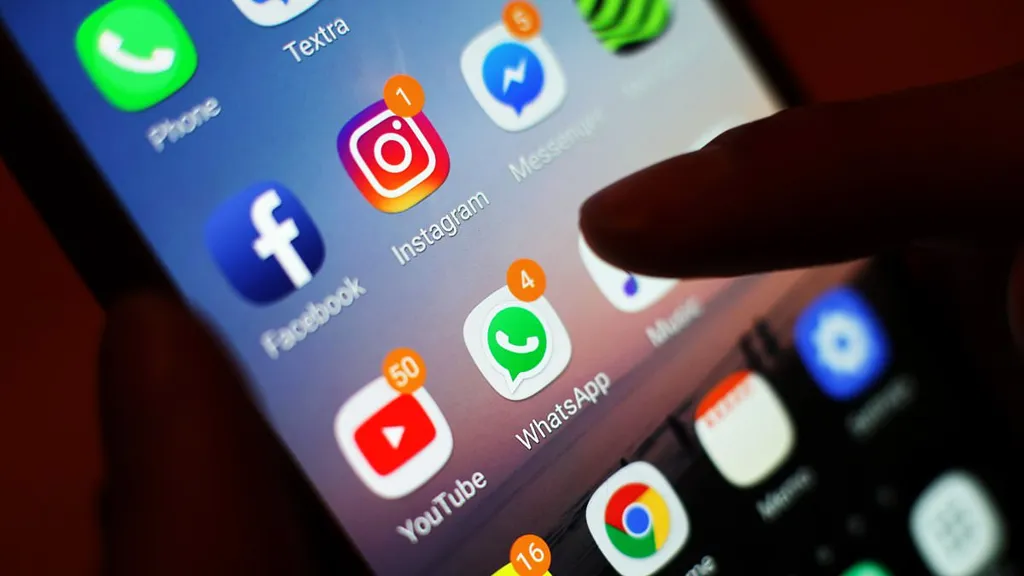
It isn't just teenagers who are hooked on social media, but their parents too, with one in five admitting to being addicted to the likes of Facebook, Instagram and TikTok
Mike Bennett, CEO of Sway.ly, said the proposed ban on social media for under-16s is likely to be 'unenforceable' and could distract parents from the 'real problem of mobile phone and social media behaviour in the family home.'
According to one academic study, published in the Journal of Paediatric Nursing last year, youngsters whose parents admitted to being glued to their mobile phones are more likely to have greater or more problematic use of social media, even though those mums and dads are more likely to enforce stricter rules - such as regularly confiscating devices to try and restrict exposure to harmful content online.
Other studies also found that class and wealth do not necessarily make a difference when it comes to social media use, with children of wealthier parents, with access to multiple devices, as likely as those from lower socio-economic backgrounds to become addicted.
Mike Bennett, a tech entrepreneur and founder of Sway.ly, a specialist app which aims to improve education and safety for children online, said the proposed ban on social media for under-16s is likely to be 'unenforceable' and could distract parents from the 'real problem of mobile phone and social media behaviour in the family home.'
'Most parents agree that too much time spent on social media is not good for kids, with as many as 70 per cent supporting stricter age verification controls to block under-16s from platforms such as Snapchat, Instagram and TikTok,' he said.
'But the reality is children will likely find ways around any ban. Early evidence from Australia has suggested that enforcing age checks is patchy and instead children are being driven to more dangerous, unmoderated corners of the internet.
'The real predictor of social media use, it turns out, is not a child's age but how much time their own parents spend using such apps or interacting online.'
The Government launched a public consultation on whether to ban under-16's from social media on Monday. They want parents and young people to submit their views on the potential restriction, as well as other dramatic interventions, such as switching off addictive features such as infinite scrolling and video autoplay; mandatory curfews to improve children's sleep habits; use of AI and how age verification could be strengthened.
But Mr Bennett, said that, rather than bans and restrictions, parents and children needed 'more education and better conversations about content to help them understand how to make healthy digital decisions.'
His app, which costs £2.60 per user a month and is currently being trialled by a major telecoms provider, works by using cutting-edge AI technology to identify and filter 36 different types of harmful content.
As well as sending an alert to parents to let them know their child may have seen something inappropriate, Sway.ly tries to educate young users by making suggestions, for example to unfollow or block accounts that show unrealistic body images or glamorise self-harm or violence.
'Banning social media may sound decisive and it may resonate with understandably anxious parents but young people are telling us clearly that prohibition won't work,' he said.
'Evidence shows that positive parental involvement like open conversations about content, boundaries, and online experiences significantly reduces risk.
'Blanket bans, by contrast, risk driving activity underground and cutting off the communication families most need.
'The online world is nuanced: boundaries shift depending on age, maturity, family values, and factors such as neurodiversity.
'Censorship alone cannot navigate that complexity. To change behaviour, we must guide, educate, and empower.'
The father-of-three added that the 'key' to creating digitally healthier children - and helping them become digitally healthier adults - is to educate children and their parents about social media use together.
He said:'Children don't need panic; they need engagement.
'Parents need to be talking to their kids about how much time as a family they are all spending on social media and about what they are viewing on social media, so they can put in place realistic age and privacy boundaries and ensure every family member, no matter their age, understands the risks associated with being online.