For the first time this century, a decline in deceased organ donors has caused a drop in life-saving kidney transplants, a shocking reversal that occurred despite more live donor kidneys and better use of them.
In the past, when total transplants fell, it was because both living and deceased donations dropped together, which has been seen during recessions or the Covid pandemic.
In 2025, the system faced a new and opposite problem: living kidney donations increased and hospitals became more efficient, transplanting kidneys they once might have discarded due to concerns over donor age, minor injuries or early signs of disease.
Yet these gains were overwhelmed by a four percent decline in deceased donor kidneys compared to 2024, a drop of 663 donations, dragging the total number of life-saving transplants down.
The cause is not a lack of registered donors, but a systemic issue within the transplant process itself, triggered by a wave of new federal oversight and investigations, along with intense media attention, focused on rare cases where doctors attempted to transplant organs from patients who were still alive.
A new report by the nonprofit Kidney Transplant Collaborative suggests the combined force of this oversight resulted in potential donors and their families, frightened by headlines, withdrawing from donor registries in record numbers and organ procurement organizations, fearing the next scandal, became overly-cautious, turning away from donors they once would have pursued.
Dr Andy Howard, Chair of the Kidney Transplant Collaborative, said: 'This is a serious signal for the transplant community and patients will feel the consequences quickly.'
'The evidence consistently shows that living kidney donations can increase transplant rates when patients and donors receive real support, guidance and navigation. We already know what works and how to scale it. The question now is whether we act in time to prevent avoidable loss of life.'
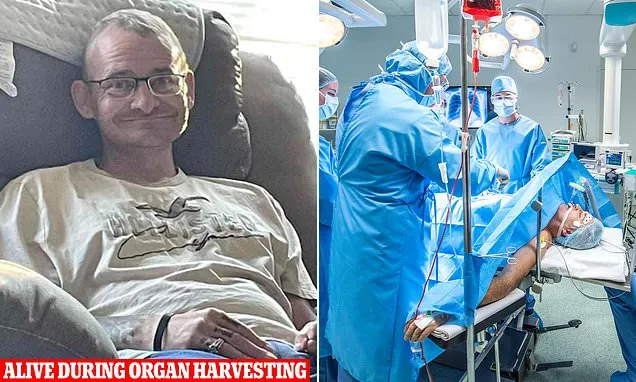
In 2021, TJ Hoover was wheeled into organ-removal surgery in Kentucky as a donor after circulatory death. Despite showing clear signs of consciousness, procurement staff allegedly pressed forward, only stopping when a doctor intervened (Pictured: his sister Donna Rhorer and Hoover)
The Kidney Transplant Collaborative cited a specific case, covered by the Daily Mail, that became an inflection point, triggering the intense scrutiny and risk aversion that now grips the organ donation process.
In October 2021, TJ Hoover was wheeled toward organ-removal surgery in a Kentucky hospital after being declared a candidate for 'donation after circulatory death' (DCD), meaning doctors would wait just minutes after his heart stopped beating before beginning the procedure, following a drug overdose.
As detailed in a federal investigation analyzed by Daily Mail and corroborated in interviews conducted by the Daily Mail with his sister, Donna Rhorer, Hoover showed clear signs of consciousness, including tracking movement with his eyes, thrashing and even crying, but staff from the Kentucky Organ Donor Affiliates (KYDA), now Network for Hope, allegedly pressed on.
The surgery was halted when a hospital physician refused to proceed, calling it inhumane.
Donors can be declared dead after either cardiac or brain death. Over the past two decades, the transplant system has increasingly relied on donations after cardiac death (DCD), which grew from about seven percent of deceased donor transplants in 2005 to 45 percent in 2024, with brain death making up the remainder.
This case, which left Hoover with permanent, profound cognitive disabilities, became the catalyst for intense federal oversight of the organ procurement system. The public revelation of his ordeal ignited a firestorm, leading directly to congressional hearings where his story was examined as evidence of systemic failure.
It also triggered a major investigation by the Health Resources and Services Administration (HRSA) and increased regulatory scrutiny from other agencies. The government response, aimed at correcting safety failures, created the subsequent climate of doubt about DCD, which impacted the available donor pool.
While this scrutiny was intended to correct grave safety failures, it has had a paradoxical effect, according to the Kidney Transplant Collaborative. The implication, the organization suggested, is that the necessary focus on horrific cases like Hoover's has shaken public trust, leading to a spike in donor registry withdrawals.
The focus on Hoover's case has also made organ procurement organizations (OPOs) overly cautious, paralyzing the system at a moment of critical need.
Fearing the next headline or federal investigation, many have grown hesitant to pursue donors after circulatory death, where the determination of death is less absolute. This new hesitation directly reduces the number of available donors. Organs degrade in the body after the heart stops.
By waiting for brain death, which can take much longer than circulatory death, or not occur at all, OPOs are allowing many potentially transplantable kidneys to become unusable, shrinking the overall donor pool.
The decline in deceased donors, which began in June 2025, creates an immediate crisis for the roughly 94,000 Americans currently waiting for a kidney on the national waiting list. Kidneys are by far the most sought-after organ, and this sudden drop in supply directly endangers the largest and most vulnerable patient population.
The impact would have been far more severe without a simultaneous, significant improvement in how hospitals use the organs they receive. The kidney discard rate fell by seven percent in 2025, meaning more kidneys from marginal or high-risk donors were successfully transplanted than in previous years.
The looming organ donor shortage spells trouble for an ever-expanding senior population, which means more sick people needing organs from a pool of potential donors who are themselves older and more likely to be medically ineligible.
According to the Kidney Transplant Collaborative, the solution is to pivot from a sole focus on fixing the troubled deceased donor system to aggressively building a federally supported infrastructure for living donation.
The central proposal is to create a national system of 'transplant facilitators.'
These trained facilitators would help transplant candidates identify potential donors and guide those willing donors every step of the way, from initial screening to post-operative care, reducing the risk of them dropping out due to fear of risks.
Programs at institutions like Johns Hopkins and the University of Alabama show that facilitator support can make potential donors up to nine times more likely to complete screening and seven times more likely to become approved donors.
To implement this strategy nationwide, the report calls for a crucial policy change to Medicare, the federal health program for seniors, by establishing facilitator expenses as reimbursable Medicare costs, just as Medicare funds the high costs of deceased organ recovery.
Howard told Axios: 'We know people want to be living donors. They're willing to do it, but we have to find a way to help them, and we feel the federal government needs to take action.'