You're reading the Bloomberg Opinion Today newsletter.
You're reading the Bloomberg Opinion Today newsletter.
You're reading the Bloomberg Opinion Today newsletter.
A peek inside the conversations shaping business, politics, economics, tech and culture.
A peek inside the conversations shaping business, politics, economics, tech and culture.
A peek inside the conversations shaping business, politics, economics, tech and culture.
By continuing, I agree to the Privacy Policy and Terms of Service.
This is Bloomberg Opinion Today, a catchy catalog of Bloomberg Opinion's opinions. Sign up here.
Today's Must-Reads
- Missile warfare has gone ballistic -- and become the norm.
- Europe prepares for its own way out of the Hormuz crisis.
- The Indian rupee's appreciation won't be appreciated.
- What a Nintendo-verse can learn from Marvel.
- Iran's Taj Mahal is under threat.
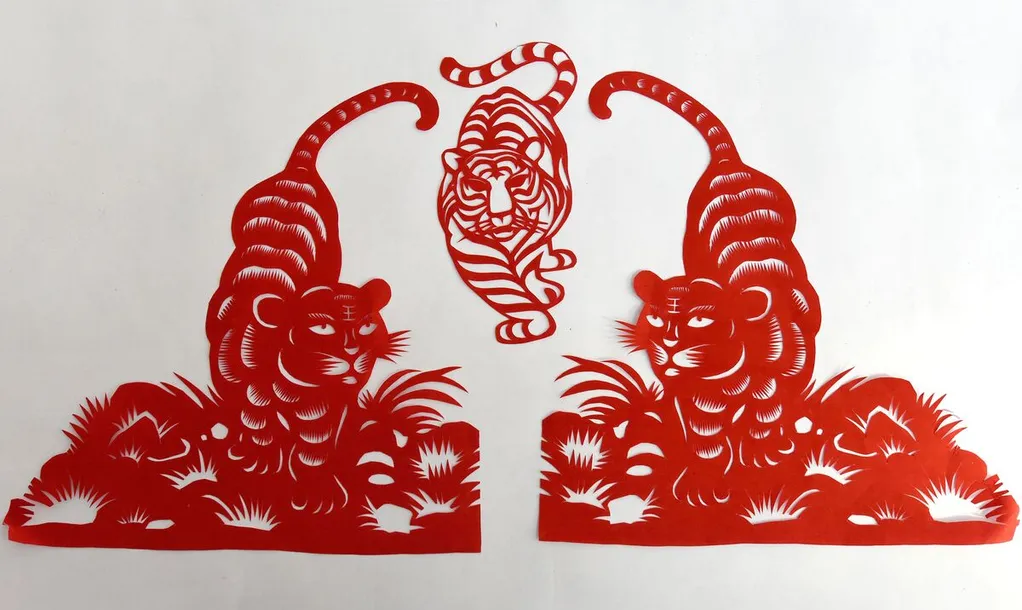
Donald Trump and His Paper Tigers
We have, I hope, reached peak "chinamaxxing" now that the President of the United States is mouthing a phrase made famous by the founder of the People's Republic. Donald Trump has called North Atlantic Treaty Organization a "paper tiger" because of what he sees as the failure of the Western alliance to support his war with Iran. Talk about becoming Chinese! In the middle of the 20th century, Mao Zedong popularized that old Cantonese epithet, which applied to a formidable appearance with no real teeth. The communist overlord used it to describe the threat of nuclear weapons as well as US imperialism. Trump also leveled the invective at Russia back in October.
Yet isn't it really the US that's become a paper tiger? In his April 1 speech, Trump said he's defanged Iran. But as Andreas Kluth notes, the conflict is leaving the US with all bark and no bite (I'm sorry I'm mixing feline and canine metaphors). "The US military is a month or so away from running out of several types of missiles and interceptors," he writes. "Just replenishing the Tomahawks that the US has already fired will probably take five years."
Trump would also really like the paper tiger alliance he's so publicly castigated -- which includes most of Western Europe -- to help clear the Strait of Hormuz. Retired US Admiral James Stavridis -- who used to be supreme commander of NATO -- says the president could get them to do that if he were less insulting. "Instead of demeaning them and demanding they join in offensive operations...," he writes, "the White House would be better served to push the allies to join in sea-control operations in the strait and throughout the Persian Gulf. The Europeans have significant air and maritime capability that could be vital to relieve an increasingly overstretched US Navy."
Of course, Mao would have called such cooperation proof that NATO members were merely the "running dogs" of US imperialism! As it is, says Lionel Laurent, France, the UK, Japan and some 30 other countries (excluding the US and Israel) are jointly trying to figure their own way out of the crisis.
In the meantime, China -- in collaboration with Pakistan -- is offering its own peace proposal. Karishma Vaswani says Beijing has strong cards to play because it "maintains close ties with Iran, working channels with Israel and a functioning -- if strained -- relationship with Washington. Its emphasis on sovereignty and non-interference makes it a more acceptable interlocutor for Tehran than most Western powers, and that gives it greater scope to help shape the contours of any settlement." However, she's skeptical that China will carry through because its five-point plan offers no mechanism that might lead to a ceasefire. It is, in other words, paper-thin.
Bye-Bye, Dubai?
The way Trump put it in his April 1 speech, the current Gulf war is the culmination of a 47-year struggle with Tehran. In that near-half century, magnificent cities have risen in the immensely rich federation of the United Arab Emirates. Among them, Dubai with its glittering towers and its tax-free living. It has drawn immigrants of all economic castes: construction workers and domestic servants; digital nomads and finance bros. Is its golden age now over as war ravages its skyline?
A small legion of online Dubai boosters continues to promote the longevity of the littoral utopia. But Lionel Laurent thinks its days are numbered due to the war and the vulnerability of Gulf economies to the openness of the Strait of Hormuz. He writes: "Dubai's supporters make the point that global capital has few other places to go, especially as London increases taxes and gets more squeamish about where the money comes from. The UAE-or-bust lobby is mistaken, however. International capital could find a home in the old-world hubs of Geneva and Milan, even if Europe has its own wartime challenges. Hong Kong's appeal is returning despite China's national-security law."
The UAE still sits on a huge pot of money, with sovereign wealth estimated as high as $2.5 trillion, and Abu Dhabi -- the richest emirate -- calling the shots. That can help it redirect its economy as well as rebuild and install better defenses against drones and missiles. But the hazards of war are the problem. As Lionel gleans from freshly expatriated Dubai expats, being on a frontline isn't what they signed up for.
Telltale Charts
"The aviation industry [is]... navigating a complicated carbon offsetting scheme that may -- or may not -- become mandatory next year. The average flyer might not realize it, but since 2021, the International Civil Aviation Organization (ICAO) has been running the Carbon Offsetting and Reduction Scheme for International Aviation, otherwise known as CORSIA. Participation has been voluntary so far, but starting in 2027, CORSIA becomes a requirement for international travel between all ICAO member states (excluding some developing nations). At the moment, it's expected that 134 countries will have to participate." -- Lara Williams in "Fuel Prices Aren't Airlines Only Headache."
"Western carmakers have been paring back their electric-vehicle ambitions in response to weaker regulation and demand, leaving buyers wondering whether their next vehicle would come with a plug after all. Now these assumptions have been jolted by another unexpected shift: the surge in gasoline prices triggered by war in the Middle East. ... Automakers able to respond nimbly to shifts in demand, while offering superior energy efficiency at an affordable price, should cope best. ... [I]n Europe I'd count on Chinese EV giant BYD Co. winning further market share. Anyone wanting a cheaper ride should also consider a used EV. Even second-hand electric Porsches offer value for money.'" -- Chris Bryant in "A $45,000 Porsche Taycan Is a Decent Oil Price Hedge."
Further Reading
- Maybe Britain really is a paper tiger. -- The Editorial Board
- China still isn't inviting enough for tourists. -- Juliana Liu
- Nike's slog just got harder. -- Andrea Felsted
- India's tough choice between dal and data. -- Andy Mukherjee
- The hedge fund winning the space race. -- Chris Hughes
- Is Asia really giving up coal? -- David Fickling
- A method to China's OpenClaw madness. -- Catherine Thorbecke
- The world's oldest bank and its unending crisis. -- Paul J. Davies
- The Iran war's bad on inflation and growth... -- Marcus Ashworth
- And pushing Japanese investors overseas again. -- Shuli Ren
Walk of the Town: One Bridge to Rule Them All
The most famous structure in London's history is kind of a charlatan: It does and doesn't exist. It also practices bilocation. A London Bridge spans the Thames, while its immediate predecessor is in Lake Havasu City, Arizona -- purchased by an American plutocrat in the 1960s and dismantled and transported to the US. The longest-lived manifestation -- 600 years! -- had houses and a pilgrimage church built on it, but fell into such notorious disrepair that it inspired the world-famous song. Tourists often believe Tower Bridge to be London Bridge, but that Disneysque fantasy only opened in 1894.
I wrote a column this week about vanished and endangered buildings. And so I took myself to the church of St. Magnus the Martyr, just about 10 minutes away from the office, to see its delightful model of old London Bridge as it likely appeared in the year 1400. It's a vibrant depiction of a medieval wonder composed of 19 arches anchored to piers — plus a drawbridge to allow larger boats through. Imagine the Ponte Vecchio in Florence, but almost 10 times longer.
Around the middle of the 18th century, however, fires and decay — and a decision to widen the roadway — led to the removal of the remaining houses and shops. A new bridge — the one now in Arizona — was built in 1831. The current span was finished in 1973. It is about 100 feet from where the old bridge of song is attached to the north bank of the Thames.
You might think that the transported bridge has become so thoroughly rooted in Arizona that it's forgotten its London roots. However, the American painter Kerry James Marshall depicted it on an epic canvas in 2017 — a transoceanic, transcultural commentary on colonialism and the slave trade (the figure in a sandwich board is a reference to Olaudah Elijah, the 18th-century slave-turned-abolitionist and resident of the British capital).
London Bridge has fallen down again and again. Yet it never seems to go away.
Drawdown
Sometimes, hope isn't the thing with feathers.
Notes: Please send heavenly counsel and feedback to Howard Chua-Eoan at hchuaeoan@bloomberg.net.