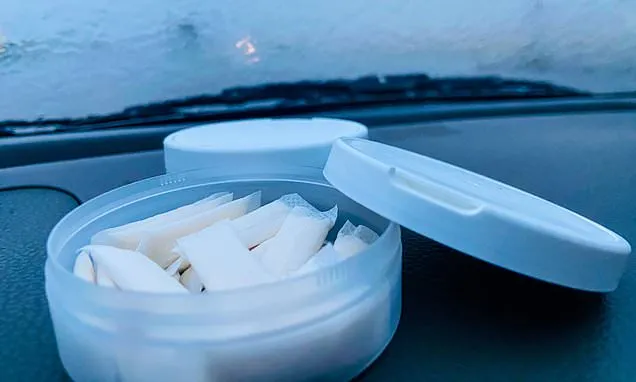
Sales of caffeine pouches have doubled in the UK in the last year, one brand has reported, as Brits are replacing coffees with the more instant pick-me-ups.
Social media platforms including TikTok have played a part in the arrival of the caffeine-packed pouches, which are tucked between the upper cheek and the gum and deliver a dose of the stimulant over 30 minutes, from the US.
Campaigners have warned that children and teenagers are at risk of becoming addicted to the pouches and could face health problems if they use them too frequently.
The caffeine hits are considered less harmful than nicotine pouches and are available for under 18s to buy.
Sold online and on UK high streets, including in branches of W H Smith, the pouches also come in flavours considered appealing to a younger audience, including watermelon and strawberry lemonade, as well as traditional coffee.
Brands available on Amazon.co.uk include End, X-booster, Belter, Fuze and Muze, reports thegrocer.co.uk.
Tins of rectangular pouches, each containing up to 200mg of caffeine - the equivalent of two cups of coffee - are cost as little as £8.50, with many marketed at those with an interest in fitness.
An X-booster strong tin, for example. which has 80mg of caffeine per pouch, carries the wording 'no tobacco, no nicotine, no sugar' and describes itself as 'Ideal for work, sports or travel.'
Health professionals are sounding the alarm over fears though that children could end up absorbing dangerously high levels of caffeine without stricter regulations.
The caffeine in the pouches can bypass the digestive system by seeping directly through the gums, providing a much higher concentration of caffeine almost directly into the bloodstream.
Too much caffeine, especially in a young person whose brain is still developing, can contribute to problems with impulse control, emotional regulation, decision-making, and attention.
Younger people can also experience caffeine overdose, which can cause trouble breathing, irregular or rapid heartbeat, dizziness, muscle twitching, and convulsions.
Markus Lindblad, head of legal and external affairs at Haypp, which sells tobacco-free nicotine products online, told The Grocer that around 10 per cent of the brand's UK consumers use caffeine pouches—a higher figure than in the US where it's at 5%.
He added that the figure for the UK market has increased two-fold in a year.
One brand selling the caffeine pouches, Haypp, reported that UK sales have doubled in the last year
Dr Jamey Maniscalco, a neuroscientist practicing in Colorado and a concerned father, told DailyMail.com last summer: 'At minimum, we should treat these products with the same scrutiny we apply to other performance-enhancing or psychoactive substances.'
Dr Hamilton Gaiani, a board-certified psychiatrist practicing in Connecticut, added: 'Teenagers are still growing, and their brains are more susceptible to these effects.'
'Excessive amounts of caffeine can also result in concentration problems, stress, and in some cases, panic attacks.'
Caffeine has some documented health benefits, from reduced fatigue to improved cognitive and muscle function.
Coffee specifically has proven beneficial to the liver, can lower blood pressure, reduce heart disease risk, and stave off type 2 diabetes.
Such benefits come from moderate amounts of caffeine, not the larger doses that might potentially be consumed via pouches.