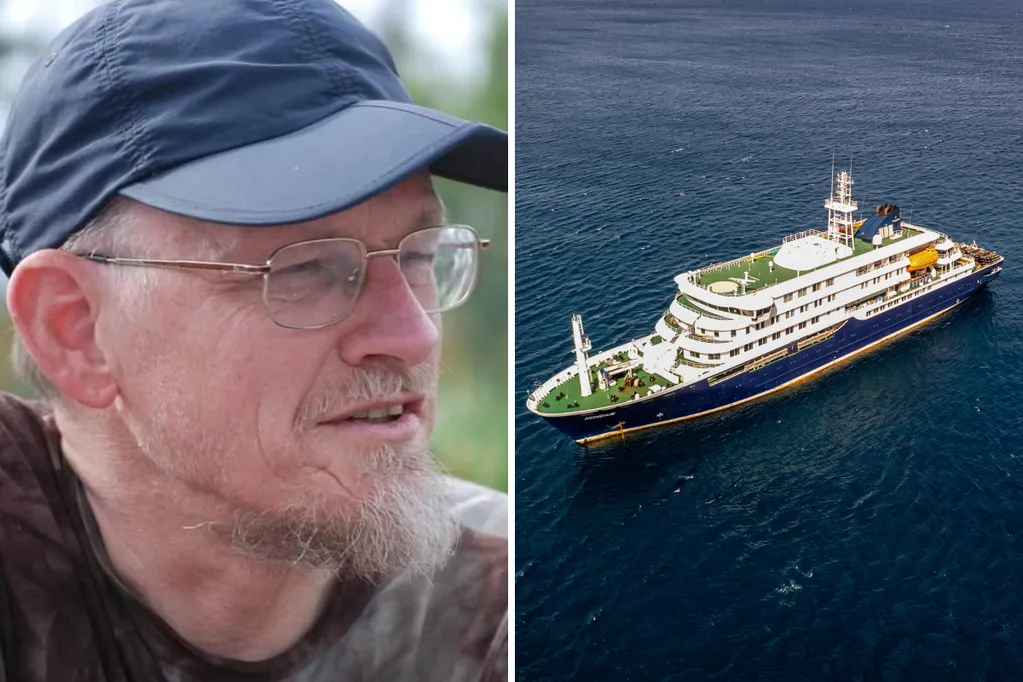
His case is central to efforts by global health officials to trace how the rare virus spread among passengers and across borders.
Schilperoord, 70, and his wife Mirjam, 69, were experienced birdwatchers who had spent months traveling across South America before boarding the MV Hondius on April 1. Their journey took them through Argentina, Chile, and Uruguay, with a return to Argentina in late March for what would prove to be a fatal stop.
The couple, from Haulerwijk, a Dutch village with a population of about 3,000, were named in obituaries published in a local monthly magazine, The New York Post and Dutch media both report.
Newsweek has contacted the Dutch Ministry of Health, Welfare and Sport and the National Institute for Public Health and the Environment (the Dutch national public health institute) for comment via email.
The outbreak involves the Andes strain of hantavirus, a rare variant that can spread between humans, unlike most strains of the disease, which generally pass from rodent to rodent.
Its emergence on a cruise ship has triggered international contact tracing efforts across multiple countries, highlighting how quickly infections can cross borders.
Passengers, including Americans and Europeans who have since returned home, are now being monitored for symptoms as authorities race to contain further infections.
Authorities believe the couple may have been exposed during a visit to a landfill outside Ushuaia, a remote city in Patagonia that draws bird enthusiasts searching for rare species such as Darwin's Caracara.
The site, described by local officials as heavily contaminated, is thought to harbor rodents carrying the Andes strain of hantavirus, which is typically spread by inhaling particles from infected droppings or urine.
Schilperoord began showing symptoms less than a week into the voyage, including fever, headaches and gastrointestinal problems, before dying on board the ship on April 11, according to the ship operator, Oceanwide Expeditions.
At the time, hantavirus was not immediately suspected because his symptoms were similar to those of other respiratory diseases, and his death initially went unexplained and no samples were taken, according to World Health Organization (WHO) Director-General Tedros Adhanom Ghebreyesus.
His wife disembarked when the ship reached the remote island of Saint Helena on April 24, but fell ill shortly afterward. She died days later in South Africa after her condition deteriorated.
Their deaths are now believed to be among the earliest linked to the outbreak, with investigators treating Schilperoord as "patient zero" in the cluster.
The MV Hondius, carrying more than 100 passengers, became the center of a growing public health response as additional cases were identified.
At least several infections and multiple deaths have been linked to the voyage, prompting monitoring, quarantines and contact tracing in countries including the United States, the United Kingdom and across Europe.
Several passengers left the ship mid-journey and traveled internationally, raising concerns about further spread during flights and onward journeys.
Hantaviruses are typically transmitted from rodents to humans and are not known for sustained human-to-human transmission.
However, the Andes strain linked to this outbreak is an exception, with health officials noting it can spread through close contact between people.
Even so, experts stress that transmission requires prolonged or intimate exposure and that the overall risk to the wider public remains low.
Despite the severity of the MV Hondius outbreak, epidemiologists stress the virus lacks the one ingredient needed to trigger a global crisis: efficient human transmission.
"Pandemic potential is mostly about transmission architecture, not lethality," Amesh Adalja, a senior scholar at Johns Hopkins, told Newsweek.
Hantavirus tends to make people seriously ill quickly, limiting how far it can spread. "It's not the case fatality rate that matters... it's the ability to transmit between humans," Harvard epidemiologist Bill Hanage said.
Experts say that even the Andes strain, the only version known to spread between people, does so poorly and usually requires close, prolonged contact.
"It's very hard to transmit it from one person to another," Stanford epidemiologist Marc Lipsitch told Newsweek.
That combination -- high severity but low transmissibility -- means outbreaks can be deadly, but are unlikely to spiral into a pandemic.
Health authorities are continuing to investigate the precise chain of transmission, including whether the infection began before passengers boarded the ship or spread during the voyage.
International agencies, including the WHO, are coordinating testing, monitoring and isolation measures while tracking passengers across multiple continents.
The focus remains on containing the outbreak, identifying any additional cases and understanding how a rare virus found its way onto a cruise ship far from its usual environment.