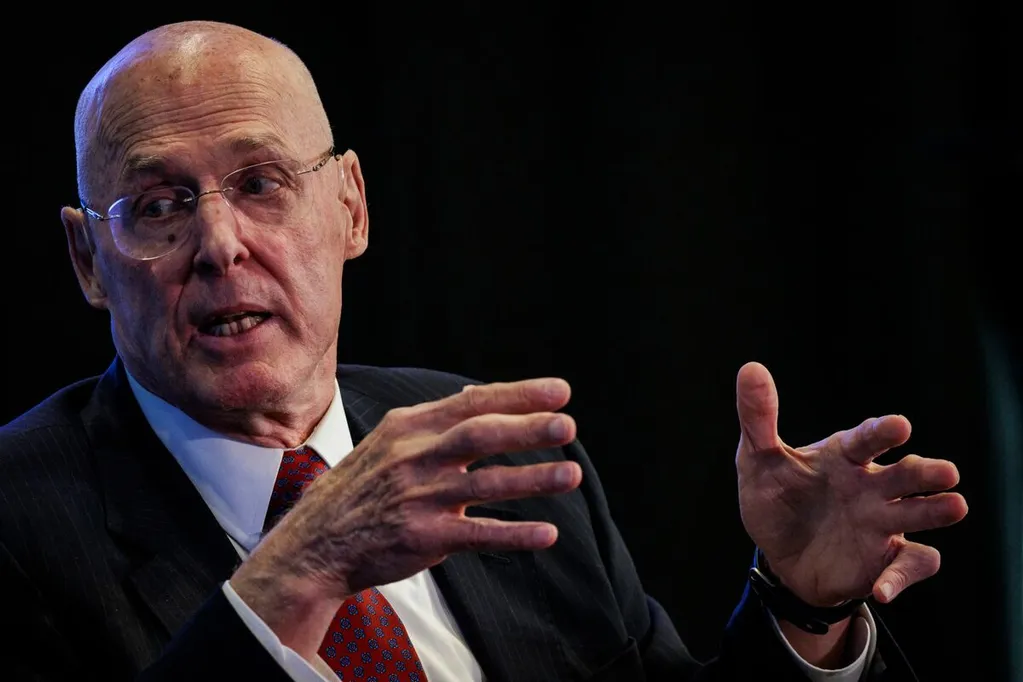
Former Treasury Secretary Henry Paulson called on US authorities to prepare a back-up plan in order to avert a potential collapse in demand for Treasuries -- an event that he warned would have "vicious" effects.
"We need an emergency break-the-glass plan, which is targeted and short-term, on the shelf, so it's ready to go when when we hit the wall," Paulson said in an interview for Bloomberg Television's Wall Street Week with David Westin.
Paulson said a breakdown in the $31 trillion market for US government debt would be different from the financial crisis he dealt with while at the Treasury's helm two decades ago.
"As bad as it was," the government had fiscal firepower to address the credit meltdown, he said. "You can come in and clean up the mess." But in the event of a US public debt crisis, "when you hit the wall and you're trying to issue Treasuries and the Fed is the only buyer and the prices of the Treasuries are going down and interest rates are up, that's a dangerous thing."
US budget experts have for years warned of the potential for a "doom loop," where investors start demanding higher yields on Treasuries due to risks tied to the government's swelling debt burden, which then causes an increase in the government's interest payments -- in turn widening the deficit.
In an extreme scenario where the Treasury proves unable to raise all it needs to pay for interest or principal payments, many assume the Federal Reserve would have to step in as an emergency buyer.
"People say, when are you going to hit the wall? I obviously don't know, it's impossible to know," Paulson said. "When we hit it, it will be vicious, so we have to prepare for that eventuality."
The former Treasury chief didn't lay out the specifics for a potential break-the-glass plan. But he said "there is good news -- we're a rich country, and so there's plenty we could do if we begin to act" on the fiscal deficit.
"It's going to take increased revenues, taxes, and dealing with expenses," he said. It would also mean overhauling Social Security and health care programs, he said. "You can raise the revenues without a big drag on growth, if you close preferences and loopholes in the tax code."
The challenge is marshaling lawmakers behind such an effort, Paulson said. "I've worked with Congress before, and Congress doesn't like to do unpleasant things until there is an immediate crisis."
The US budget deficit has averaged roughly 6% of gross domestic product over the past three years -- a historically large shortfall rarely seen outside of wartime or recessions and their aftermath. The gap is expected to stay around those levels throughout the coming decade, according to the Congressional Budget Office.