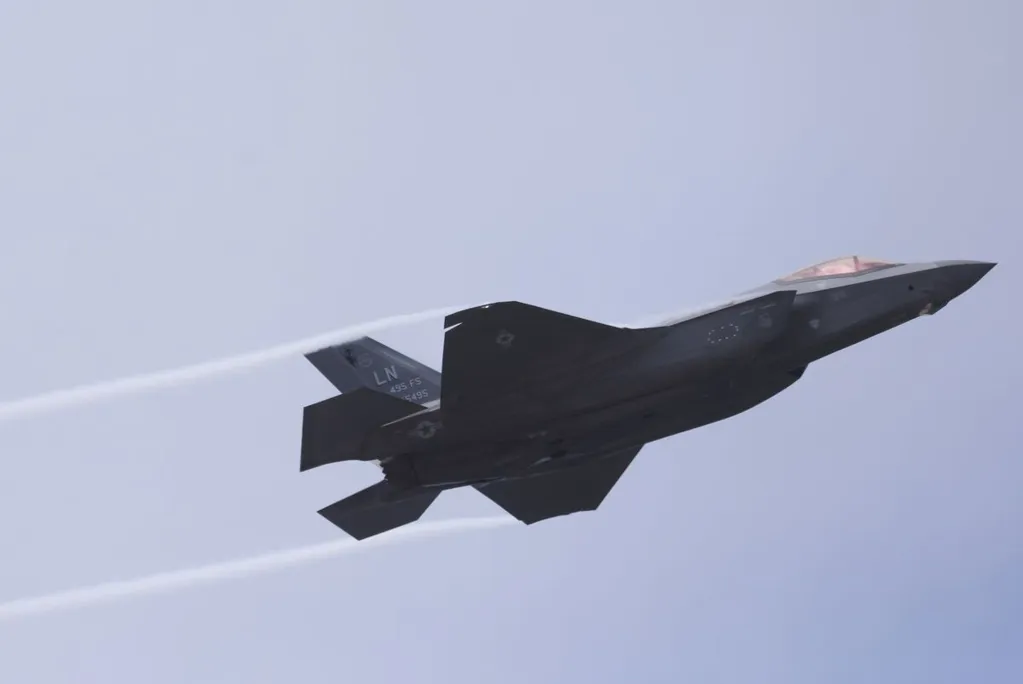
The Pentagon needs an additional $12 billion through 2031 to boost declining readiness rates of the F-35 fighter, the world's biggest weapons program and a key part of the US arsenal in the Iran War, program officials have told congressional auditors.
The additional funding -- mostly for spare parts -- would add to the $1.2 trillion the Pentagon has already estimated it will cost to support the planned fleet of 2,470 Air Force, Navy and Marine jets over decades of service. That's separate from the program's $485 billion development and production phase.
The disclosure comes as Marine Corps F-35C jets continue flying missions over Iran from the USS Abraham Lincoln aircraft carrier. The new data raises questions about the level of effort needed to keep those aircraft flying and the impact of sustaining that use on the remaining fleet.
The Pentagon's spending plans won't provide any immediate relief to F-35Cs currently flying in the Mideast, which are likely drawing down on parts from other regions, according to a Government Accountability Office official.
"We know from our prior work the program surges parts to support deployed operations," said GAO Defense Capabilities and Management Director Diana Maurer, who's supervising the readiness work. "But since there aren't enough parts and other support to go around, non-deployed units suffer."
Officials at the Pentagon's F-35 program office, Marine Corps and Lockheed Martin Corp. didn't immediately respond to a request for comment.
The concerns about the program aren't new. Last year, the overall "mission capable" rate of the Marine Corps' F-35C model -- a measure of which aircraft are deemed safe and ready to perform one mission -- dipped to 64.2% from 66% in 2024, according to fresh data provided to the GAO for a report to be published later this year. The service is supposed to maintain that rate at 85%.
The gap is even wider when it comes to meeting "full mission capable rates" -- the percentage of time during which aircraft are fully capable of accomplishing all assigned missions. The Marine Corps' C-model rate for that metric was 22%, down from a high of nearly 30% in fiscal 2022. The program's goal is 75%.
The comparable full-capability rate for the Air Force, which is buying 1,763 F-35s, isn't much better: 28.5% against a goal of 80%, according to the newly disclosed data.
Raising fleet-wide readiness rates "even 10% means dozens more mission capable F-35s ready to address other contingencies," said Maurer.