TAMPA - While many Americans enjoy a long weekend on Presidents' Day, the holiday's origins -- and its local connections -- often go overlooked.
Presidents' Day was originally established to celebrate George Washington's birthday on February 22. Over time, the observance shifted to the third Monday in February, expanding to honor all U.S. presidents.
But in Tampa, presidential history isn't just commemorated once a year, it's woven into the city itself.
Take a walk through downtown Tampa, and you'll find a familiar pattern: Washington, Jefferson, Polk, Pierce, Harrison, Tyler -- and even Zack Street, named for Zachary Taylor.
According to Rodney Kite-Powell of the Tampa Bay History Center, those names trace back to the city's earliest planned days.
"It's interesting to look at our downtown street grid," Kite-Powell explained. "You will see the name of Zachary Taylor on Zack Street downtown along with several other presidents; Washington, Jefferson, Polk, Tyler."
The reason dates to the 1840s when Tampa's street grid was created by John Jackson.
"He was really fond of Revolutionary heroes, which is where you get some of the early ones," Kite-Powell said. "But also, the politics of the time. So, you find a lot of presidents from his era going backward right in our own downtown streets," Kite-Powell said.
One of Tampa's most recognizable roads carries a more recent presidential story.
John F. Kennedy Boulevard wasn't always Kennedy.
"Kennedy became Kennedy in December 1963, just a month after he was assassinated in Dallas," Kite-Powell noted.
The renaming held special meaning for Tampa.
"He was here three days before,"Kite-Powell said."His motorcade here in Tampa was the last one that he survived."
Shortly after Kennedy's assassination, Lafayette Street was renamed in his honor -- the same street where the president had traveled during his visit.
Before becoming America's 26th president, Teddy Roosevelt made an important stop in Tampa, one that helped launch his national legend.
The backstory:
In 1898, Roosevelt stepped away from politics to form the volunteer cavalry unit known as the Rough Riders. The regiment, made up of cowboys, Ivy Leaguers, and adventurers, trained in Tampa before deploying to Cuba during the Spanish-American War.
Thousands of troops gathered near Port Tampa, including Roosevelt and his men.
Selena Martinez of the Henry B. Plant Museum said Roosevelt carefully shaped his public image during this time.
"Teddy Roosevelt bought his friend, Richard Harding Davis, who was a journalist," Martinez said. "He's going to watch the whole thing and say this guy is incredible. He single-handedly took this charge up a hill. He captured the city and helped save everybody. He's an American hero. He's an American war hero. And there are going to be depictions of him throughout newspapers across the country. And they're going to be so impressed with this legend, Teddy Roosevelt, that he's going to be able to become McKinley's vice president. And when McKinly is assassinated, he will then become president and he's going to get elected for another term. So Teddy Roosevelt and his legend started here," Martinez added.
Roosevelt's wife, Edith Roosevelt, also spent time in Tampa, staying at the Tampa Bay Hotel during the regiment's training period.
Long before he became president, Zachary Taylor left his mark on Tampa during a turbulent chapter of Florida's history.
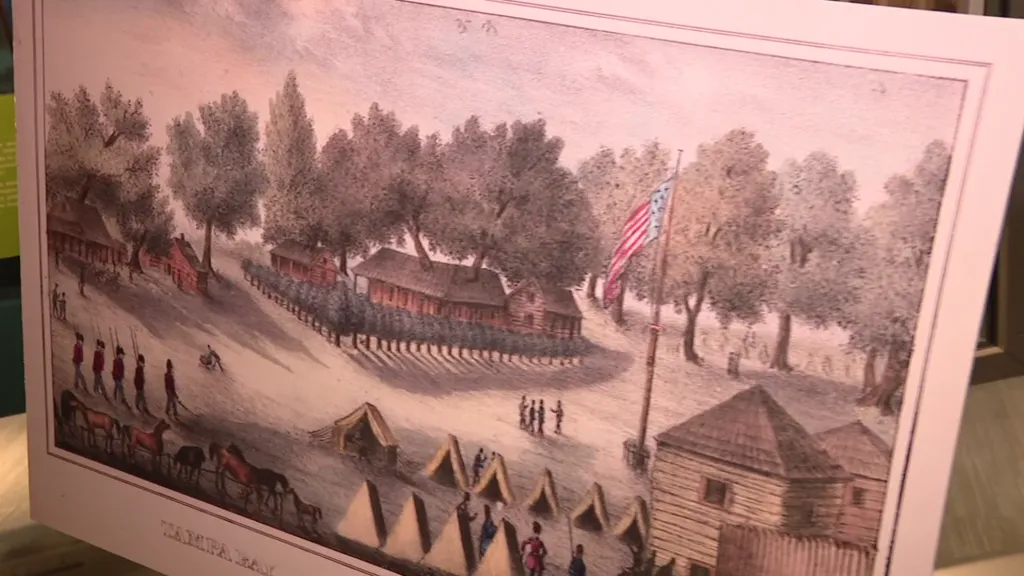
Taylor was stationed at Fort Brooke, which served as a key military headquarters during the Second Seminole War, beginning in 1835.
"Taylor was actually stationed here in Tampa at Fort Brooke," Kite-Powell said. "Fort Brooke was the headquarters of the Army's engagement against the Seminoles."
Taylor's leadership during the conflict elevated his national profile. He later gained widespread fame in the Mexican American War, a reputation that ultimately propelled him to the presidency in 1848.
From street names to military campaigns, Tampa's ties to U.S. presidents run deeper than many residents realize.
Whether it's Roosevelt's rise to fame, Taylor's early military career, or Kennedy's motorcade, Tampa's landscape quietly reflects chapters of American history.