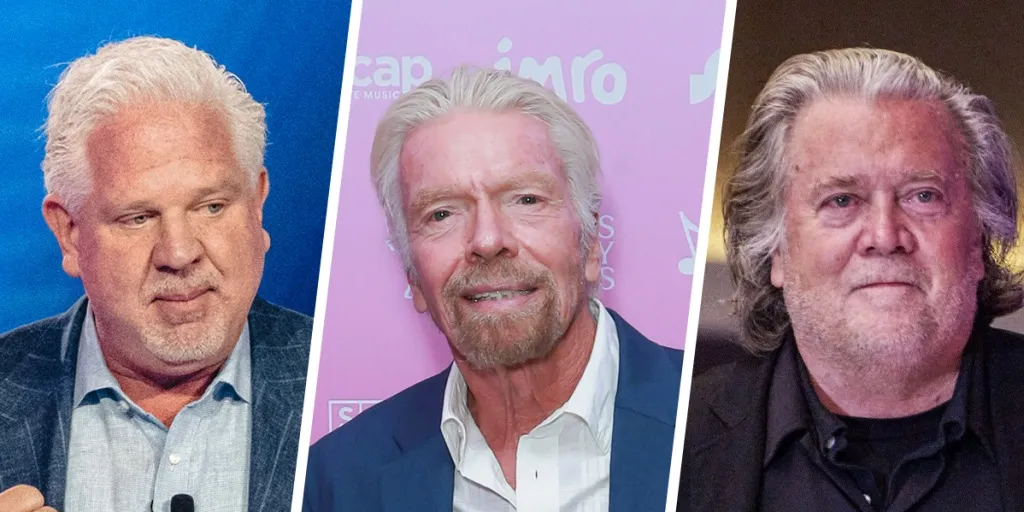
An unlikely band of prominent business, religious, government and academic leaders have set aside their political differences and signed onto a new declaration of human rights for the AI age.
The Pro-Human AI Declaration, released Wednesday and backed by more than 40 organizations, asserts the importance of humans and human values as AI becomes increasingly powerful and, in some regards, humanlike. Signatories include former Trump administration adviser Steve Bannon, conservative firebrand Glenn Beck and billionaire mogul Richard Branson, as well as consumer advocate Ralph Nader, Biden administration national security adviser Susan Rice and Nobel Prize-winning economist Daron Acemoglu.
"As companies race to develop and deploy AI systems, humanity faces a fork in the road," the statement's preamble declares. "One path is a race to replace: humans replaced as creators, counselors, caregivers and companions, then in most jobs and decision-making roles, concentrating ever more power in unaccountable institutions and their machines."
"There is a better path," the statement continues, "where trustworthy and controllable AI tools amplify rather than diminish human potential, empower people, enhance human dignity, protect individual liberty, strengthen families and communities, preserve self-governance and help create unprecedented health and prosperity."
The declaration was drafted by a coalition of organizations from across the political spectrum, including the Congress of Christian Leaders, the American Federation of Teachers and the Progressive Democrats of America.
The Future of Life Institute, a nonprofit advocacy group whose mission is to guide advanced technology toward beneficial purposes and avert large-scale risks to humanity, convened the participants and facilitated the drafting process. The declaration was drafted in multiple in-person gatherings and finalized after a wider ratification meeting in New Orleans in January.
The declaration, also signed by AI pioneer Yoshua Bengio, covers five main topics with titles such as "Keeping Humans in Charge" and "Responsibility and Accountability for AI Companies." Within each topic area, a list of finer-grained statements detail the signers' pro-human ideology.
"No AI Monopolies," "Democratic Authority Over Major Transitions" and "Shared Prosperity" are several of the statements comprising the second major topic area, entitled "Avoiding Concentration of Power."
Joe Allen, senior fellow at Humans First, a nonpartisan social advocacy organization campaigning to raise awareness about the future of AI, and the former technology editor at Steve Bannon's War Room podcast, told NBC News the declaration was "the product of painstaking consensus among intellectuals and activists who have been thinking about the dangers and downsides of artificial intelligence for many years."
According to Allen, the signers spanned a wide "axis, with reasonable techno-optimists at the top and a few of us quasi-Luddites below."
"As with free speech, and freedom in general, the ideal position is that every human being -- even one's ideological opponents -- has some say over a fundamentally anti-human technology," Allen shared in written comments.
AI systems have become dramatically more capable over the past few years and even months, with AI systems reshaping or eliminating software development jobs and outperforming scientists' ability to create new tests to measure their performance in areas like mathematics.
"Big Tech is racing to create AI smarter than humans," said Brendan Steinhauser, director of the Alliance for Secure AI, a Washington, D.C.-based advocacy organization and a former Republican campaign strategist. "The Alliance for Secure AI remains steadfast in its mission to keep humanity in control of AI, not the other way around."
"If we want AI to benefit humanity and not just Silicon Valley CEOs," Steinhauser told NBC News, "then we must come together to protect our future."