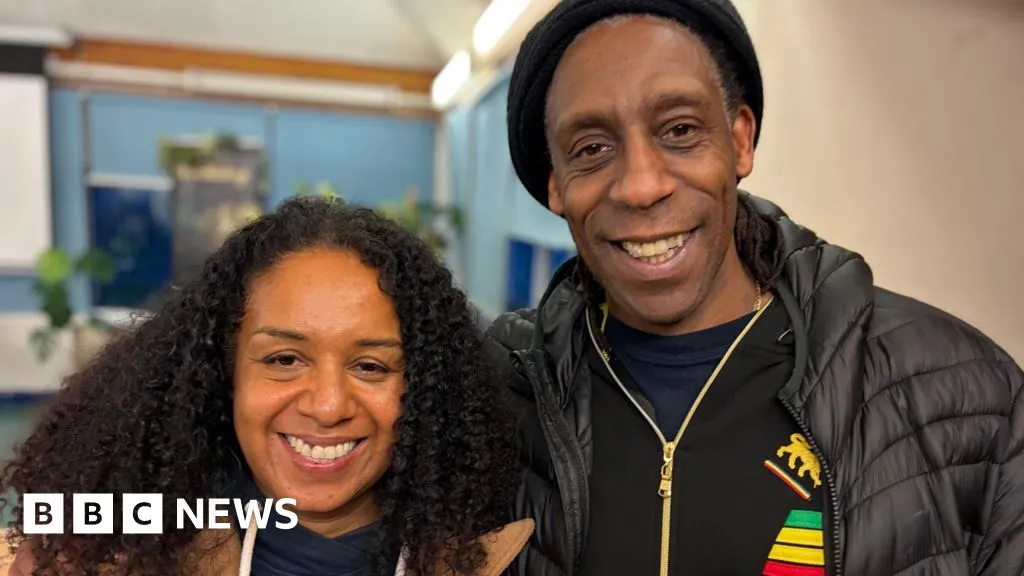
A man says he wants to give people of Caribbean and African ancestry the right resources "to make them feel more connected to their heritage".
Adrian Stone, 52, from Bristol, has been holding workshops teaching skills to help people trace their family trees.
The workshops include exploring plantation slave registers, discovering the journeys people of African heritage have made to establish communities around the world and how to search the passenger lists of Windrush-era transport.
Stone, whose father died when he was seven, said when his mother suffered a serious illness it "sparked the curiosity" to investigate his roots.
His quest took him to Jamaica, where he picked up expertise in using local sources of information.
Stone said he discovered a link to music legend Bob Marley and an enslaved woman from Nigeria named Eboe Venus.
Stone said the excitement of the discoveries he made inspired him to want to help others, including by putting a display up in his local supermarket.
One of the people who responded was Valerie, who said researching her roots had been something that has been in her heart for many years.
"Being Black British, my parents are from Jamaica, so being a parent and now a grandparent, it's really important to know my family history," she said.
Some of the workshops have been held at the St Paul's Learning Centre in the city.
Amanda Sterling-Bynoe, who attended one of them with her husband Derek Sterling, said: "Because so much of our history has been lost, it's really important that we understand what we have lost, but also reclaim those connections with family and those Caribbean islands and further back again to understand where we've come from in Africa."
Describing some of the hurdles he had faced, Lloyd Russell said: "You often find that when you're talking to an elder, they just don't want to let go of their history.
"They think it's suspicious, they want to know why you're asking, and often a lot of the elders go to their graves with all the history," he added.
Stone said "historically" and "culturally" many go by pet names, making it very difficult to find their records.
"If they're not married then they're registered under the mother's name, so those are the kinds of troubleshooting problems that we have."
He talked to the group at one workshop about records of compensation paid to slave owners.
"There are records of awards that were given to them as a result of freeing our people, so if you're doing your tree it's most likely that you will trace it back to somebody who was enslaved," Stone said.
Natalie Nelson said she had managed to contact and meet distant cousins in Birmingham and is hoping to find even more connections.
"They were related to my paternal grandfather, so that's been amazing.
"I'm just hoping to find the same for my maternal grandmother," she added.
Adrian Stone has been liaising with organisers of the St Paul's Carnival and said he hopes to hold another event later this year.