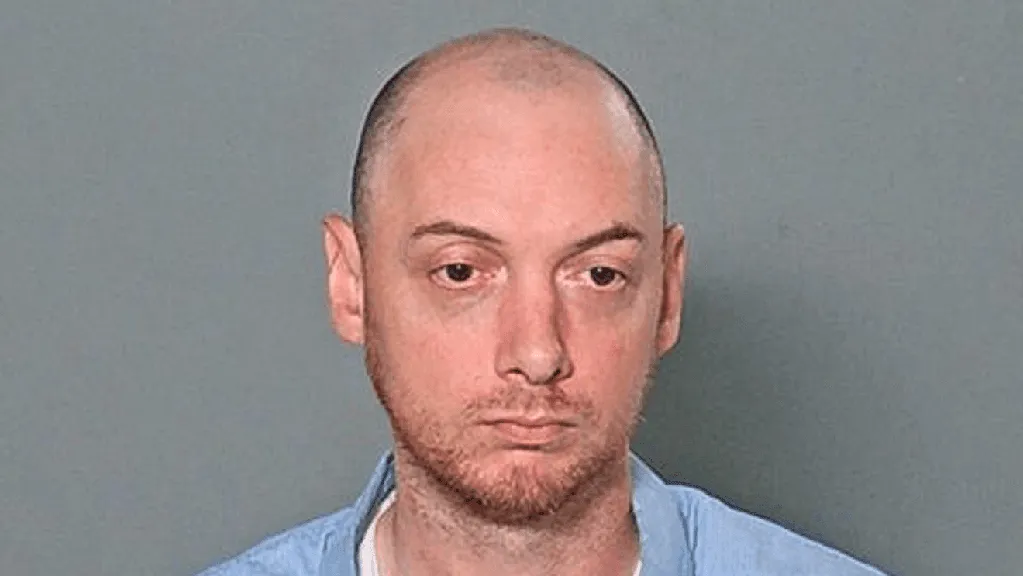
APPLETON (WLUK) - Prosecutors will drop drunk driving charges against a man whose conviction was overturned by the Court of Appeals when it ruled officers erred when they directed hospital staff to do a blood draw without a warrant when the on-call judge wasn't available to authorize the sample.
The appeals court decision, issued in February, directed Brandon Taff's case back to an Outagamie County judge for further proceedings. An April 28 hearing is scheduled.
However, District Attorney Melinda Tempelis and the defense filed a joint stipulation Thursday, asking for the case to be dismissed due to the now-lack of evidence in the case.
Taff was was pulled over at 1:13 a.m. on May 10, 2019, in Grand Chute by the Wisconsin State Patrol. He told them he had had five beers at a Green Bay-area casino, but stopped drinking about 90 minutes before he was pulled over. After a field sobriety test, he was arrested.
Taff was taken to the hospital for a blood draw. He refused. The troopers made nine calls to the on-call judge, trying to get a warrant, but were not successful. Concerned that the passage of time would dissipate the evidence in his blood, the troopers told hospital staff to do the blood draw without the warrant.
"Taff's blood alcohol concentration (BAC) was .044 g/100 mL, which is below the legal limit. The blood sample also revealed 4.7 ng/mL of Delta-9 THC. The State charged Taff with OWI and operating a motor vehicle with a restricted controlled substance in his blood, both as a third offense," the ruling explains.
Taff challenged the blood draw, but a judge upheld it. Taff was convicted. He then appealed.
In a 14-page ruling issued Feb. 17, the appeals court overturned the decision.
"In this case, based on the totality of the circumstances, we conclude that the troopers' actions were unreasonable and that exigent circumstances did not justify Taff's warrantless blood draw. As we outlined above, it is undisputed that Sasse read Taff the Informing the Accused form at 2:00 a.m., and Taff refused to consent to the blood draw. Despite his refusal, the troopers delayed starting the warrant process until they arrived at the hospital, approximately 15 minutes later. As a result, the warrant process did not begin until roughly one hour into this 'run-of-the-mill OWI investigation,'" the ruling states.
"Once at the hospital, the troopers attempted to contact the judge over a period of about 30 minutes. When they concluded that the on-call judge was unavailable, approximately one and one-half hours remained of the three-hour evidentiary window pursuant to WIS. STAT. ? 885.235(1g). Nevertheless, the troopers made no further attempts to secure a warrant by, for example, continuing to attempt to contact the on-call judge; traveling to that judge's home to attempt to obtain a search warrant; consulting with a supervisor; calling dispatch again to find out if there was a procedure to be used when the on-call judge was unavailable; calling another judge in the jurisdiction; or pursuing any alternative means to obtain judicial authorization," the ruling states.
The judge's unavailability didn't automatically create exigent circumstances to allow the blood draw without the warrant, the court ruled.
After the ruling was issued, the Wisconsin State Patrol told FOX 11 it would use the case as a training example for officers.
Taff originally was sentenced to 50 days in jail, placed on probation for a year and had his driver's license suspended for two years, court records show.
"Keeping impaired drivers off Wisconsin roadways is central to our department's public safety mission. Wisconsin State Patrol officers receive extensive training, and the division continually reviews judicial case outcomes to identify lessons learned and integrate those insights into ongoing training efforts. Law enforcement officers must regularly make split-second decisions in the interest of community safety. These decisions must be carefully balanced within the framework of evolving legal standard,"the DOT said.
Speaking in general terms about policy, Outagamie County Judge Carrie Schneider -- the presiding judge for the county and chief judge for the region - told FOX 11 that the county's procedure says if the on-call judge doesn't answer, the officers should move on and call another judge on the list. Additionally, the sheriff's department dispatch has a copy of the list for reference, should officers need it.
In smaller counties with fewer judges, or sometimes just one judge, judges from other counties cover for them, Schneider said.
In Brown County, the judges also rotate duties. A cell phone and tablet are provided to the on-call judge. If they cannot be reached, the presiding judge is usually the next one called, a county official told FOX 11.