The big Wall Street banks released their financial results this week, and the continued growth of private credit seemed to be on everyone's mind. Bloomberg finance reporter Hannah Levitt explains what the fuss is all about. Plus, a company that claims it keeps school buses safe, and how AI is changing hiring at the big consultants.
Private credit was the hot topic in the first quarter this year -- is it about to get messy? -- and as the largest lenders reported their earnings this week, executives took turns telling investors they're really not that worried about it. JPMorgan Chase & Co. Chief Executive Officer Jamie Dimon, Wall Street's elder statesman, said on a conference call that the $1.8 trillion market, as big as it is, is still small enough that it won't pose any significant risk to the financial system. His peers universally echoed that sentiment. In other words, don't be all, like, uncool.
US Treasury Secretary Scott Bessent got the message. At an event on Wednesday, he said none of his department's work on the topic has indicated a systemic problem, and "even Jamie Dimon" agrees.
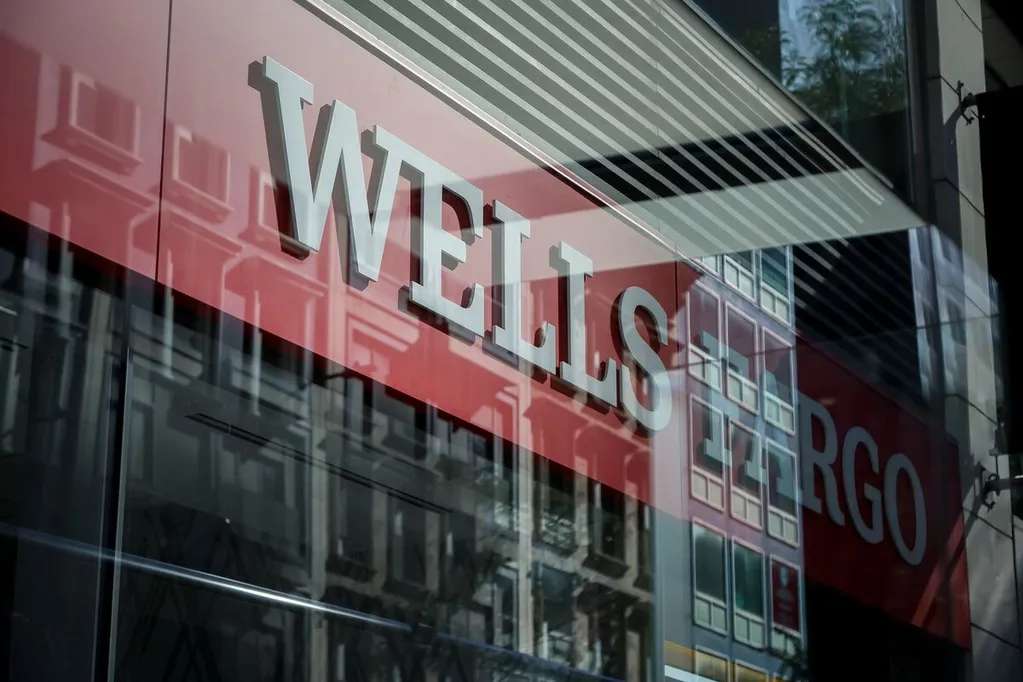
One interesting through line here is that the banking industry's top brass clearly believe they have the edge when it comes to lending. That shows up in two places: First, the biggest banks lend (a lot) to private credit shops. As they detailed their exposures this week -- about $50 billion at JPMorgan, $36 billion at Wells Fargo, $22 billion at Citigroup and $20 billion at Bank of America -- they all trumpeted their prowess in making those loans. There was lots of talk of cushions and structural protections that will insulate the banks if things go south. Citigroup Inc. even noted that it's had zero losses over the life of its portfolio.
Part two is that there's a vibe of: Private credit's woes could be banks' opportunities. After all, most of these firms have been in the business of lending for well over a century -- some even hundreds of years -- while much of the private credit industry as it exists today came into existence only after the 2008 financial crisis. Now that the asset class is "having a learning moment, we'll call it an adolescent moment," Morgan Stanley CEO Ted Pick said on a conference call. Dimon said that when the credit cycle turns, "people may be surprised that some of the players aren't particularly good at it," and the banks would ultimately end up getting that business back.
Goldman Sachs Group Inc.'s asset manager raised a healthy $10 billion for its private credit strategies in the first quarter, CEO David Solomon pointed out on its earnings call. Then he noted that Goldman's "30-year track record of performance in private credit is characterized by rigorous underwriting, selective deployment and disciplined portfolio construction."
This is surely not the last we'll hear on this matter -- as Solomon put it, "there's going to continue to be some noise." But the resounding message from bank executives at this point is: It's fine.
Moving beyond private credit, bank earnings across the board were pretty good. Here's a crazy stat: Bank of America, Citi, Goldman, JPMorgan and Morgan Stanley all notched their best equity-trading quarter ever, pulling in almost $20 billion combined.
They have President Donald Trump to thank. Since returning to the White House early last year, his policy moves have spurred wild market gyrations that have translated to record after record. And it's not the first time the chaos in Washington has paid off for traders. Before this week, Goldman's best-ever equity-trading quarter was the last three months of last year. For Morgan Stanley and JPMorgan, the hauls from the first quarter of last year were the numbers to beat.
The war in Iran was, of course, behind market swings in recent weeks, and bank executives outlined the reverberations across the economy. The main message was that consumers are still strong, but rising gasoline prices could start to pinch. Bank of America, for example, said customers’ spending on gas jumped 16% in March after the war increased oil prices. The ultimate effect remains to be seen -- or, as Wells Fargo & Co. CEO Charlie Scharf said, “the duration and severity will be driven by the level and duration of higher oil prices.”
In Brief
- The US and Iran are closer to extending a ceasefire and restarting negotiations about a longer-term peace deal, the Associated Press reported, even as their standoff intensifies over the Strait of Hormuz.
- India's biggest companies are struggling to break Beijing's grip on the production of batteries, EVs and critical minerals.
- New York Governor Kathy Hochul is backing a new tax on second homes in New York City worth at least $5 million as a way to raise cash for the city's struggling budget.
Every weekday morning outside the 16-story apartment complex at 1400 East-West Highway in Silver Spring, Maryland, students step onto big yellow buses that take them to school. It's not a particularly pleasant spot: The building faces a fenced-off construction site across six lanes humming with Washington metro-area commuter traffic.
But this is an important place for Montgomery County. In addition to students, the buses are collecting valuable data every time they stick out their stop signs ("stop arms," in transportation lingo) and flash their red lights. Artificial-intelligence-powered cameras attached to these buses record vehicles that fail to halt -- vehicles, in other words, that violate the state law requiring all lanes of traffic to halt for a stopped school bus with its stop arm extended. The footage is sent to local police for review. If they decide the law was broken, the driver receives a $250 ticket in the mail. There are a lot of scofflaws near 1400 East-West Highway. More than 11,500 tickets have been issued here over the past decade, making it among the county’s most heavily ticketed stops.
Yet critics of BusPatrol say municipalities are getting a bad deal. In Montgomery County, after more than 375,000 tickets and $92 million in issued fines, there’s been little reduction in violations and no evidence of a decline in collisions near stopped school buses, according to county records and Bloomberg Businessweek’s review of local news reports and stop-arm camera footage. The county has done little to change the infrastructure at its most ticketed stops; it’s repeatedly said there are no safety concerns at most of these locations. Because of the financial structure of the program, the county transferred millions to its stop-arm technology providers for the first three years and kept no revenue itself while also spending hundreds of thousands of tax dollars to review the AI’s work. Meanwhile, there’s evidence the program is heavily burdening residents who either can’t or don’t pay the fines.
AI Valuations
$800 billion
That’s how high Anthropic’s valuation could go after the AI startup received several offers from investors for a new round of funding—overtures the Claude maker has so far resisted. Anthropic has also discussed a public listing as soon as October, and investors have been impressed by the company’s strong revenue growth.
First Jobs
On their first day as students at Princeton University, Liv Bobby and Ezekiel Akinsanya met at an ice cream social and realized they shared an aspiration: Both hoped to get hired by a topflight management consulting firm like McKinsey & Co.
The following year they co-founded an undergraduate consulting club, and both did summer internships in the industry. But with both graduating this spring, Bobby is off to work on Wall Street in the fall, while Akinsanya is looking to return home to England and land a job with the UK government or military. “I want to be integral, and right now it’s not very clear that you will be integral as an analyst anymore,” Akinsanya says. “Those entry-level roles are maybe slowly becoming obsolete.”
The big consulting firms harvest thousands of fresh graduates each year—estimates range from 10,000 to 45,000 entry-level hires depending on the role—offering pay prestige and connections that can pave the way for partnerships or C-suite roles down the line. But the industry is still course-correcting from a post-pandemic hiring binge that led to delayed start dates layoffs and sluggish salary growth making applicants wary. Meanwhile consulting firms that rely heavily on government contracts are reeling from DOGE cutbacks and foreign-born job applicants are worried about changes to US immigration and visa policies.
Matthew Boyle looks at how AI is changing the way firms like McKinsey BCG and Bain think about hiring now.
"I'm playing catch-up with retirement savings after having to withdraw money twice during the last recession. Paying off student loans made it hard to save more. I feel that I'm back on track but won't meet the retirement number some guidelines say I need. I'll retire in another country to offset costs."
Retirement planning and saving can feel like a long climb toward a distant summit, one where the paths you choose along the way -- saving, investing, managing taxes, shaping your lifestyle -- influence how arduous your journey will be. This guide is designed to help you stay on track at every age and stage.