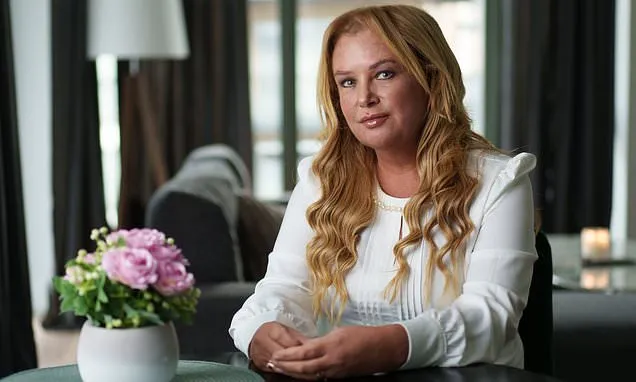
Every day, Nikki Hayes gets up at 6.30am. She has a daily routine that she sticks to that involves her work as a producer and a presenter on East Coast FM and volunteering with a Christian youth group.
No one is more surprised than Nikki who, just a few short years ago, was homeless and walking the streets of Dublin with a criminal charge hanging over her head - all due to alcohol addiction.
At her lowest ebb, she was drinking five to six bottles of wine a day, not wanting to spend one second sober. What it took for Nikki to get her life back was the love and support of friends and family, which led to addiction treatment in the specialised centre Tiglin.
Hers is a much-publicised battle through the lens of court reports, which documented how she ended up falling prey to nefarious people who used her as a money-laundering mule.
But it is also a story of hope for as she sits in her apartment, there's a contentment Nikki has that she never had before. On March 5, as part of International Women's Day, Nikki - whose real name is Eimear O'Keeffe - will speak as part of the Women Leading Change event. It wants to highlight the strength, resilience and leadership of women who are making a difference in their communities and beyond.
'Rock bottom didn't break me - it shaped me,' Nikki says of her role in the event. 'Being able to use my darkest moments to help others and find their path to recovery is the most amazing gift I could ever receive.'
Speaking to Nikki today, it's still unfathomable that this golden girl of 2000s radio from 2FM to Spin would have fallen so far, so quickly. It is only the two-and-a-half years of intensive treatment that has helped her pinpoint things, including a diagnosis of personality disorder.
'I always felt socially awkward, like I never fitted in,' she says, revealing that she was treated for anorexia as a teen while also self-harming from the age of 15.
'My father was an alcoholic until I was four and those kind of behaviours would have been in the house while I was growing up.'
'So when I found my first drink when I was 11 and realised it made me feel a little bit more socially acceptable, I started relying on alcohol in different situations and it got progressively worse.'
In college there was a party scene and clubbing and then, as Nikki became a successful DJ, there was more alcohol and nights out attached to her industry. Then, she says, things went wrong in her life.
'After my dad died, I went on a bender for five weeks; nobody could contact me; my phone was off and people thought I was missing,' she says. 'It was chaos, but it always happened around some sort of life event.'
Nikki had got married to Frank Black and they had a daughter Farah, though they separated after two years. For a while there was joint custody but as Nikki's drinking got worse, it was decided that Farah would go and stay with her dad.
'Myself and her dad had split up anyway because of my drinking,' Nikki says. 'I had postnatal depression after having Farah. We shared custody, but my drinking was getting heavier and things were starting to go amiss. It was obvious that I wasn't coping so a decision was made that she would go and stay with him and give me a chance to get my act together. Unfortunately I didn't, things got worse, so she stayed there.'
All this time Nikki was working in radio, describing herself as a functioning alcoholic. Then Covid hit.
'Suddenly I didn't have any accountability,' she says. 'I didn't have to show up to work as we were working from home. Farah had gone to live with her dad, so all these responsibilities that were keeping me functioning were gone.'
Even Farah's departure wasn't enough to stop Nikki drinking.
'I was too far gone at that stage,' she explains. 'My family had completely disowned me; they took a step back. Later they told me it was because they couldn't watch me tearing myself apart. I'd drink until I passed out and then start drinking when I woke up again.'
'I couldn't even bear to be sober for two seconds. My friends stopped talking to me because I was hanging around with some really not-nice people.'
'I was drinking at home because I was broadcasting from home, so I inevitably then lost my job, then I lost the house. I literally had lost everything and I had nobody around me to support me except these people who took everything I had and left me for nothing.'
These individuals are the ones who take advantage of the vulnerable.
'The guards would have known who they were,' she says. 'It's extremely obvious that they weren't desirable people but I was so deep in addiction and I had nobody and I stupidly believed that they were friends.'
'They literally took everything. I sold my car, any belongings I had, everything was gone. I was left with nothing.'
Although she had dabbled in cocaine and was taking anti-psychotics prescribed by her doctor, Nikki's main issue was alcohol.
It was one of these people at a party one night who persuaded Nikki to hand over her bank account number. They lodged €15,000 into her account as part of a money-laundering scam that Nikki was oblivious to.
She was arrested and charged and by the time it hit the papers and went to court, the former 2FM golden girl was homeless and living on the streets.
'Some of the days I was on the streets, some days in hostels,' she recalls. 'I remember I was due up in the Criminal Courts of Justice, and I took a really bad fall from being under the influence and ended up hospital and then that was in the papers the next day. It was like my ugliest, darkest secrets were being spilled out because I wasn't in control of my life. I see the photos of me turning up to the court and how badly bloated I was from drink and how bad I looked. Each time I did that I was chased by photographers up and down the road. It was just horrendous.'
In the midst of her drinking, Nikki spent a month in hospital due to acute pancreatitis and doctors thought her liver was failing. Even so, she kept drinking.
'I was so full of shame and guilt; I was being propelled by that,' she says. 'I was on the streets for three and a half months.'
'It's like you're constantly walking around in a daze - I guess you are because you're still drinking or using. For me it was thinking about the next thing - where am I going to sleep tonight? Where am I going to go to toilet? Where am I going to get my lunch?
'There are a lot of services around the city, and you will learn to access them, but it takes a while. I just used to walk and walk. I remember having a pair of cheap Ugg-style boots and they were so worn and wet and my feet were covered in blisters.'
Often she'd travel all night on the 24-hour buses just to have a safe space; sometimes she'd find herself sleeping on a park bench. For her family, it was a difficult time as, even though they had cut contact, they were terrified about what would become of Nikki.
'My mum says she was living on a knife edge, that she constantly thought when her door went, it was the guards to say I was dead,' she says. 'But I think no matter how much people tried to help, I was so far gone that I think I had to end up on the streets.'
It was Nikki's sisters who eventually got her to seek the help she needed after promising to pay for tourist hostels if she accessed treatment.
Her sister Caroline knew someone in the addiction centre Tiglin and asked if Nikki could try it. She was accepted into the programme and spent 18 months in their care.
During this time, her money-laundering case ended up in court but the gardaí who had charged her were looking after her and were lovely from the start.
She pleaded guilty to possessing €10,000 as a proceed of crime and two further counts of possessing €2,600 and €2,400 were taken into consideration. The judge noted her guilty plea and it was felt that Nikki was vulnerable and a victim at the time the money was put into her account.
The money was paid back; her former boss Kevin Brannigan from Classic Hits spoke to the judge on her behalf plus a kind friend agent Joanne Byrne paid the balance of her court case.
This kindness, she says, floored her. 'I thought nobody cared about me; nobody wanted me; I felt so ashamed and disgusted with who I was,' she says.
Tiglin offered her another chance at life. She spent nine months in a residential programme with routine therapy counselling.
'Basically they break you down to try and rebuild you,' she says.'It's intense so you live on site.I didn't have any visit days until one day before Christmas.My sister said she was going to come and visit me and when I looked out the window,I saw my mum come up the driveway with her.I hadn't seen her in eight years so that was massive.
'My daughter didn't come to visit because we thought it would be too traumatic for her to come down to the centre;so I didn't actually see her until I moved to Greystones for aftercare.'
After living in a transition house in Greystones,Nikki has since moved into her own apartment again in Swords.She is still supported by wonderful people from Tiglin and is rebuilding her life.
Sean Ashmore,the chief executive of Sunshine 106,wrote to her while she was in treatment and offered to help Nikki get her career back on track.
'I lost a lot of friends and not all of my family are back in my life but I have amazing friends who never left my side,'she says.
Nikki says she is still rebuilding.
'You're not going to do that much damage and just come out back on top,'she says.'Every day I'm working at my recovery which has to come first,because if I don't have that,I won't have anything else.I know what I can lose because I lost everything.'
She is slowly mending bridges with her mum, who is now 82, and with Farah, who is now 12.
'Farah was very hurt - her mum disappeared and that's a trauma that has to be worked through,' she admits.
'But we have a beautiful relationship. We spend loads of time together and we are rebuilding.'
'But I'm not even a year out of treatment. People seem to think that you click your fingers and everything's back. That doesn't happen when you've brought trauma into people's lives. You have to just be appreciative of every second you get with them and a chance to rebuild.'
The treatment she has now received from Tiglin and the diagnosis of a borderline personality disorder means Nikki is sober and not self-harming any more either. She wants others to know that having a better life is still possible.
'I have days when I struggle; I'll have days when I cry because recovery is a daily thing. I have a peace now which I've never had before,'she says admitting that there is something freeing about everyone knowing your darkest moments.
'I've nothing to hide;the scars are out there;the ugliness is out there.
'Your life can't get any worse than mine has been over the last couple of years so I just feel peace knowing that if I keep doing the right thing it can only get better.'
'Life is just normal and I appreciate the normal things.'
'I'm doing my meetings;working with my sponsors;doing my 12 steps;doing everything that I'm supposed to do because if I don't do that and drop ball I know back park bench at back Jervis Street don’t want go back there.'
Women Leading Change, an International Women's Day Event with Nikki Hayes, Mary Byrne, Vera Twomey and Mary Gavin is on Thursday, March 5, at 11am in Handball Alley, Sackville Avenue, Ballybough, Dublin. Admission is free