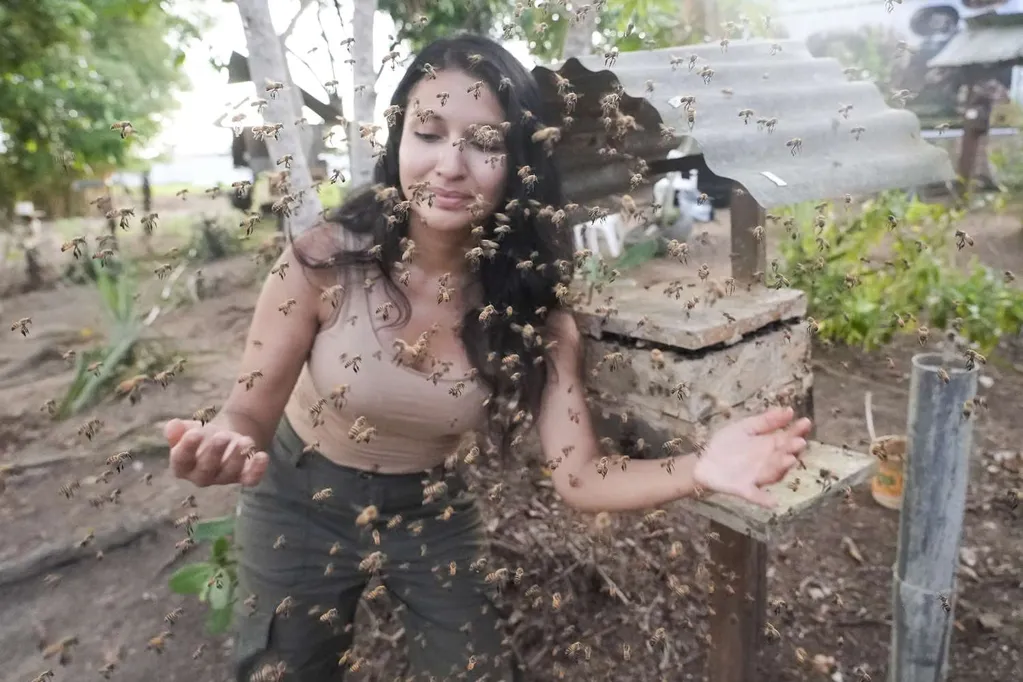
A Peruvian scientist and her team are working together to make sure stingless bees are around for generations to come.
Rosa Vásquez Espinoza, founder of Amazon Research Internacional, and Constanza Prieto, Latin American director at the Earth Law Center, have been working together to make sure stingless bees in the Amazon have the right to exist, according to The Guardian and CNN.
Espinoza, who refers to the insects as "the most efficient pollinator," told CNN in a recent interview that the bees are keeping the important ecosystems of the Peruvian Amazon alive and regenerating.
However, deforestation, along with climate change and pesticides, are some of the many challenges the insect species faces.
"Globally, we have around 600 documented species of stingless bees. In Peru, we know we have at least 175 species. That positions Peru as such a biodiversity hotspot for stingless bees, which means we need to be driving the change and the actions to help bring back the stingless bee," she said.
Espinoza, along with others like Prieto, is advocating for legal protections for the stingless bee due to its contributions to the surrounding environment.
"Some of our world's most important pollinators are under threat, but now a gentle revolution is buzzing: Peru could grant stingless bees legal #NatureRights to exist and flourish, setting an example for other countries to follow! Indigenous communities are leading the charge -- let's rise with them," she captioned a Dec. 12 Instagram post.
Her efforts have paid off. In the past few months, ordinances were passed in two Peruvian regions to protect bees and support their growth, marking some of the first legal rights for insects worldwide, according to The Guardian.
"This ordinance marks a turning point in our relationship with nature: it makes stingless bees visible, recognises them as rights-bearing subjects, and affirms their essential role in preserving ecosystems," Prieto told the outlet.
Despite their name, stingless bees do have stingers; however, they are not designed for defense.
In research shared by Espinoza and colleague Cesar Delgado in December 2023, the pair said,"Stingless bee honey has a long history of traditional use in medicine, food, religion, and cultural activities worldwide. In the Peruvian Amazon, indigenous and non-indigenous communities have utilized this honey for centuries to treat various diseases."
At least 14 diseases were said to be treated using stingless bee honey.
"I was seeing hundreds of medicinal molecules, like molecules that are known to have some sort of biological medicinal property," Espinoza said of their research, per The Guardian. "And the variety was also really wild - these molecules have been known to have anti-inflammatory effects or antiviral, antibacterial, antioxidant even anti-cancer."
Apu Cesar Ramos, president of EcoAshaninka of the Ashaninka Communal Reserve, added,"Within the stingless bee lives Indigenous traditional knowledge passed down since the time of our grandparents."
"The stingless bee has existed since time immemorial and reflects our coexistence with the rainforest," Ramos said.
In December 2024, Congress approved a bill by María Acuña Peralta that protected stingless bees and promoted beekeeping in Peru.
Satipo became the first municipality to pass an ordinance granting legal rights to stingless bees in October, per The Guardian.