Human remains that were found in Golden Valley have been identified as a man who was reported missing in 1998, using DNA technology.
An unsuspecting family searching for seashells on a beach four years ago found human remains that have since been identified as a banker from California who had been missing for nearly three decades.
The remains belong to Walter Karl Kinney, a former banker who was 59 years old when he went missing in 1999 while living in Santa Rosa, according to the DNA Doe Project, a nonprofit helping officials identify John and Jane Does.
This is the second time his remains have been identified, the DNA Doe Project said. Someone found the first set of partial remains belonging to Kinney the same year he went missing, according to the nonprofit's news release. The second set of partial remains was found 23 years later, in 2022.
Investigators identified the remains as Kinney's using genetic genealogy and a news article about earlier remains found nearly 30 years ago.
As of Tuesday, March 31, Kinney's cause of death is undetermined. The case is closed unless officials recover more of his body that can help investigators determine how he died, the Sonoma County Sheriff's Office told USA TODAY.
Here's how his identification unfolded.
When was Walter Kinney last seen?
Kinney was last seen on Aug. 10, 1999, the DNA Doe Project said in its release. That same year, the remains washed up in Bodega Bay, about 27 miles west of Santa Rosa.
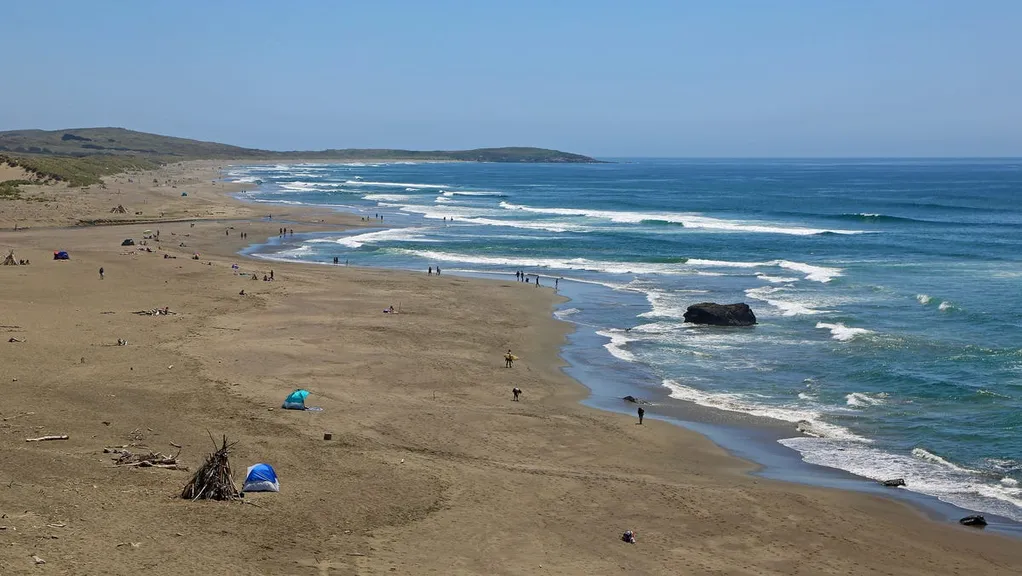
On June 17, 2022, 23 years after Kinney disappeared, a family searching for seashells found a long bone sticking out of the sand on Salmon Creek Beach. According to the DNA Doe Project, the bone the family found had surgical hardware attached to it. After a pathology examination, investigators learned the bone was possibly a tibia, or shin bone.
Investigators searched Salmon Creek Beach but didn't find additional remains. The Sonoma County Sheriff's Office went to the DNA Doe Project for help identifying the remains because the nonprofit has genetic genealogists who work for free to identify John and Jane Does.
The nonprofit was able to take the remains, develop a DNA profile for the unidentified person, and upload it to the DNA database GEDmatch in January 2026.
After the DNA was uploaded to GEDmatch, a team of volunteers began working on the case, learning that the unidentified person likely belonged to a family that had moved from the East Coast to the San Diego area. The team came across Kinney's name.
"Though Kinney was born in San Diego, he had later moved to Santa Rosa, not far from Salmon Creek State Beach," the DNA Doe Project wrote in its press release.
2003 news article led to 'critical breakthrough' in identifying remains
Kinney's family last spoke to him in August 1999, and he was last seen in Santa Rosa, the Sonoma County Sheriff's Office confirmed to USA TODAY.
His family said it was common for them to go long periods without hearing from him because he had a history of alcoholism and legal issues that led to stints in jail, per a 2003 Press Democrat article sent to USA TODAY.
Kinney last checked in with his parole officer in early August 1999 and checked out of a homeless center he was registered at on Aug. 10, 1999, per the article.
The following month, in September 1999, a partial human leg and foot had washed up on the beach. There was also a size 12 brown leather men's Rockport ProWalker shoe and a custom orthopedic insert, the Press Democrat reported. At the time, news coverage about the foot circulated, but Kinney’s mother pushed the possibility that it could belong to her son far out of her mind.
Then, in 2003, Kinney’s daughter was looking for him because he had an inheritance that he needed to claim, according to the Press Democrat article. When she got on the phone with her grandmother, Kinney’s mother, she learned about the newspaper article about the foot on the beach.
His daughter then contacted the coroner and authorities in 2003, who worked to see if the foot matched Kinney’s. Since authorities had the orthopedic shoe insert and knew Kinney had missing bones in his foot, they checked local hospitals to see if he had been treated locally. They worked with a local radiologist, who used X-rays to confirm that the foot found on the beach belonged to Kinney, per the Press Democrat article.
By early 2026, team members from the DNA Doe Project suspected Kinney was their Salmon Creek Beach John Doe, the nonprofit told USA TODAY. The team then found a "critical breakthrough" in the case - the 2003 news article about investigators identifying the earlier remains as Kinney’s.
The DNA Doe Project realized there could be a connection between the remains found in 1999 and 2022, and sent a lead to the Sonoma County Sheriff's Office. Investigators were then able to confirm that the remains found in 2022 at Salmon Creek Beach belonged to Kinney.
"We value this partnership as we continue working together to identify remains found in Sonoma County,"
'This world was just too harsh a place for him'
Traci Onders, an investigative genetic genealogist and team lead at the DNA Doe Project, said in the news release that Kinney’s case is not like others they’ve worked on.
"This case was unusual - it's not often we see someone end up as a John Doe twice,"
In the 2003 Press Democrat article, Kinney’s daughter said her father mailed birthday cards to loved ones, no matter what he was going through. He also loved the coastline and used to take her camping every weekend.
He had been married at least twice and had two brothers, although the siblings didn’t stay in touch. His daughter said she had to cut ties with her dad once his drinking became an issue, per the article.
She described the former banker as “smart, sensitive, almost to a fault,” and said, “This world was just too harsh a place for him.”