Emily Mae Czachor is a reporter and news editor at CBSNews.com. She typically covers breaking news, extreme weather, and issues involving social justice. Emily Mae previously wrote for outlets like the Los Angeles Times, BuzzFeed, and Newsweek.
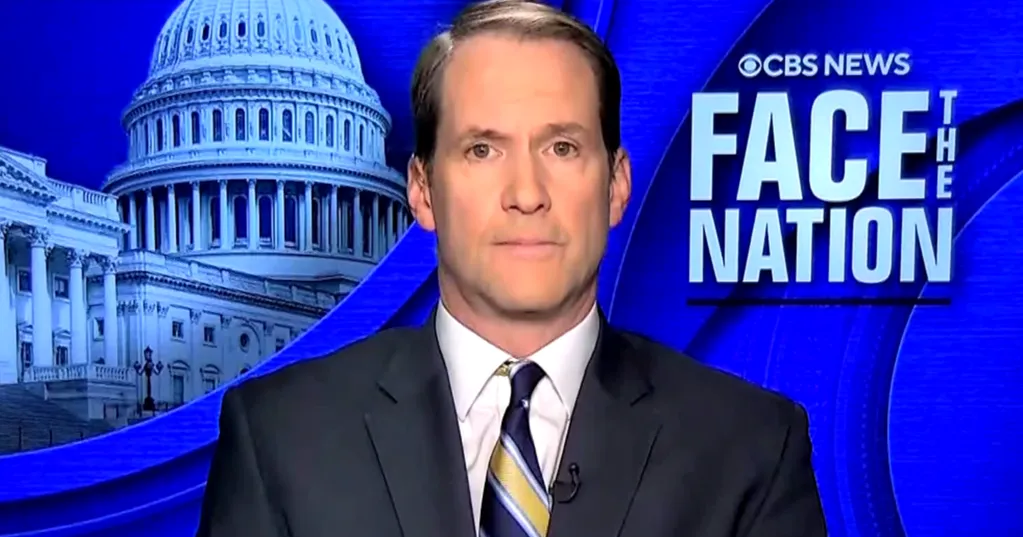
Democratic Rep. Jim Himes, the top Democrat on the House Intelligence Committee, on Sunday accused President Trump of "flat-out lying" about negotiating with Iran last week amid market turmoil and the ongoing war.
"Last Sunday, he realized, 'I've got a financial cataclysm in the market,' so he just made that statement up," Himes said on "Face the Nation with Margaret Brennan" after Brennan asked if he thought Mr. Trump hadn't been engaging in diplomacy because he hadn't been briefed as a member of Congress.
One week ago, the president announced that he would push a deadline for Iran to reopen the Strait of Hormuz to international shipping after he had threatened to "obliterate" Iran's power plants if the country failed to concede to the U.S. demand. Iran had threatened to attack U.S. and Israeli energy and infrastructure throughout the Middle East in response to that ultimatum while stock futures had signaled close to a 1% decline and oil prices soared to $112 a barrel. Stocks rose and energy prices dropped in the immediate wake of the announcement, but neither pattern held up.
"The Iranians have now realized they have the reins," said Himes. "Gasoline prices are up more than $1 a gallon. They have realized, 'Holy smokes, we've got a lot of leverage here.'"
Iran's Foreign Ministry characterized Mr. Trump's sudden move to delay the deadline as "part of efforts to lower energy prices and buy time for the implementation of his military plans," Iranian state media reported shortly after his announcement, which the president insisted could lead to swift resolution of the conflict. His initial five-day pause in strikes on Iran's energy infrastructure was later extended through April 6 in the U.S., or April 7 local time in Tehran.
Mr. Trump went on to dispute additional Iranian state media reporting that said talks were not taking place with the U.S. and claimed last week that his administration was negotiating with a "top" Iranian official, but not the supreme leader, Ayatollah Mojtaba Kahamenei. But the Iranian Foreign Ministry denied any direct negotiations with the U.S., saying that "friendly countries" had relayed messages to Iran that indicated Washington was seeking talks to end the war.
Several days after Mr. Trump initially said negotiations with Iran were underway, U.S. special envoy Steve Witkoff said the Trump administration had presented Iran with a 15-point plan for a possible peace deal, through Pakistan, which acted as an intermediary. On Sunday, diplomats from Egypt, Saudi Arabia and Turkey gathered in Islamabad, Pakistan, to discuss potentially reaching an end to the war, but neither the U.S. nor Iran are currently at that table.
Egypt's Foreign Affairs Minister Badr Abdelatty said the meetings aimed to open a "direct dialogue" between the U.S. and Iran and Pakistan's foreign minister Ishaq Dar said Sunday that they will host talks between the U.S. and Iran, although neither the U.S. nor Iran have confirmed participation and so far have not been directly involved.
Iran's parliament speaker earlier called the meetings a "cover" for the U.S. and accused the Trump administration of planning a ground invasion in the background.
CBS News has reached out to the White House for comment.