WASHINGTON -- A report from the Democratic staff of the Senate Foreign Relations Committee reveals that the Trump administration allocated over $40 million to deport approximately 300 migrants to nations that were not their countries of origin. This move was part of an effort by immigration officials to fulfill President Donald Trump's directive to expedite the removal of immigrants from the United States.
Led by Sen. Jeanne Shaheen, the Democrats on the Foreign Relations Committee criticized these third-country deportations, describing them as "costly, wasteful, and poorly monitored." The report urges a thorough review of this policy, which they claim is currently shrouded in secrecy.
The State Department, responsible for negotiating these deportation agreements, defended the practice as a component of Trump's broader initiative to curb illegal immigration.
Addressing the issue at a recent Senate hearing, Secretary of State Marco Rubio stated, "We've arrested people that are members of gangs and we've deported them. We don't want gang members in our country," emphasizing the administration's stance on certain third-country deportations.
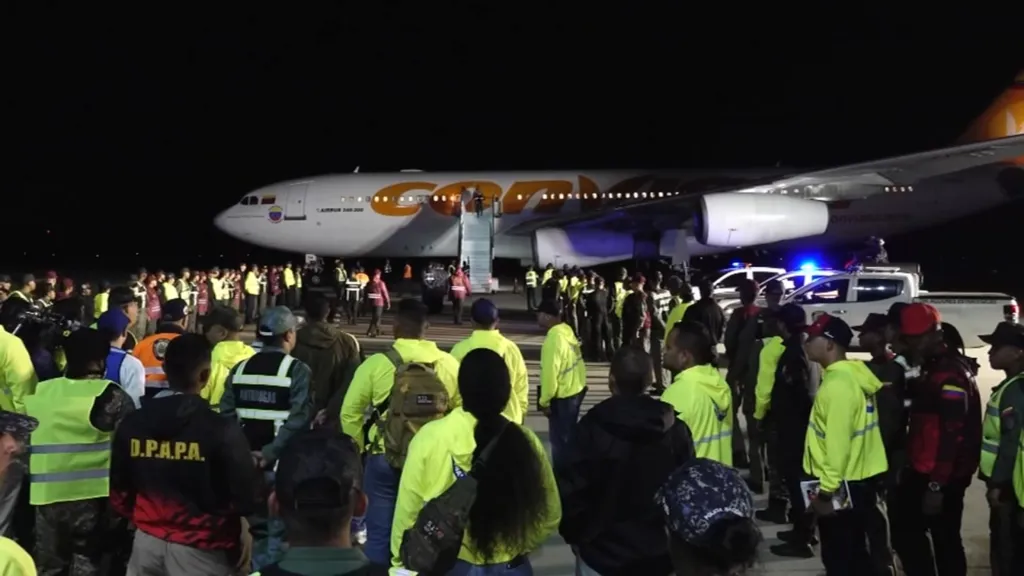
The report noted financial transactions ranging from $4.7 million to $7.5 million paid to five countries -- Equatorial Guinea, Rwanda, El Salvador, Eswatini, and Palau -- for accepting deported migrants. Of these, El Salvador took in about 250 Venezuelans in March of the previous year, while other countries received significantly fewer individuals, with Equatorial Guinea accepting 29 and Palau yet to receive any.
The report's findings cover only a segment of the Trump administration's broader efforts in third-country deportations. Internal documents reviewed by The Associated Press indicate there are 47 such agreements at various negotiation stages, with 15 finalized and another 10 nearing completion.
The administration is also negotiating agreements with countries that will accept U.S. asylum seekers while their asylum claims are processed, according to the internal documents. There are 17 that are at various stages of negotiation, including 9 that have formally taken effect, although the administration claims that the agreements do not necessarily need to be concluded for people to be sent there.
Immigration advocacy groups have criticized the "third country" policy as a reckless tactic that violates due process rights and can strand deportees in countries with long histories of human rights violations and corruption.
During a visit to South Sudan, Democratic committee staff found a gated house with armed guards where deportees were held, including migrants from Vietnam and Mexico.
The Democrats also largely take aim at how wasteful and ineffective the policy may be. It details several instances of migrants being deported to a third country, only for the U.S. to later pay for another flight to return the migrant to their home country.
"In many cases, migrants could have been returned directly to their countries of origin, avoiding unnecessary flights and additional costs," said Shaheen in a statement also signed by Democratic Sens. Chris Coons, Tammy Duckworth, Tim Kaine, Jack Rosen and Chris Van Hollen.
It also remains unclear what benefits the countries may receive - or expect - in return for accepting third-country nationals.
After an agreement was in place last year, South Sudan sent a list of requests to Washington that included American support for the prosecution of an opposition leader and sanctions relief for a senior official accused of diverting over a billion dollars in public funds, according to diplomatic communications made public by the State Department in January.
Shaheen has also questioned a $7.5 million payment sent to Equatorial Guinea that came at the same time the Trump administration was developing ties with the country's vice president, Teodoro "Teddy" Nguema Obiang. He is notorious among world leaders accused of corruption for a lavish lifestyle that has attracted the attention of prosecutors in several countries.