Texas Republicans in two counties who were pushing to count ballots by hand their March primaries are abandoning their plans, citing logistical concerns.
The Dallas County Republican Party said it called off their efforts after struggling recruit enough volunteers and stay in budget. And the Hays County Republican Party said it ran into issues around complying with federal voting laws.
Republicans in both counties will use ballot-counting machines, as they have in the past, for the March 3 primary, which features contests for Senate, House, governor and other down-ballot offices.
In Texas, political parties, not local governments, are in charge of Election Day voting in primaries, a process that gives partisan officials unusual authority over election administration. Democrats and Republicans in the state often administer elections jointly and outsource the tasks to county election officials so their expenses can be reimbursed by the Texas secretary of state.
Last year, Republicans in at least a half-dozen Texas counties considered or made plans to hand-count ballots, a process that would have required them to run their elections separate from Democrats and at the precinct level.
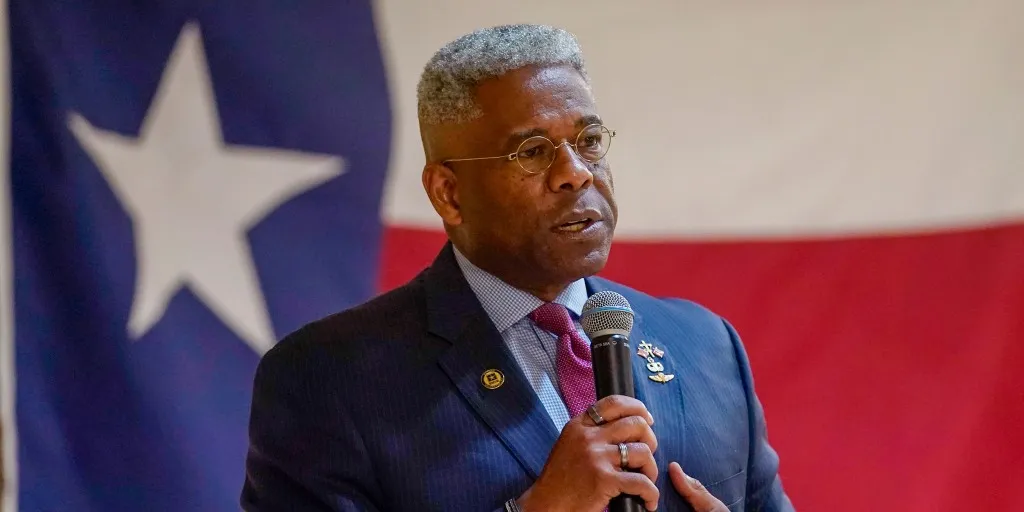
Republicans in Dallas County, the second-largest by population in Texas, had vowed to recruit more than 3000 volunteers to hand-count ballots at the precinct level in March. By the end of the year, they were only able to find between 1,300 and 1,500 volunteers, county GOP chairman Allen West, a former Florida congressman, told NBC News.
West said party officials expect a long ballot, which exacerbated staffing concerns, and that he worried they would run afoul of state law requiring ballots to be counted within 24 hours.
"It's a second-degree misdemeanor if you're not able to get those ballots counted on time and get them submitted and we don't want to put people in that position," West told NBC News.
Money was also a concern. The party raised a half-million dollars to fund the effort, but West they expected they would need as much as $150,000 more. Donors will now be offered a reimbursement, West added.
Hays County Republicans said they couldn't get enough voting machines for disabled voters at their precincts, and that the county wasn't able to get them the voting data that would have allowed them to prepare and consolidate precincts.
"Proceeding without these elements would have placed our party and voters at significant legal, financial, and operational risk, and could have undermined the very integrity we have been striving to defend," county party chairwoman Michelle M. López said in a letter on Dec. 22.
Voting experts have long warned that hand-counting ballots is error-prone, slow and costly. But President Donald Trump and other Republican activists have seized on the method, touting false claims of fraud in election machinery.
López and West told supporters they may revisit the counting method in the future.
"There's a lot of foundational work that was done," West said, adding that the party would consider it again in 2028.
Beverly Foley, a Republican activist who has urged counties to hand-count ballots, said Denton County Republicans voted against using the method this March.
Republicans in Gillespie County and Eastland County will still hand-count their ballots, according to Eastland County GOP chair Robin Hayes and a precinct chair in Gillespie, Tom Marschall.
"I am working on ordering ballots, confirming election judges, and alternate judges, and continuing to train hand counters," Hayes said in an email.
Foley said federal requirement that every polling site have a voting machine for disabled voters has emerged as a significant barrier.
Texas law requires primaries where ballots are counted by hand to be run at the precinct level, leaving Republicans who want to pursue the method scrambling to find enough machines.
"All of a sudden, when you're trying to have the Democrats over here doing their election and the Republicans over here," Foley said. "There's only so many machines."