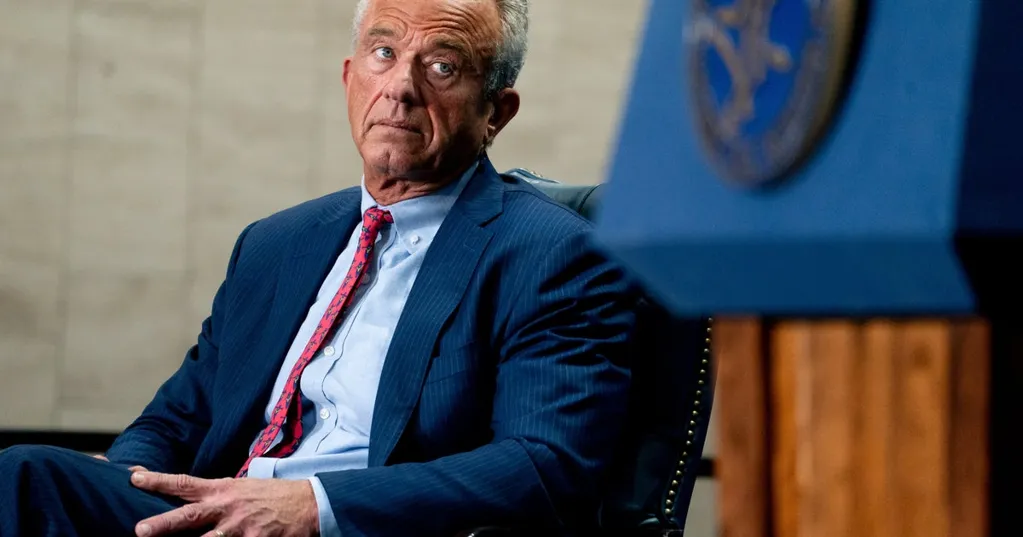
At a publicity event for his Make America Healthy Again healthy-eating campaign, Health and Human Services Secretary Robert F. Kennedy Jr. suggested that Americans purchase "cheap cuts" of meat instead of more expensive steak in light of the rising beef prices throughout the country.
At the MAHA event, Kennedy said, "If you buy a Porterhouse steak or a strip steak, it is gonna set you back. You can buy liver or the cheaper cuts of steak that are very, very affordable."
The nod to the liver is a surprising one to many people for more than one reason.
While the ingredient is more prominent in certain countries, such as in Egyptian cooking, and is sometimes served alongside onions on diner menus throughout the U.S., it's not a protein that most Americans cook regularly -- if at all.
And the emphasis on "cheap" foods feels ironic in an increasingly unaffordable country, experts told HuffPost, where the richest of Americans receive tax cuts while lower-income Americans lose health care and food assistance as funding for Medicaid and the Supplemental Nutrition Assistance Program, also known as SNAP, is slashed.
While Kennedy can spout off sweeping guidance encouraging people to eat more cheap liver, the reality is much more complicated than that. Plus, there are some health facts folks should know before going all in on liver. Here's what dietitians say:
"Liver can absolutely be a nutrient-dense food," said Sam Previte, a registered dietitian, intuitive eating counselor and founder of Find Food Freedom.
"It's rich in protein, iron, vitamin A, B12, folate and many other micronutrients," she added.
"Our body loves, loves, loves variety, and all of these micro and macronutrients have such specific jobs in our body," said Previte.
"So, I would say the risk here is really if we're pumping one sort of protein, aka liver, then we are really missing out on all of these other great proteins," Previte added.
According to Abbey Roberts, a registered dietitian and owner of Fork Diet Culture, it's not generally recommended for folks to consume liver daily or multiple times a week because of its very high levels of vitamin A and copper.
"Vitamin A is a fat-soluble vitamin, and so we can reach vitamin A toxicity ... when consuming large amounts of liver or consuming liver pretty consistently throughout the week," said Roberts.
This can cause nausea, headaches, bone pain and in extreme cases, liver damage and vision issues, she said.
Copper toxicity is also a concern, said Roberts.
"Even in a three-ounce serving, it's providing over 1,300% of your recommended daily intake of copper," she said.
Nausea, vomiting, diarrhea and abdominal pain are all among the signs of copper toxicity.
This doesn't mean that eating liver here and there will cause health problems. Once again, it can be a nutrient-dense food choice.
But eating very high amounts of it can be a problem. This is particularly true for folks who follow a supplement-heavy routine or are pregnant, Previte added.
"Liver is high in dietary cholesterol," said Clara Nosek, a registered dietitian nutritionist,"which may be concerning for those who have a history of heart disease or are trying to manage cholesterol levels."
"But considering who is advocating for this protein,it is unsurprising that RFK Jr.recommends eating liver as a more cost-effective alternative as he has been a huge supporter of increased saturated fat intake,"Nosek said.
Kennedy is known for saying things like "we are ending the war on saturated fats" while peddling foods such as beef tallow and whole milk.
Eating a diet that's high in saturated fats is known to be a heart disease risk factor.
More, while cholesterol is a necessary substance in the body, having too much of it can also increase your risk of stroke and heart disease.
To keep cholesterol low, the American Heart Association suggests limiting red meat, full-fat dairy products and fried foods.
Liver is not straightforward to prepare, said Nosek -- it's often suggested you soak it in milk for a few hours to remove its bitterness. It's likely not something you learned how to cook from a parent or recipe influencer online.
It's also a food that's known to be an "acquired taste," said Nosek. (Many folks complain about the texture.)
Roberts added,"Personally,I don't know a lot of people that are super stoked about wanting to eat liver ... I don't know how many people are going to be wanting to add this to their weekly meal plan."
"Is this a recession indicator? Like, what are we doing here?" said Roberts.
"Promoting a not-so-popular protein that is difficult to prepare,while Americans notably struggle to consume fruit and vegetables (foods that objectively taste good) is intellectually offensive,"Nosek said.
"Liver may be easier on the wallet,[but]it assumes culinary skills,time wealth,and resources that many Americans may not have—which is very on brand for MAHA-related solutions,"added Nosek.
Nosek said there's also a dose of irony in Kennedy's recommendation that folks eat more liver.
"The idea that this man is recommending people eat liver,while the current president (who he endorsed)deregulates meat processing times,reduced USDA inspections and rolled back safety requirements—is a level of cognitive dissonance that only MAHA enthusiasts can support,"Nosek said.
"I think this is a really important conversation about affordability and access to food,"Previte added.
"Protein can be very expensive,and right now we know the price of groceries are so expensive,"Previte said.
If food costs are a concern, people may consider increasing plant-based sources of protein like beans and tofu rather than focus on liver.
Beans and plant-based proteins are also affordable.
Previte said you can also purchase shelf-stable proteins like lentils,canned tuna and salmon;peanut butter;other nut and seed butters.
"These are accessible,versatile;can sit on a shelf ...;culturally familiar for a wide range of people,"Previte said.
"Telling everyone to just eat liver is a very interesting narrowed-lens nutrition statement,"noted Previte.
"Nutrition recommendations must be realistic;rooted in evidence-based science;consider average consumer purchasing habits/preferences,"Roberts said
"And off the top of my head,I cannot think of a single person that would be like,'yes,I want to eat so much liver now',"added Roberts.
Many folks took Kennedy's statement about cheaper cuts of meat as a bit "let them eat cake" adjacent. Rep. Nikki Budzinski (D-Illinois) posted a photo on X of RFK Jr.'s face superimposed on Marie Antoinette's body alongside the text "let them eat liver."
Kennedy himself is known to chow down on steak and, as a Kennedy and high-ranking government official, it's highly unlikely that he is pinching pennies at the grocery store.
"The recommendation may feel insensitive given the steps our government has taken to reduce access to a wide variety of foods,"Meehan said.
"With rising costs of food,SNAP cuts and food apartheid,the suggestion to 'eat liver' feels unhelpful for many,"added Meehan.
A lot of people are feeling frustrated with the cost of everything right now, including groceries.
People are also frustrated around the disconnect coming from Kennedy and the MAHA movement as a whole, Roberts noted.
"Them telling us just eat these things ... [liver] is cheap compared to the red meat cuts that we're telling people to eat more of while also not acknowledging the higher cost of grocery prices and the adverse health effects that come from eating more meat ... or more whole milk dairy products,"said Roberts.
Previte added that "healthy eating" isn't built on a single ingredient.
"It's sustainable habits,and then if we pull in also the determinants of health,health is impacted by so many things,"Previte added,"our medical care;our environment;our genetics & biology;our social circumstances as well as our individual behaviors."
RFK Jr. can advocate for "cheap" cuts of "healthy" protein,but that doesn't paint a full picture of health.
"Our social circumstances impact our health more than our nutrition,"Previte said.
"And,right now,the state of the world when we look at our social circumstances—that also encompasses discrimination,safety in neighborhoods & our political climate—[it]is not setting up a safe space for so many people who look a certain way so that needs to definitely be addressed as well,"said Previte.