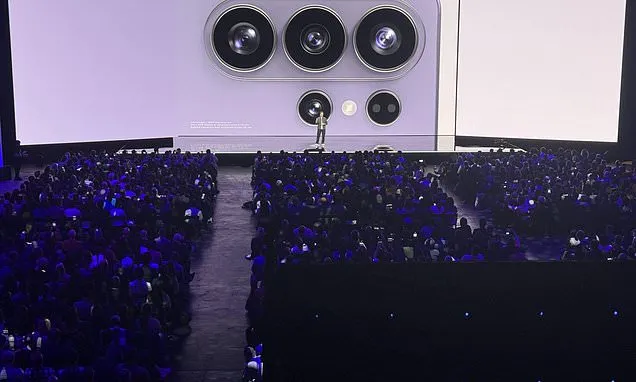
SAN FRANCISCO (AP) - Samsung on Wednesday unveiled its latest Galaxy smartphones, which boast an even bigger toolbox of artificial intelligence technology than the previous two generations and introduce a new privacy shield mode that blocks snoopy bystanders from sneaking a peek at the display screen.
The upgrades on the Galaxy S26 lineup - arriving in stores March 11 - will also include price increases of 10% to 13% on the basic and mid-tier models while the Ultra device will cost the same as last year's version. The standard Galaxy S26 will sell for $899, while the Plus model will cost $1,099. That's $100 more than what Samsung charged for the comparable devices released in each of the past two years. The Galaxy S26 Ultra remains at $1,299.
As has become commonplace for all new smartphones, Samsung has improved the camera and battery for the Galaxy S26 because those features weigh so heavily on consumers' decisions on whether it's worth upgrading from the devices they already have.
Samsung is also dangling a new reason to pony up for its most expensive Galaxy S26 with a built-in feature called "Privacy Display" that will only be available on the Ultra.
When the privacy protection option is turned on, the pixels on the Ultra change in a way that enables the display screen to only be seen when looking directly down at it. The screen appears off when viewed from the side, preventing "shoulder surfing" from people standing or sitting nearby. The controls can be set up so specific apps, such as those dealing with financial information or other sensitive information, will always open in the Privacy Display mode.
PP Foresight analyst Paolo Pescatore predicts Privacy Display could turn out to be "the sleeper hit, a standout feature in a sea of AI noise."
But Samsung continues to highlight AI as a marquee attraction on its Galaxy phones, amplifying on a theme that it began harping on two years ago when the company began to embrace the technology as a way to make its devices even more versatile and compelling.
"AI must become part of our infrastructure," said TM Roh, Samsung's CEO of device experience, during a showcase held in San Francisco. "You should be able to enjoy its benefits through the devices you use every day."
Samsung is promising this year's Galaxy lineup is loaded with AI that will act as multipurpose agents that fetches information and content so users won't have to spend time doing it on their own.
"This is the agentic AI phone," Roh said of the Galaxy S26.
As it has in the previous years, Samsung is leaning heavily on Google's Gemini technology for its AI, but also is adding another assistant option from Perplexity, a rising star that is best known for running its own "answer engine" for finding online information.
The Galaxy S26 phones will also include more tools that can doctor photos taken on the devices, including one that automatically softens a subject's skin tone if the selfie is taken with the phone's front camera.
AI technology is being deployed on many other smart devices, including those made by Apple and Google, but it's unclear if the strategy is resonating with consumers.
Although Apple has been promoting its own AI suite for nearly two years, the trendsetting company still hasn't been able to deliver on all the features it has been promising. Apple's AI shortcomings have become so glaring that it's depending on Google to help smarten up its often bumbling virtual assistant Siri.
Despite all that, Apple's iPhone has remained the world's top-selling smartphone for the past three years—a mantle that Samsung last held in 2022, according to research firm International Data Corp.
"AI is still not a sought-after feature among users," Pescatore said. "The big opportunity is making AI feel like a daily habit rather than a party trick, with tighter integration across core apps. AI must be boringly useful. Less 'look what it can do,' more 'this saves me time every day.'"