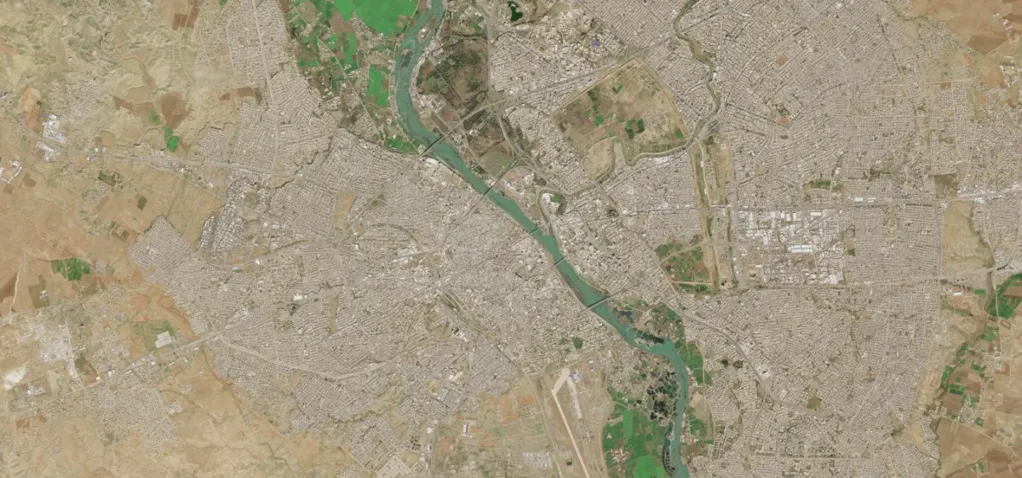
The historic city of Mosul, once the capital of the so-called Islamic State (ISIS), has risen from the rubbles and marked a milestone in its cultural revival this year amid ongoing efforts to rebuild the city, with visible reconstruction progress taking place in recent years.
Mosul, Iraq's second-largest city, was a major stronghold for ISIS from 2014 to 2017, when the group seized the city and inflicted massive destruction. Holy sites tied to Iraq's religious communities, including Christians and minority groups, were desecrated, forcing believers to flee. Iconic monuments and neighborhoods were extensively damaged or destroyed during the fight by Iraqi forces, supported by U.S.-led coalition airstrikes, to liberate the city.
Iraq's government, alongside international partners, has overseen Mosul's revival from ISIS‑era destruction. According to UNESCO, the Islamic State militants targeted Mosul's cultural heritage, looting manuscripts and ancient artifacts and reducing 80 percent of the Old City to rubble by the time the fighting ended.
More than $115 million has been utilized to restore Mosul's Old City, including four religious monuments, 124 heritage houses, and community education and training programs, under UNESCO's flagship initiative Revive the Spirit of Mosul. Major contributions came from the United Arab Emirates, the European Union and UNESCO's Heritage Emergency Fund.
Clearing unexploded ordnance, recycling millions of tonnes of rubble, rebuilding classrooms and centuries-old landmarks, U.N. agencies worked with local authorities and international partners to revive the war-torn city. A debris recycling initiative also provided job opportunities for residents returning after the conflict.
In September 2025, Iraq's Prime Minister Mohammed Shia al-Sudani and UNESCO officials inaugurated three of Mosul's most iconic restored landmarks: the Al-Nouri Mosque complex, Al-Saa'a Convent, and Al-Tahera Church, marking a major milestone in the city's cultural recovery.
Another historic church, the Mar Toma Syriac Orthodox Church, was recently restored under a project by French organization, l'Oeuvre d'Orient.
Audrey Azoulay, director general of UNESCO, said: "Today, Mosul once again becomes the beacon of hope that it should never have ceased to be, a model of what can be done to rebuild through the power of culture and education -- in Iraq and elsewhere."
Hugues de Woillemont, director general of L'Oeuvre d'Orient, was quoted as saying by Vatican News in an October celebration of churches reopening: "Today is a great celebration not only for Mosul's Christians but for all its inhabitants."
"Worship will begin here again," he said. "And the church bells will ring out once more."
The Iraqi government has launched the "Mosul Pulse" project to rehabilitate and reconstruct the alleys and neighborhoods of Old Mosul.