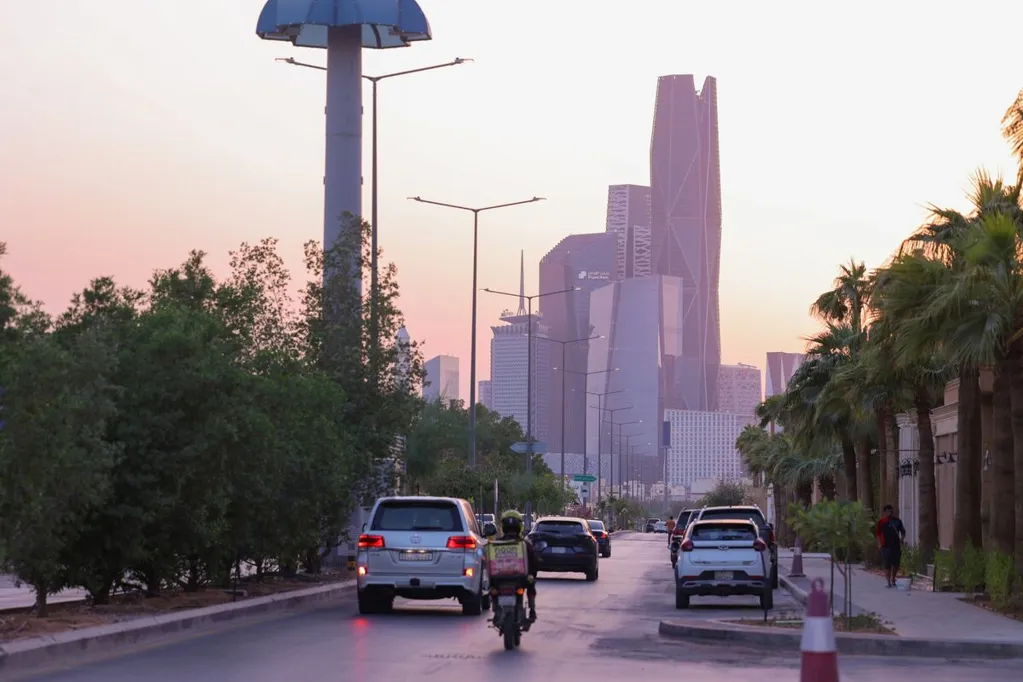
The Saudi government is redrawing its plans to diversify the economy away from oil and shrink its budget deficit, with a focus on spending more efficiently and drawing more private capital and foreign investment.
Saudi Arabia plans to release an updated strategy for Crown Prince Mohammed bin Salman's $2 trillion economic diversification agenda as the kingdom adjusts its policies and spending priorities amid fiscal pressures.
The government this week began discussing how to communicate its strategy for the next five years, Finance Minister Mohammed Al-Jadaan said in an interview with Bloomberg Television at the AlUla Conference for Emerging Market Economies in Saudi Arabia.
He listed tourism, manufacturing, logistics and technology as focal areas but stopped short of offering more details or saying when the strategy would be released.
The International Monetary Fund is among those that have called for more clarity and communication from the Saudi government, which is redrawing its plans for major projects including new stadiums for the FIFA World Cup in 2034.
Saudi Arabia has been working to fine-tune its strategy for the so-called Vision 2030 agenda to diversify the economy away from oil as it seeks to shrink its budget deficit. It has specifically sharpened its focus on spending more efficiently after years of excess, a move that would help combat periods of volatility in oil prices and revenues.
Drawing more private capital and foreign investment have also become bigger priorities.
"We continue really to reprioritize, rework our policies, making sure that we enhance as we go to ensure that we enable the private sector to lead the economy," Al-Jadaan said on the sidelines of the event, co-hosted by the IMF and Saudi Arabia's Ministry of Finance.
Saudi Arabia has been running budget deficits since 2022 as spending on economic diversification initiatives outpace revenues that have been dented by anemic oil prices.
Officials have said sustained shortfalls are a deliberate choice being made to continue to support investment in the economy. They see the deficit shrinking to 3.3% this year from 5.3% in 2025, while Wall Street economists estimate the figure will be far higher.
The kingdom predicted its total financing needs will amount to about $58 billion this year as it looks to plug its budget gap.
"We have quite a wide network of channels that we can tap in case we need more than what we have planned for," Al-Jadaan said on Sunday.
He highlighted the Saudi economy as a key point of strength. Gross domestic product expanded at the fastest pace in three years in 2025, with the oil sector emerging as a stronger engine of growth under new OPEC+ supply policy.