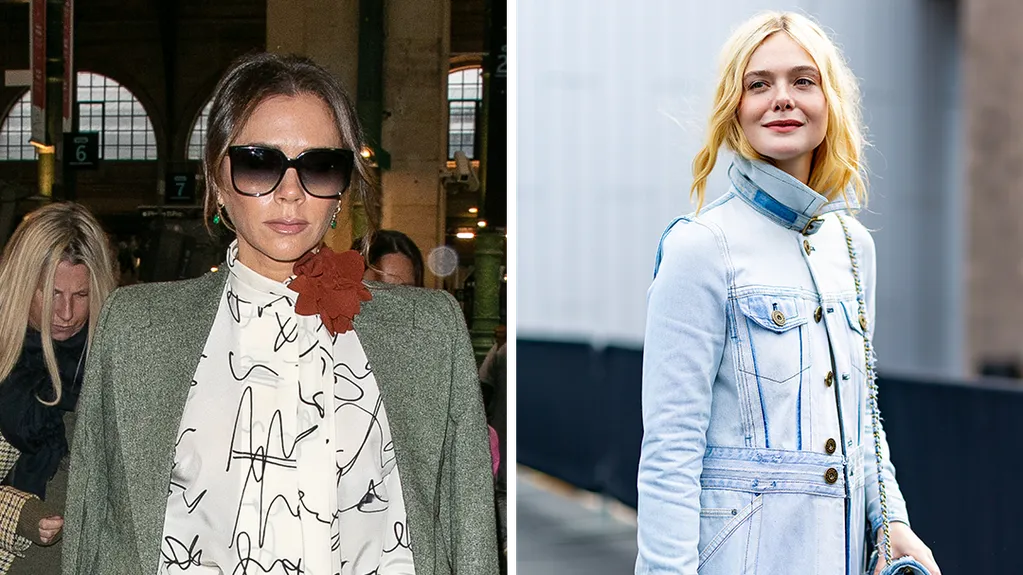
It was once fashion creed to coordinate your purse with your shoes or coat. Our critic explains how that rule has been bent, broken and revived.
Does my handbag need to match my shoes, my coat or what? Does that rule even matter anymore, and if so, where and when does it apply? -- Madeleine, New York
The "matchy-matchy rule" -- which is to say, the idea that you should match the color of your handbag to your shoes or your outfit -- is a sort of postwar, midcentury-modern (or not-so-modern) trope, originally sold as an easy hack to demonstrate sophistication and attention to detail.
And it wasn't just the bag and shoes that were supposed to match. It was the bag, shoes, gloves, scarf, belt and hat. Or at least some combination of those. Women would dutifully decant the contents of their purses at night so they could be replaced in a new, coordinated bag the next morning. If that sounds like a lot of work, it was, in the same way that going around all day in a girdle was work. It could also be expensive. All those bags!
So it shouldn't really be a surprise that by the 1970s, women rebelled. The feminist revolution was in part a fashion revolution -- liberation as expressed through dress, including the liberation of being able to dump all your stuff in one tote bag and not worry about it anymore. But the real death knell of the matching accessory set may have been the advent of the It bag in the 1990s.
Once the bag itself, and the bag alone, became a sign of achievement and insiderness, then the more it stood out, the better. Rather than disappear tastefully into an outfit, the goal was to show it off, and "matchy-matchy" became, as the designer Steven Stolman put it, "one of the most disparaging terms in fashion."
But if there is one rule in fashion that trumps all others, it is that what was once out comes back in and vice versa. So as the dominance of the It bag has disintegrated along with the monoculture, an interest in matchy-ness has begun making a comeback.
Catherine, Princess of Wales, or the woman formerly known as Kate Middleton, has made something of an art form out of coordinating her bag and her outfit (not to mention her whole family's outfits). And Victoria Beckham will pair her Birkins with her stilettos.
This time, the goal is generally less about exact matching and more about what the handbag designer Anya Hindmarch calls "artful arrangement." What the heck is that? Let her explain.
"It's like putting together a nice room arrangement or a bunch of flowers that works," she said when I called her in a muddle. "I love the color punch of a bright red patent bag with a brown trouser suit. Or the color smudge of a pale mint bag with a gray dress or the modern hit of a silver mirror leather bag with a narrow lapel sleek navy overcoat."
Think of it as more coordination, less perfection, and think about proportion, color and materials. Stuart Vevers, the creative director of Coach, put it like this: "I think the more interesting way to dress is when things don't quite line up. A worn leather bag against something very clean, or something polished with something a bit undone. That slight clash is where it starts to feel personal."
The point is, Ms. Hindmarch said, "what doesn't work is the same bag with everything. It is important to be intentional and to build the outfit." The point is not to have the bag disappear into the accessory background or to be the star of the show, but rather to become one note in a whole sartorial symphony.
It's essentially the fashion version of the Hegelian dialectic: After thesis and antithesis, now we have synthesis.
The exception, the designers said, is more formal events. For black-tie dressing, "a bit of harmony helps," Mr. Vevers said.
But even then, be careful not to go too far. As Mr. Stolman pointed out, "a jeweled minaudière or a straw tote does not necessarily make for a good shoe."