Singapore's monetary tightening says a lot about the delicate state of the world economy. The Middle East conflict is spawning twin afflictions: a notable slowdown in growth and an unwelcome pickup in inflation. Hoping for a speedy resolution is fine, but it's prudent to prepare for protracted hostilities. And the global trading hub, usually in the vanguard of fighting price pressures, just showed how it's done.
The Monetary Authority of Singapore, which uses the exchange rate rather than interest rates to steer the economy, took out some insurance against a poor outcome. The central bank said on Tuesday it will increase the slope of the band in which it wants the local dollar to trade. The city-state imports much of what households and businesses consume; an appreciating currency helps counter inflation.
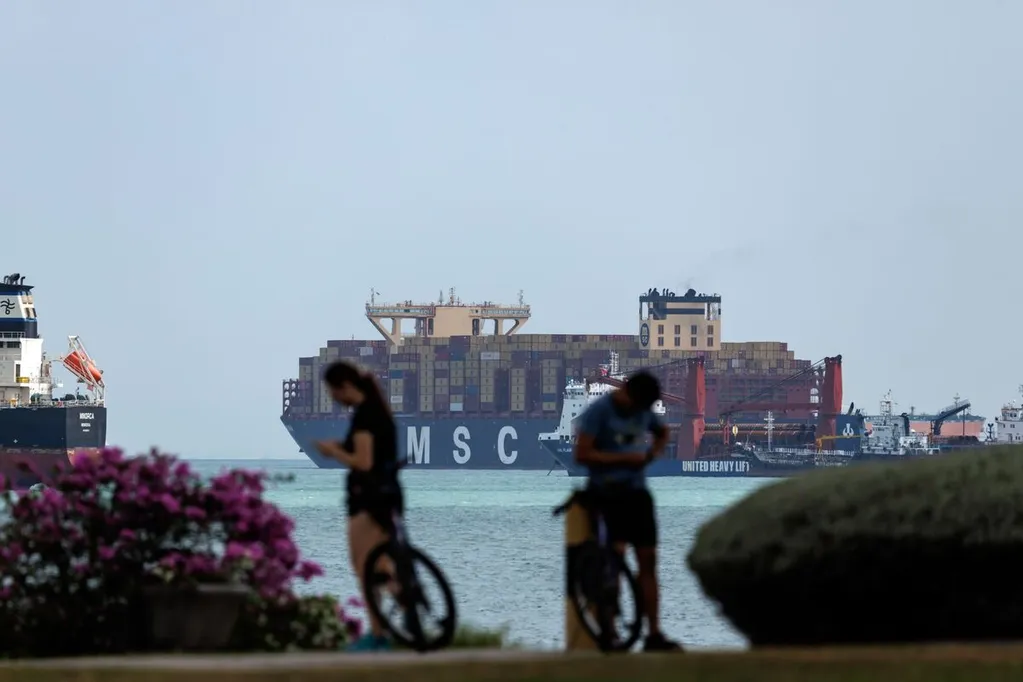
The tiny nation, which is a big center for shipping, aviation and oil trading, views developments in the Middle East with more alarm than most. The government recently warned of the inflationary consequences of the conflict. But talking merely in terms of prices lowballs the stakes for a country that rose to prosperity in the era of liberalized trade and freedom of the seas. Leaders recently convened a crisis panel. Several measures were rolled out: Corporate tax rebates will increase, grocery vouchers will be distributed, and cab drivers will get some compensation for fuel costs. (Singapore relies heavily on imported natural gas for power generation.) Regulations were issued ordering air conditioners at public buildings be set at 25 degrees centigrade (77 Fahrenheit) or higher.
The case for MAS's tightening was compelling. Officials had flagged a revision in inflation forecasts and, given the spurt in oil and gas prices, it was unlikely to be a downward one. Even before the attacks on Iran started on Feb. 28, there was a sense that the next move would be to head off a spurt in inflation. The war may have accelerated the shift, but it was coming. Singapore was one of Asia's strongest economies in 2025; gross domestic product climbed more than 5% in the final quarter. The real surprise would have been no change to settings this week.
Only the extent of the shift was up for debate. MAS refrained from its equivalent of a jumbo rate hike. The situation isn't so dire, but it is deteriorating. Core inflation is projected to quicken to between 1.5% and 2.5%, up from a prior prediction of as much as 2%. The expansion may also suffer, and new forecasts will be published next month. It was important not to engage in overkill when making this initial tightening. Officials have plenty of scope to do more, should conditions worsen.
The global economy was robust in 2025, contrary to speculation that the tariffs imposed by US President Donald Trump would sunder growth. That resilience will help put a floor under activity this year. What MAS worries about is that the country's major trading partners will do worse than anyone expects. For a nation that hosts one of the largest ports, that would be bad news indeed.
MAS is also worth watching because it has form when it comes to preemptive moves. The authority tightened early as inflation pressures began to build when economies relaxed Covid restrictions. It acted in October 2021, just behind South Korea, but ahead of the big players. The pacesetter this time is the Reserve Bank of Australia, which became the first Group of 20 central bank to lift borrowing costs. Singapore's steps will surely reverberate among neighbors like Indonesia and the Philippines.
The Iran war could end in weeks or months. It's quite possible that energy supplies and the cost of procuring them will return to some semblance of normal. Would you bet on it? Singapore isn't, and it has tended to be right. The insurance taken out on Tuesday could, unfortunately, come in handy.