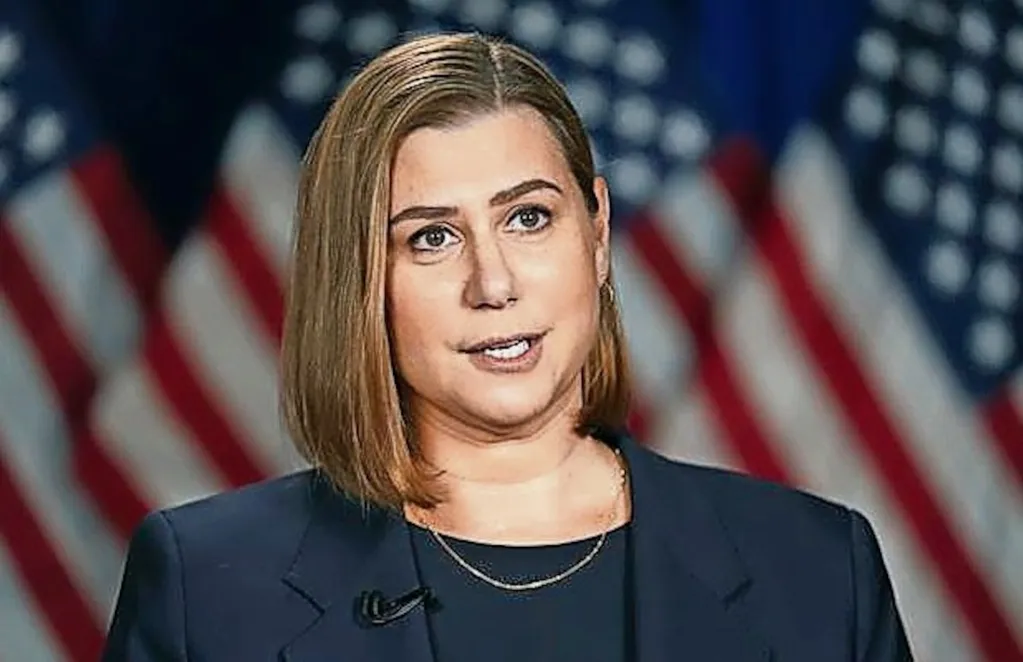
FLINT, MI -- The federal government has denied and deflected responsibility for its role in the Flint water crisis for too long, U.S. Sen. Elissa Slotkin said on Thursday, Jan. 15, in remarks on the floor of the Senate.
Slotkin's comments come on the tenth anniversary of former President Barack Obama's declaration of a federal emergency in response to the water crisis and less than two weeks before a bellwether trial brought by three Flint children against the U.S. Environmental Protection Agency.
The EPA "was supposed to be the backstop for everything" as lead, bacteria, heavy metals and cancer-causing chemicals thrived in Flint's water system during parts of 2014 and 2015, the Holly Democrat said.
But the agency "consistently buried reports of lead poisoning instead of holding officials accountable," she said.
The EPA did not immediately respond to a request for comment on Slotkin's remarks on Thursday.
The EPA has maintained it is not responsible for the water crisis, saying the city and the former Michigan Department of Environmental Quality caused it by using the Flint River as a drinking water source without appropriate studies and corrosion control to prevent lead from leaching from transmission lines.
While other entities, including the state of Michigan and the city of Flint, settled pending lawsuits against them, the EPA has continued to litigate cases that allege it was negligent in its oversight.
Both the EPA and the Department of Justice have previously declined to comment on the lawsuits against it, including the case of the three children, who claim they were damaged by Flint water while the agency allowed the crisis to linger longer than necessary.
Slotkin cited the work of Miguel Del Toral, an EPA water specialist who authored an interim report warning of high levels of lead in Flint water on June 24, 2015.
However, the final version of the memo left out Del Toral's criticisms that Flint was failing to follow federal regulations on corrosion control chemicals and testing for lead.
Months earlier, other EPA officials also warned Michigan regulators that the chemistry of Flint River water appeared to be causing transmission pipes to leach lead and iron into the water supply.
By January 2016, Susan Hedman, regional administrator for the EPA's Chicago-based Region 5, resigned amid mounting outrage over Flint.
Obama's Flint declaration came in the same month as that resignation, following a request from former Gov. Rick Snyder.
Later in 2016, Congress approved the Water Infrastructure Improvements for the Nation Act, including language that made Flint the only community eligible for $100 million in new federal drinking water funds.
But Slotkin said the fallout from the water crisis has continued.
"Flint is a community still in pain, still seeking justice, still seeking accountability,"
she said, advising EPA to take its day in court or settle the Flint cases against it fairly.
Slotkin joins other past and present congressional officials who have urged the EPA to accept accountability for what they've described as lax oversight in Flint.
In September, U.S. Rep. Kristen McDonald Rivet, D-Bay City, called on the federal government to acknowledge its failures during the water crisis and to negotiate a settlement with city residents.
Flint residents who filed claims against other government agencies and private companies that funded a historic $626.25 million settlement began receiving payments just last month.
The settlement provides 30 different compensation categories covering a wide range of claims of injury and damage, including claims for minors and adults, and claims for personal injuries, property damage and business loss.
Payments are expected to vary widely and "many will be modest," according to information posted on the U.S. District Court water settlement website.