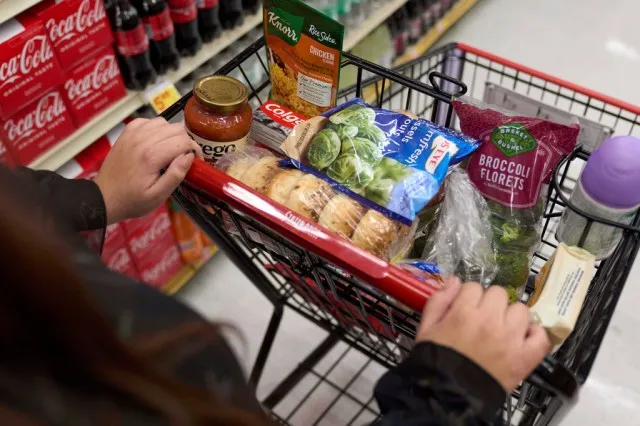
2025 marked a volatile year for the 41.7 million Americans who rely on the Supplemental Nutrition Assistance Program, or SNAP, to buy food. But while their benefits were restored after the government shutdown ended, budget cuts and new work requirements mean the challenges will continue in the new year.
As of December, millions of Americans are at risk of losing their SNAP benefits once again. That's because President Trump's "One Big Beautiful Bill," passed over the summer, reduced SNAP funding by $186 billion, the largest cut in the program's history. In addition to this sweeping slash to funding, there are now tighter work requirements for determining who is eligible for SNAP benefits and for how long. Those who do not meet new work requirements will lose their benefits when their SNAP eligibility is next recertified, which happens every six to 12 months.
What happens when millions of Americans are unable to meet work requirements?
As experts in food policy and nutrition, we know just how harmful this will be. Our research has shown how changes to benefit amounts affect whether and what SNAP participants are able to afford to eat -- lower benefit amounts mean more meals skipped and lower intake of nutrient-rich foods. The absence or withdrawal of benefits, especially for groups experiencing higher food insecurity and discrimination in finding employment, mean pernicious hunger and health harms for many Americans struggling to eat and work.
Before Dec. 1, SNAP work requirements included exemptions for non-disabled adults above 54, veterans, people experiencing houselessness, and youth aging out of foster care. New work requirements, however, increase the upper age limit to 64 and remove these other exemptions. The bill also entirely restricts immigrants from receiving SNAP benefits, including refugees, asylees, and human trafficking survivors.
While new work requirements may sound reasonable, the effects of these changes are deeply harmful to millions of Americans. The targeted groups already struggle more than other Americans to afford food, especially healthy food. According to the latest research, around 13 percent of older adults, 57 percent of unhoused adults, 69 percent of former foster youth, and 18 percent of immigrants experience daily hunger. Making matters worse, recent cuts to federal funding for charitable food organizations have left emergency food resources struggling to keep up with demand.
At the same time, these groups also face job market discrimination, making it more difficult to find employment than other Americans. Older adults face aging-related physical limitations; unhoused Americans often don't have access to job seeking and sustaining resources; veterans and former foster youth experience disproportionate mental health barriers to working and finding employment. Immigrant populations are also ridiculed for "taking American jobs" but are forced to work even when working places many at risk for deportation and detainment.
And when they can find work, people with low income are often forced into physically demanding jobs like agriculture, manufacturing and construction. Physically demanding jobs require much greater caloric intake and hydration than white collar jobs. Despite hunger, discrimination and high unemployment barriers, SNAP participants are now becoming physically and mentally overworked while being underfed.
Depriving Americans of nutrition security while forcing them to work labor-intensive jobs is problematic and hypocritical. Simply put, stricter work requirements are fueling a cycle of literal and economic starvation in the U.S.
As the Trump administration continues to shirk its responsibilities to the American people, state and local leaders can and should step up during these challenging times and support those in need.
City and state governments should consider appropriating funds to cover partial costs of SNAP as federal funding gets cut back. And with eligibility requirements becoming more complex, hands-on assistance for people who are applying for benefits should be offered locally. The Nutrition Outreach and Education Program in New York, for example, offers potential applicants help in completing and submitting a SNAP application.
States should also mimic the "Anti-Hunger Task Force," made up of Massachusetts local government leaders, food banks, non-profit organizations, farmers, small business owners, and SNAP recipients themselves. This public-private partnership will strengthen food access by expanding cross-sector partnerships; develop immediate and long-term solutions; create a comprehensive policy roadmap to improve food security.
Food is a human right, not a privilege. Without immediate local action, we will continue to be a starving nation with starved morals.
Pasquale E. Rummo, MPH, PhD, is an associate professor at NYU Grossman School of Medicine and studies the impact of food policies and healthy eating interventions on nutrition-related health outcomes. Jesse Strunk Elkins, MPH, is a physical activity researcher and PhD student in public health sciences at Charlotte.