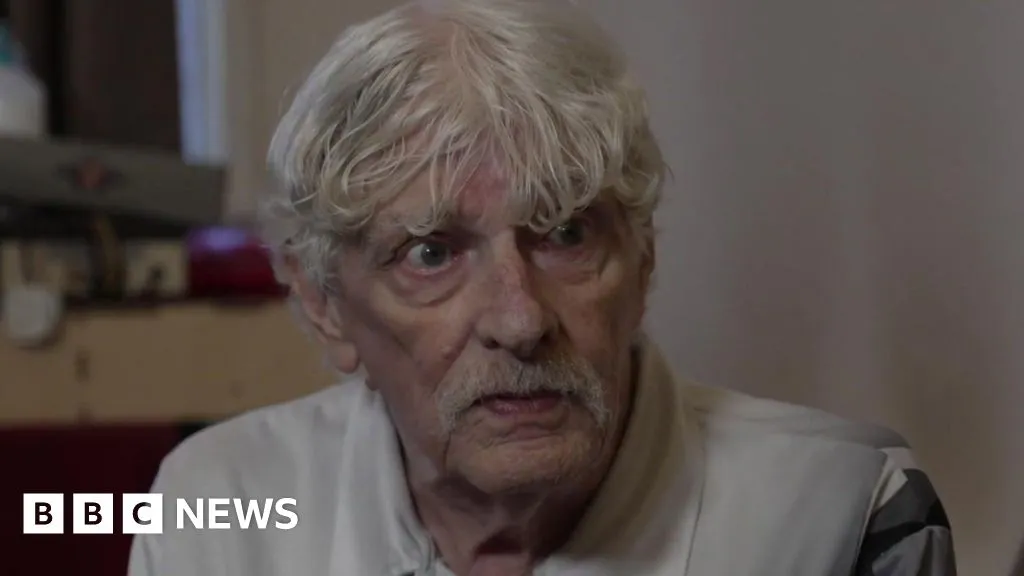
Graham Smith-Thompson is proof that you can beat an addiction to tobacco.
Now aged 79, he smoked for 66 years until the end of 2025.
Smith-Thompson used to smoke more than 20 roll-up cigarettes a day but says he has finally stopped thanks to nicotine replacement treatment (NRT) patches and determination.
He feels healthier and estimates he is more than £200 better off a month, saying:
"It's ridiculous, when you stop and think of the amount of money that you have spent, just to destroy my health really.
"You can live a better life - it's as simple as that - and a much more prosperous life too."
He lives with Chronic Obstructive Pulmonary Disease, which causes breathing difficulties, and the help he needed to stop smoking came while he was a patient at Southampton General Hospital.
The hospital is currently supporting 70 inpatients just like Smith-Thompson, who says:
"They treated as if I had a disease; there wasn't any judgement or you shouldn't be smoking or anything like that."
"It's probably a third and a third and a third - of the nicotine replacement, the willpower and the fact that I knew I had backing, and I knew I only had to pick up the phone and I could talk to somebody if it got too bad."
University Hospital Southampton (UHS) started the New Year with a drive to help patients quit.
The tobacco dependency team offer free treatment to all inpatients who smoke to help them quit, providing the most appropriate alternatives to patients who are tobacco dependent, including access to nicotine replacement therapy and specialist, tailored support.
The smoking campaign group ASH (2025) estimates that:
- Smoking costs Hampshire and the Isle of Wight £1.2bn a year
- 10.4% smoke (151,000 people)
- £344m is spent on tobacco
It says the combined cost of smoking related medical treatment, hospital admissions and primary care treatment in health services in Hampshire and the Isle of Wight is £53.9m.
Paul Grundy, chief medical officer at UHS, says:
"We know, for example, that if we prescribe nicotine replacement therapies, which we can do, and if we engage with our tobacco dependency advisors that we've had a between 70 and 80% quit rate."
The team also supports some patients after discharge, allowing valuable interventions to continue at home.
Since the team was established two years ago, it has spoken to more than 4,000 patients, helping many successfully quit smoking.
It says that improves health outcomes and benefits the hospital, as smoke-free patients are less likely to be re-admitted, helping to reduce bed pressures and save hospital resources.
There are about 500,000 hospital admissions in the UK each year that are linked to smoking, with people who smoke 36% more likely to be admitted than those who do not.