READ MORE: Airports across Italy are running out of fuel - as Brit holidaymakers warned to book flights now
With the Strait of Hormuz still effectively closed and the jet fuel crisis continuing, some airlines are having to react to the developing situation.
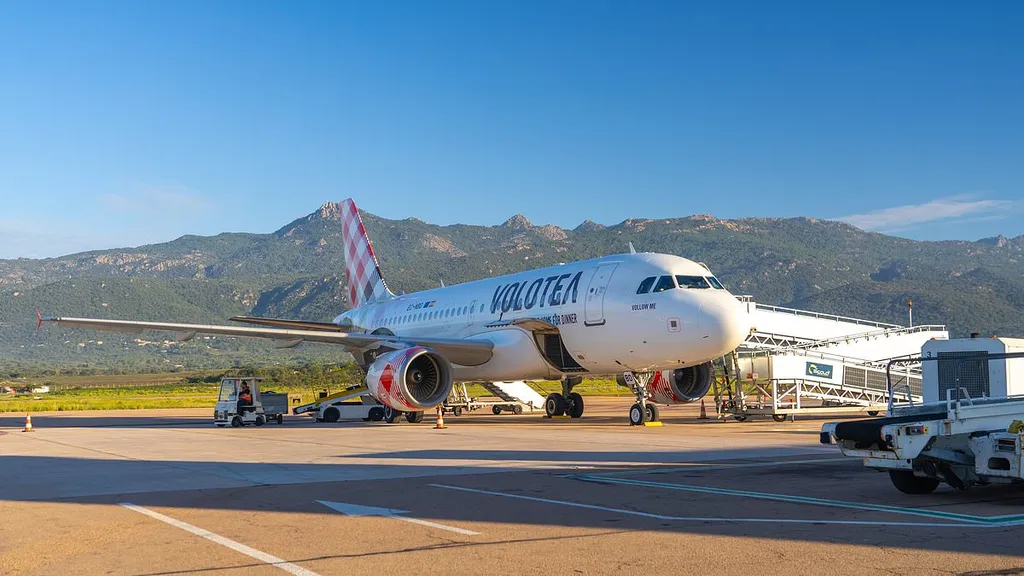
One Spanish carrier, Volotea, has even reportedly been pushed to demand extra fees from some passengers after they have booked and paid for their flight.
The budget airline apparently added a small fuel surcharge and asked travellers, who had already covered their costs, to pay in an email, according to Simple Flying.
Some people online claimed they were asked to cough up between $8 to $11 (£5.90 to £8.10).
The airline seems to be using a clause in its conditions of carriage - reportedly referred to as its 'Fair Price Promise'.
Volotea's website has a 'Fuel Cost Adjustment' clause listed under section four, Prices, of its conditions of carriage.
The clause outlines how passengers will have been informed of the possibility of a price change during the booking process and explains how rising fuel prices are the cause.
'In the event of extraordinary variations in fuel prices affecting international energy markets, Volotea may apply a limited and temporary adjustment to the ticket price prior to the scheduled departure of the flight.
'Any such adjustment will be calculated in accordance with the methodology, thresholds and limits published on Volotea's website.
'Passengers will be informed during the booking process of the methodology applicable to any adjustment resulting from increases or decreases in fuel costs, which may lead to a corresponding increase or decrease in the price of their Ticket.
'The exact amount of any such adjustment will be communicated to passengers prior to departure, once the applicable fuel cost variation has been determined.'
'Such adjustments will only apply to passengers who have been informed of this possibility during the booking process, allowing them to make an informed decision before completing their purchase.'
'By completing their purchase after being informed of the possibility of any adjustment to the Ticket price, passengers acknowledge and accept that such adjustment may be applied and authorise Volotea to charge any corresponding increase, or reimburse any decrease, using the same payment method used to purchase the Ticket.'
The clause appears to be a new addition to Volotea's terms, with previous versions of the website from earlier this year not showing the 'Fuel Cost Adjustment' section.
It comes as jet fuel prices have surged with the Strait of Hormuz being blocked by Iran since war broke out on February 28.
Around 20 per cent of global oil and liquefied natural gas supplies pass through the strategic passage in the Gulf.
The Daily Mail approached Volotea Airlines for comment.
It could be a sign of things to come as airlines continue to navigate the soaring jet fuel prices.
Although British airlines haven't had to do the same just yet, some might end up having to follow Volotea's approach.
Earlier this month, a spokesperson for the Department for Energy Security and Net Zero told the Daily Mail that 'Jet fuel shipments are continuing to arrive in the UK' and stressed that the country 'receives imports of jet fuel from India, US and the Netherlands as well as smaller amounts from a range of other countries'.
Travel expert Simon Calder recently wrote in the Independent how he estimates British Airways, Ryanair and easyJet passengers could be impacted by jet fuel rationing.
The experienced journalist explored the hypothetical possibility of what might happen if airlines have to reduce their fuel consumption by one fifth.
He explains how British Airways is better prepared because it will be accustomed to having to cut flights at the request of London Heathrow due to poor weather.
The airline sometimes cancels European trips such as to Amsterdam or Nice and then offers its passengers the chance to rebook a route before or after the original departure time.
Calder predicts this technique could easily be applied to long-haul destinations if needed.
As for Ryanair, the budget airline's CEO Michael O'Leary has recently warned passengers could be hit with disruption from 'early May'.
'But if the war continues, we do run the risk of supply disruptions in Europe in May and June, and we hope the war will finish sooner than that and the risk to supply will be eliminated,' he revealed, speaking to Sky News.
But Calder predicts the carrier will have scope to move things around if necessary.
Back in 2017, Ryanair cancelled around 20,000 flights due to 'messing up' its holiday rosters for pilots, leaving too few on standby to keep schedules on track.
The airline could easily make 'tolerable' cuts to popular routes that have frequent flights, such as from Stansted to Barcelona, according to Calder.
Meanwhile easyJet, a major budget airline, could also make some cuts.
Meanwhile, Virgin Atlantic has recently had to increase ticket prices by as much as £360
It has several routes that fly out multiple times a day, such as the Manchester to Amsterdam flight which takes off six times each way.
Virgin Atlantic has hiked ticket prices to as much as £360 amid warnings that jet fuel could run out 'in the near future' as the Iran war continues to rage on.
The airline, founded by Sir Richard Branson, has placed an extra £50 fuel surcharge on economy tickets, with both premium economy and business class fares increasing by £180 and £360 respectively.
Virgin's chief executive, Corneel Koster, said recent failed peace talks between the US and Iran 'was not good news' for the air industry, as he warned travellers will face further increased prices for the next few months - and possibly the rest of the year.
'We have never seen jet fuel at this level, and airlines cannot sustain those sorts of high costs,' he said in an interview with The Financial Times.'
'If the fuel price goes much higher, I think the surcharges may go higher. If they go up in a week and you book in two weeks’ time, you’ll be paying higher.'
The airline boss also predicted the sale of economy seats becoming 'relatively weaker' in comparison to business class tickets as the crisis in the Middle East continues to tighten people's purse strings.