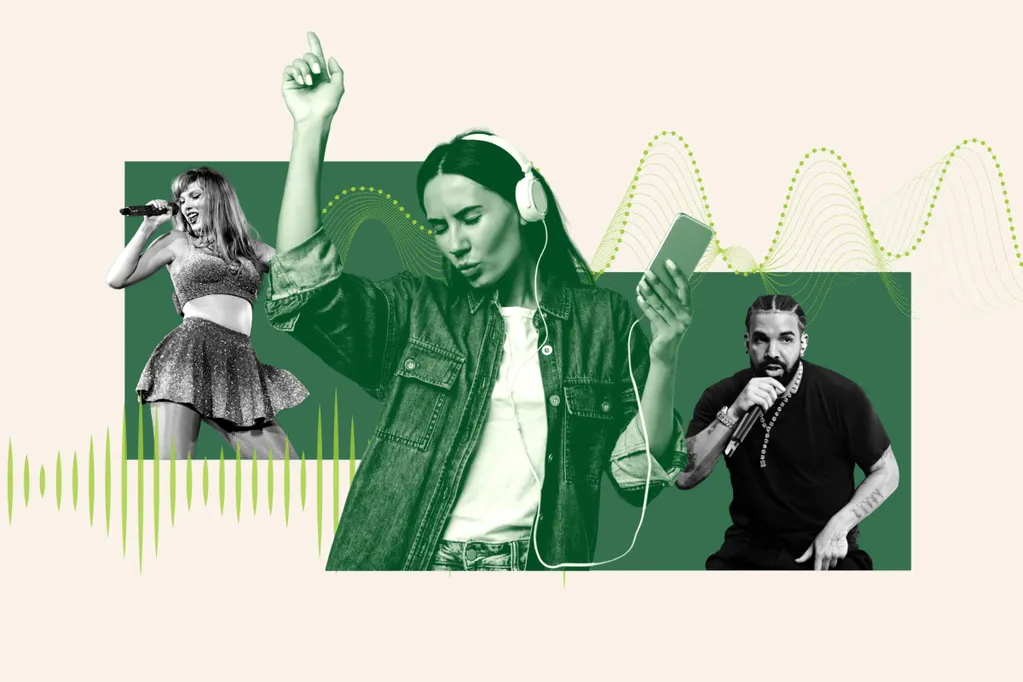
Streaming was once the greatest fear of record producers -- until Spotify arrived, offering instant, legal listening that outsmarted piracy and stabilized a rattled industry.
Founded in 2006, launched in 2008 and expanded to the U.S. in 2011, Spotify turned access-by-app into how millions relate to music. Now approaching 20, its story extends well beyond songs. The company says it has "revolutionized music listening," "brought innovation" through podcasting, and that its 2022 move into audiobooks -- competing directly with Amazon and Audible -- was "the next leap."
Today, Spotify calls itself "the world's most popular audio streaming subscription service," offering over 100 million tracks, 7 million podcasts and 500,000 audiobooks, with 751 million users -- up 11 percent year-on-year. It also runs production studios, hosts awards, drives brand collaborations and generates annual viral momentum through "Wrapped."
Its 2025 AI-generated DJ added personalized radio to keep users inside its ever-expanding ecosystem.
Spotify told Newsweek that 91 percent of users consider the platform essential to their daily routine. Now a global entertainment titan -- absent only in China, Iran, Cuba, Russia and a few other restricted markets -- Spotify has sustained legacies, launched careers and made household names across music, presenting, producing and content creation.
Newsweek reviewed the platform's defining numbers to learn what Spotify changed, who benefited most, and what comes next.
Taylor Swift -- Spotify's most-streamed artist and the first female to cross 100 million monthly listeners -- claimed 26.6 billion streams in 2024; Bad Bunny, the most-streamed male artist of all time, led globally from 2020 to 2022; Drake dominated the 2010s with 28 billion streams alongside that decade's top female artist Ariana Grande, now of Wicked fame; and The Weeknd holds the most-streamed song record with "Blinding Lights" at over 5 billion streams, his Daft Punk collaboration "Star Boy" ranking fourth all-time.
"Drake, Taylor Swift, Bad Bunny, and Ariana Grande have creative fan experiences that contribute to growing their respective communities," Ian "JY" Williams (@whoisjy), senior director of A&R at Mnrk Music Group, told Newsweek. "Building community has always been key in the industry and now this strategy has become more popular than ever."
"They make highly addictive music," Chuck Creekmur (@chuckcreekmur), CEO of @AllHipHopcom, told Newsweek. "Creating this addiction, in alignment with fan bases that want to see them victorious is key."
"Most are masters of marketing and timing, playing the game globally -- with replay value, fanatical supporters, and an embrace of changing landscapes."
Spotify crosses borders at a speed radio never managed, propelling artists from diverse linguistic backgrounds to global popularity.
From Bad Bunny's Spanish-speaking dominance to BTS and Blackpink, mainstream is increasingly multilingual -- 16 languages reached Spotify's Global Top 50 in 2025, more than double 2020's count.
The fastest-growing genres generating over $100 million in royalties were Brazilian funk, K-pop, urban Latino and reggaeton.
Yet Spotify's audience is unevenly distributed. The U.S. and Europe account for 53 percent of users and 67 percent of revenue -- its cultural influence is global, but its financial center remains Western.
In 2018, the day after rapper XXXTENTACION was fatally shot, his single "Sad!" broke Spotify's single-day streaming record with 10.4 million streams, surpassing Taylor Swift -- showing how emotion and cultural shock can trigger sudden audience shifts.
Where radio once set the agenda, Spotify's playlists now do.
"RapCaviar" has over 15 million followers; Today's Top Hits 30 million—a single placement can add millions of streams overnight. Users can mix books, podcasts and songs in collaborative playlists that become personality markers.
Spotify noted that 63 percent of playlists created in 2026 were made by Gen Z.
Streaming was once cast as the end of the music business, but, instead, it revived it.
Global recorded-music revenue hit $28.6 billion in 2023—the highest in decades. In 2025, Spotify paid the music industry over $11 billion, bringing lifetime payouts to nearly $70 billion, up more than 10 percent year-over-year.
Labels now benefit from subscription income, global distribution and infinite catalog shelf life.
Spotify's "Discover Weekly," "Wrapped" and AI DJ have made personalized discovery and curation central to the platform experience.
Spotify's 2025 "Wrapped" was the biggest in company history, with more than 300 million users engaging and over 630 million shares online.
Streaming's harshest critique is that 90 percent of streams go to the top 1 percent of artists, squeezing the middle.
Still, Spotify's distribution tools, playlist placement and "Fresh Finds" ecosystem -- where more than 1 in 10 artists earning over $100,000 were first playlisted -- support emerging talent. In 2023, over 200,000 independent artists earned more than $1,000; 50,000 generated at least $10,000 from Spotify alone.
By 2025, 13,800 artists generated at least $100,000 -- nearly 1,400 more than the prior year. That same year, the 100,000th-highest-earning artist made over $7,300 in royalties.
Spotify said that more than half of its 2025 streams came from that generation.
"According to 8,400 survey respondents across 19 global markets, 75 percent of Gen Z users feel satisfied with their time on Spotify, and 78 percent say Spotify has a positive impact on their lives," a spokesperson said.
Spotify did not kill the album but accelerated the drift from it.
Album sales have fallen 77 percent since 2010, and average track length on the Billboard Hot 100 dropped from 4:12 in 2000 to 3:03 in 2023, driven by skip-based streaming economics.
Albums still generate frenzy -- Sabrina Carpenter’s Man’s Best Friend sparked widespread debate -- but Spotify now promotes singles with the vigor once reserved for full records.
Spotify ended the download era, replacing ownership with access.
U.S. digital song sales fell from 1.3 billion in 2012 to 152 million in 2023 -- a decline Spotify's annual industry payouts aim to offset.
Spotify's AI DJ and recommendation tools point toward real-time, adaptive, personalized listening.
But the next challenge may be authenticity over curation. Leadership has flagged AI alongside unsolved problems across music podcasts books and formats not yet built as defining the years ahead.
Debates over compensation continue with Taylor Swift and Justin Bieber buying back and selling their masters respectively.
Since 2024, Spotify requires tracks to reach 1,000 streams in the prior 12 months to qualify for royalties; a unique-listener threshold prevents manipulation.
Spotify is testing social features -- listening together, following friends, easier playlist sharing -- as TikTok and Instagram reshape discovery.
Short-form video now drives many hits before streaming can claim credit, pushing Spotify to experiment with video and discovery tools.
TikTok users scouting sounds will still likely turn to Spotify for fuller listening.
One underappreciated shift in Spotify's second decade is how financially -- not just culturally -- global the charts have become, with artists recording in Portuguese, Korean, Italian, Turkish and Spanish building massive audiences worldwide.
Spotify's first two decades have reshaped music and culture; while questions remain around competition compensation what counts as "music" in an ecosystem now spanning books podcasts AI-driven creation its impact on how songs are made found valued is undeniable.