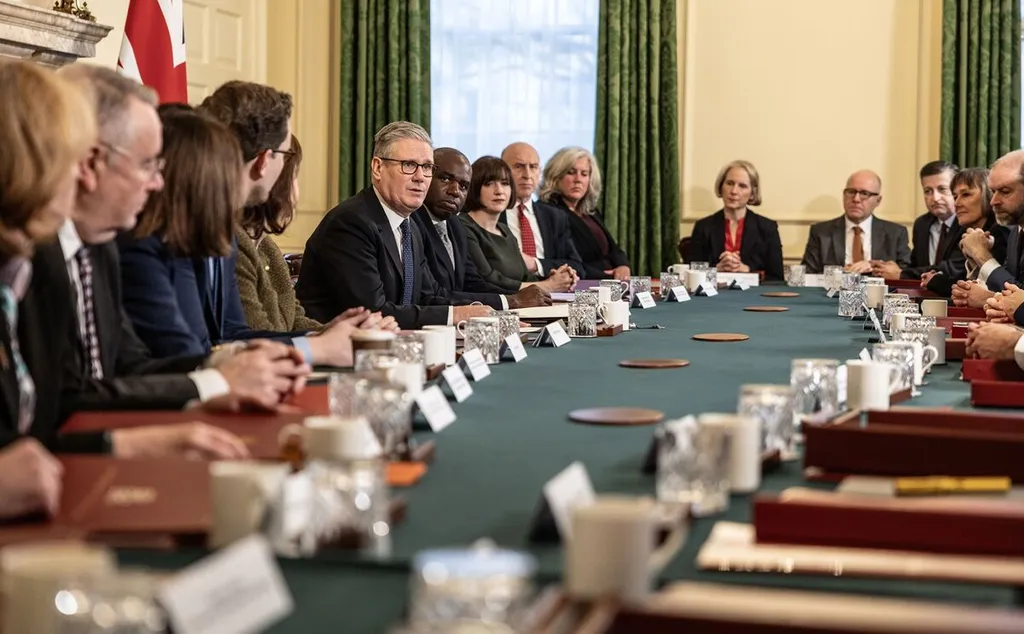
The last time Keir Starmer's job was hanging in the balance the whole cabinet backed him with supportive posts on social media. This time the silence was telling.
The UK prime minister survived a frenetic Friday in Westminster after revelations the previous day that security officials had raised concerns about Peter Mandelson's appointment as US ambassador triggered renewed calls for his resignation.
The fresh row about Mandelson's vetting is the latest in a series of political storms to engulf Starmer during his 21-month premiership. The open question now in Downing Street and among cabinet ministers is whether he can get through the next week, and then make it past a set of local elections on May 7, when opinion polls suggest Labour will be trounced.
Aides to cabinet ministers, speaking on condition of anonymity about private matters, told Bloomberg that while their bosses agreed to a Number 10 request to publicly back Starmer when the Mandelson saga last blew up in February, this time the premier's team knew not to even ask. Senior ministers are watching how the latest developments would play out and reserving judgment about whether it should cost him his job, they said. No one knew if he was telling the truth, one said.
Those Bloomberg spoke to largely expected Starmer to weather the coming days but felt that he is badly weakened by his failure to escape lurid news stories about his decision to appoint Mandelson and the likelihood of him being replaced in the wake of the local elections next month is now higher.
The Mandelson pick yielded early benefits in the form of better trade terms with the US than the UK's European neighbors secured. But it's proved disastrous since he resigned in September following Bloomberg News revelations about his relationship with disgraced financier Jeffrey Epstein.
Ministers will be watching Starmer's appearance in Parliament on Monday closely, when the premier will explain the circumstances that saw security officials object to Mandelson during his vetting process, yet his appointment approved by the Foreign Office's top civil servant, Olly Robbins, without the prime minister or his team knowing of any issues.
Government officials familiar with the matter described to Bloomberg an internal mess bordering on farce. Everybody comes out of the story badly and it represents one of the worst failures by senior politicians and officials in living memory, one said.
The crux of the problem, they said, is that Starmer himself, and his senior team in Number 10, made a political decision to appoint Mandelson as ambassador to Washington believing he was uniquely capable of wooing President Donald Trump. The premier signaled privately that he was relaxed about Mandelson’s previously known links to Epstein, Russia and China, leading senior civil servants involved in the appointment to believe their job was to make it happen, they said.
This created a climate that meant when security officials raised objections about Mandelson’s suitability for the role, Robbins and a team of Foreign Office officials felt they were doing the prime minister’s bidding by disregarding those concerns and approving his clearance regardless.
Robbins, who at the time was just weeks into the new role, felt the privileged nature of the vetting process, in which candidates are afforded confidentiality to be open about embarrassing aspects of their personal lives, meant he was bound not to tell Starmer, his office or anyone outside of a small circle involved in the process about those security concerns, they said.
Cabinet Office officials complying with a parliamentary order to publish information about Mandelson's appointment discovered the problematic conclusions of the vetting process when they accessed a secure portal to read them on April 10, people familiar with the matter said.
It became clear to them that even Robbins had not seen the full details of the vetting process, only its conclusions, and that the Foreign Office security official who took those conclusions to Robbins had since left the organization. It meant there was not a single member of staff still in post at the Foreign Office who had ever seen Mandelson's full vetting report, compounding the difficulty in finding out what had gone on.
An official described the situation as so opaque it was Kafkaesque. When Starmer was informed on Tuesday, he was furious at being kept in the dark and decided to fire Robbins.
Ironically, Robbins' defense against the decision to oust him also appears to help the prime minister who pushed him out, because it tallies with Starmer's position that he was unaware of Mandelson's vetting failure and therefore could not have intervened.
Number 10 should be thankful to Robbins for saving Starmer, not throwing him under the bus, an ally of the ousted official said. Nonetheless, a person close to Starmer said it was unthinkable that a senior civil servant should withhold such vitally important information from the prime minister and his position was therefore untenable.
A cabinet aide said they thought the situation was so complicated that it favored Starmer surviving it, though they cautioned that view was notwithstanding any further revelations either in the media in coming days or during a parliamentary appearance by Starmer and a possible one by Robbins next week.
It means that for Starmer, a six-week period in which he won praise for his handling of Trump's war in Iran, leading many in Labour to assume he was likely safe from a leadership challenge in coming weeks, has come to a screeching halt.
Instead, it will factor into the calculations of cabinet ministers and lawmakers when they weigh whether to change leader if, as expected, Labour takes disastrous losses on May 7. Counting in Starmer's favor is that his main potential rivals, former Deputy Prime Minister Angela Rayner and Health Secretary Wes Streeting, don't yet appear ready to mount a challenge.
Even if Starmer does persuade his own party, the court of public opinion is firmly against him. Only 16% of Britons think he has been honest about the circumstances of the Mandelson appointment, according to a YouGov poll on Friday afternoon.
Worryingly for the prime minister, even Labour voters on balance do not believe him, with 37% saying he has been dishonest compared to 31% thinking he has told the truth. Meanwhile, the party has regularly trailed in fourth behind Reform UK, the Conservatives and the Greens in recent polls of voting intention.
Even if Starmer gets through the next few days, that may not be a sustainable place for the prime minister to be.