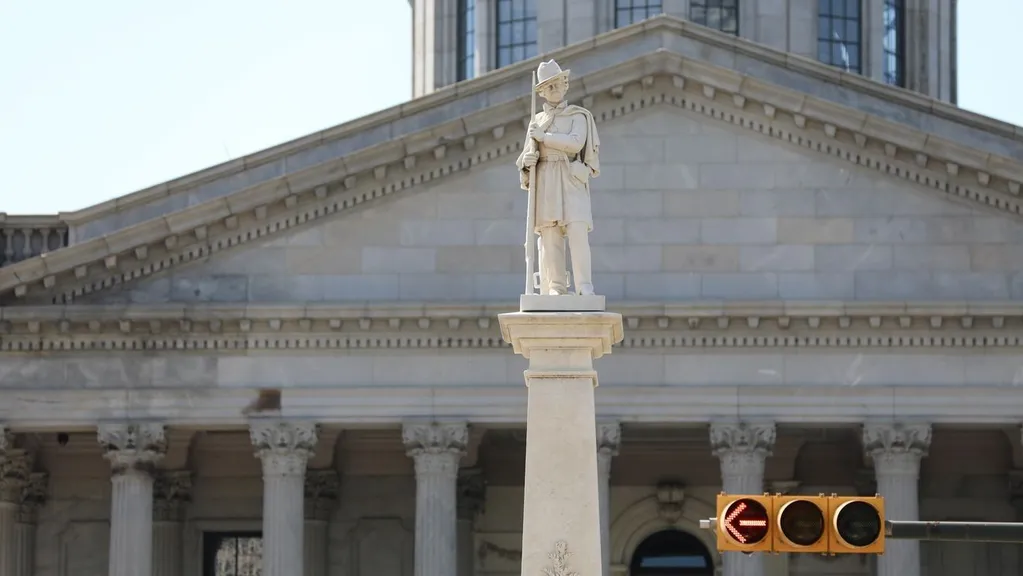
CHARLESTON, S.C. (WCIV) -- South Carolina lawmakers are considering a bill that would make it more difficult to alter or remove historical monuments, reviving debate over how the state preserves and interprets its past.
The proposal, dubbed the "Heritage Act 2.0," would strengthen a 2000 law that already limits changes to monuments and memorials across the state. Supporters say the measure is designed to protect historical sites from political influence, while critics argue it could restrict efforts to provide a fuller context about the people and events those monuments represent.
Under the legislation, decisions about altering or removing monuments would shift away from local governments and instead require approval from the state's General Assembly. The bill would also expand who can file lawsuits over changes to monuments, potentially exposing cities and towns to legal challenges.
Brian Turner, president and CEO of the Preservation Society of Charleston, said the proposal could hinder efforts by historians and local groups to better explain the state's history.
"We shouldn't have such limitations on our ability to further explain these stories," Turner said.
Turner also raised concerns that the bill would limit the use of tools such as QR codes on historical markers, which can provide additional background and interpretation. If enacted, he said, South Carolina could become the first state to restrict such technology in public historical spaces.
"We have a state department of archives and history that helps us and aids in the interpretation of landscapes, people and places," Turner said. "Those are the experts in the room. And what this does is really take the ability for those experts to talk about history and puts it in the seat of the General Assembly."
Supporters of the bill have pointed to Charleston City Council's unanimous vote in 2020 to remove the John C. Calhoun monument from Marion Square as an example of why stronger statewide protections are needed. The proposed law would centralize authority over such decisions and make it easier for individuals or groups to challenge monument changes in court, including the potential recovery of attorney's fees.
Turner said that provision could discourage local governments from adding new interpretive material out of fear of litigation.
"This would have the effect of precluding a lot of new information because, frankly, cities and towns are going to be afraid they're going to be sued," he said.
Opponents of the bill argue it addresses a problem that does not exist. Turner said existing review processes already ensure that any added context to monuments is accurate and vetted by qualified historians.
"We can't point to a single example where some monument has been recontextualized in a way that's non-factual," he said.
The bill is currently being debated in the South Carolina House. With the legislative session scheduled to end May 14, it remains unclear whether lawmakers will pass the measure this year.