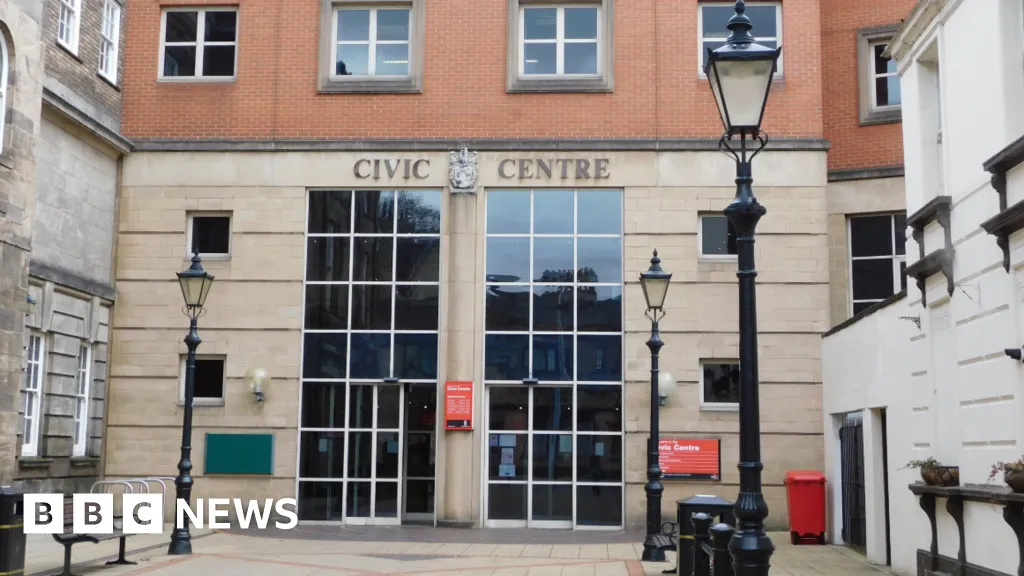
Residents have little trust in their council and other agencies and feel their concerns are being ignored, a survey shows.
More than 1,300 people took part in a "listening exercise" commissioned by Stoke-on-Trent City Council as part of work to develop a new community cohesion strategy after anti-migrant riots in Hanley and across the country in 2024.
The findings paint a picture of a city where people lack confidence in statutory agencies, feel they cannot influence decisions that affect them and believe that "others" are receiving more than them.
In response, councillor Duncan Walker said the council and its partners need to reach out and rebuild trust while tackling disinformation.
The survey indicates that 64% of respondents feel local services, such as the council, police and NHS, understand their community's needs "not very well" or "not at all".
"A consistent theme from the listening exercise was the low level of confidence people feel towards institutions and decision-makers in the city," surveyors concluded in a report.
"Residents described a lack of trust in both what public bodies say, and in whether they act in the interests of the community.
"This lack of trust is compounded by people's perception that services are getting worse rather than better."
The listening exercise uncovered a "particularly prevalent" belief that migrants have pushed up the cost of housing in the city.
While the strategy acknowledges a "sharp" rise in rents over the past two years, it says the causes are "more complex than migration alone", with inflation and low house-building rates being among the other reasons.
The exercise also found high levels of trust in voluntary groups, sports clubs and faith organisations, a "strong community spirit" and pride in Stoke-on-Trent's culture and heritage.
The new strategy includes 10 priorities setting out how the council and its partners can strengthen cohesion in Stoke-on-Trent.
These include giving people a say in decisions, such as through the use of participatory budgeting, to influence public spending in their communities.
Another priority calls on partners to tackle misinformation spread by local, national and international actors, which is "creating divisions in the city and contributing to a widespread sense of unfairness, grievance, and prejudice towards some migrants and asylum seekers".
Also highlighted was the need to spot and respond to community tensions early, with co-ordinated action by agencies and training to help staff and volunteers recognise emerging issues.
Walker said: "A lot of people won't bother reporting things because they feel that nothing will be done about it.
"And it's not just the council; it's a lack of confidence in all statutory agencies. There is a real problem with misinformation and rumours spreading on social media.
"We aren't going to change things overnight, but we have to start somewhere. We have to find a way to rebuild faith and trust in the city."
Cabinet members will be asked to approve the new community cohesion strategy for adoption at a meeting on Tuesday.
This news was gathered by the Local Democracy Reporting Service, which covers councils and other public service organisations.