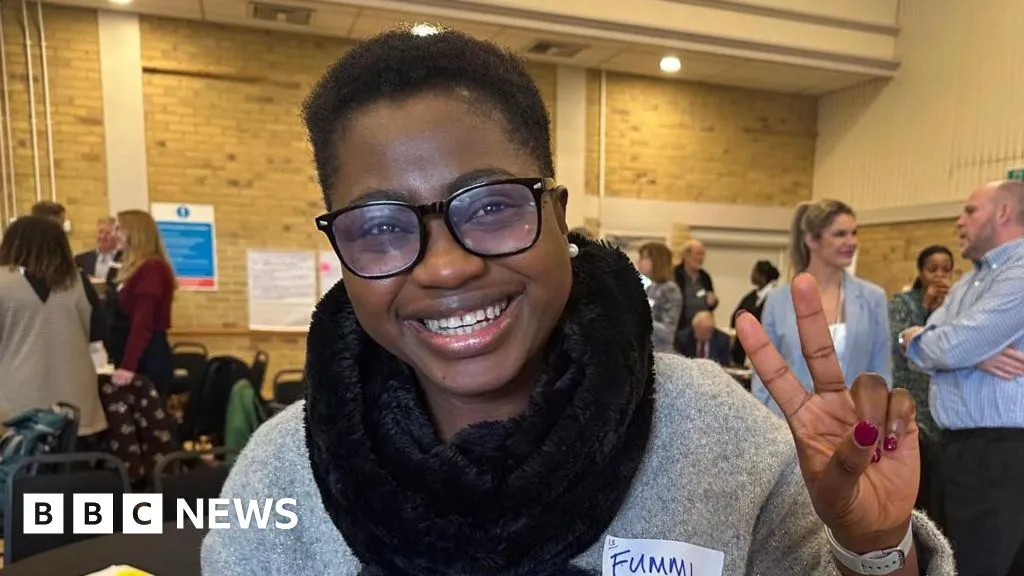
Organisations and charities have come together to look at better ways of stopping people falling into the criminal justice and social care systems.
Suffolk's High Sheriff Gulshan Kayembe organised a Power of Prevention 'hackathon' in Kesgrave, Suffolk, on Thursday as a culmination of her year in office.
"Today is all about asking what our strengths are here in Suffolk, who are we supporting and how do we prevent negative issues happening in all areas of society," she said.
The sessions focused on sharing best practice, strengthening grassroots work and making sure organisations learned from people with experience of addiction, poverty and disadvantaged backgrounds.
Brendan Borrett spoke about his experience of drug and alcohol addiction and how support from the charity Iceni had helped him.
He said: "I approached Iceni in January 2024 - I was desperately seeking help.
"There was no judgement whatsoever. They helped me through very difficult times, helped me with my mental health, gave me a place to make sense of things... and believed in me."
He feels earlier mental health intervention would have enabled him to start his recovery from addiction sooner.
"It's about breaking a lot of those stigmas to allow people to feel comfortable and be open and honest and trust organisations to help them," he said.
Iceni, based in Ipswich, "works with families affected by substance misuse and those who cause harm within relationships".
Brian Tobin, chief executive, told BBC Radio Suffolk: "Sadly it's an ever-increasing workload.
"We've got our highest waiting list in our history currently, which is heartbreaking knowing there's families that need our help.
"So we've got to get better at looking at social policy; in Suffolk we've got around 20,000 children in relative poverty.... in the UK it's 4.5 million.
"That's just horrendous figures. So you've got to start putting interventions in place earlier."
Funmi Akinriboya, founder of BME Suffolk Support Group, a community organisation supporting black and minority ethnic individuals and families, said she had come to the event because connecting with other similar groups was good for sharing knowledge.
"Bringing agencies together is really important - we all have our areas of expertise and we can share," she said.
"For me prevention is about addressing concerns at the earliest possible stages. We don't want people to suffer in silence and make the wrong decisions so we aim to support people and get the information to people as early as possible."
The High Sheriff was pleased with how the event had gone.
She said: "We hope we have been honest about the challenges here and that we leave together today with a list of strategic priorities that we can all use to navigate the next few years when we are facing serious funding and service cuts."