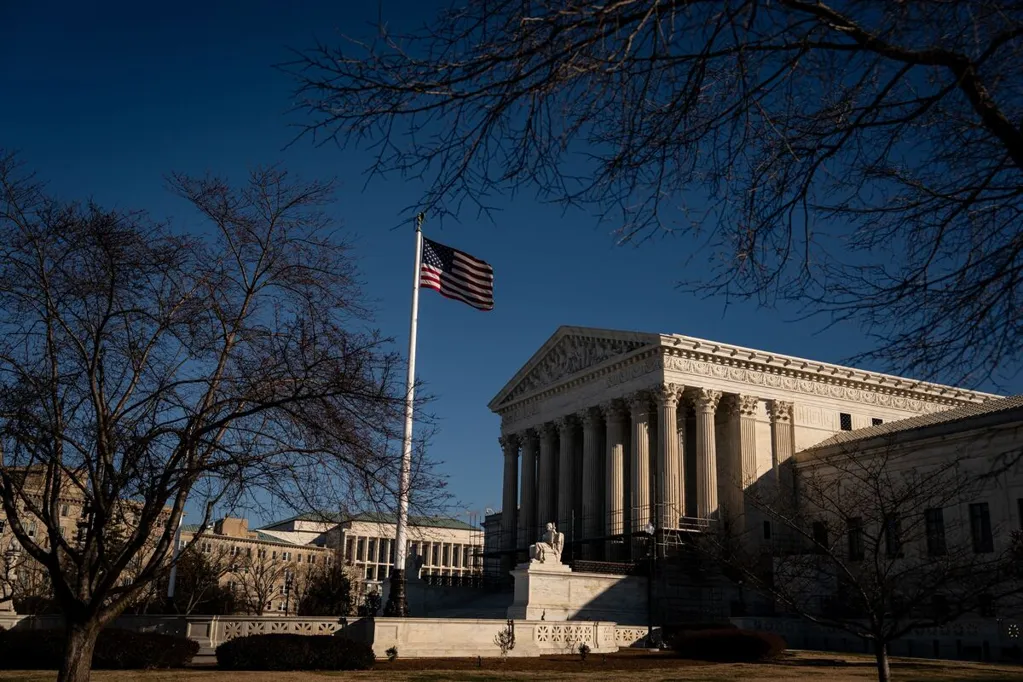
A ruling against Trump would deliver his biggest legal defeat since returning to the White House, with the court considering Trump's tariffs imposed on Canada, Mexico and China.
The US Supreme Court scheduled Feb. 20 as its next opinion day amid a global wait for a ruling that could invalidate most of President Donald Trump's signature tariffs.
The justices also are expected to issue opinions on Feb. 24 and 25 as the court returns from a four-week recess. The tariff clash is one of 12 cases that were argued in October or November and haven't yet been decided.
The disputed tariffs are costing importers more than $16 billion every month, according to federal government data. At that rate, the total collected under the law at the center of the case, the 1977 International Emergency Economic Powers Act, could surpass $170 billion by Feb. 20, according to Bloomberg Economics analyst Chris Kennedy.
A ruling against Trump would deliver his biggest legal defeat since returning to the White House. The court is considering Trump's April 2 "Liberation Day" tariffs, which placed levies of 10-50% on most imports, along with duties imposed on Canada, Mexico and China in the name of addressing fentanyl trafficking.
The new opinion day comes amid signs that Congress is starting to push back against the tariffs. The Republican-led House on Wednesday voted to end some levies on Canadian imports, approving legislation to dissolve the emergency declaration that provided the legal basis for them. Trump declared in a 2025 executive order that fentanyl trafficking across the northern border was an emergency that warranted the imposition of tariffs.
If the tariffs are struck down, the White House has said it will quickly replace them using other legal tools, though Trump has acknowledged the alternatives would more cumbersome.
The Supreme Court heard arguments Nov. 5 on an expedited basis, setting a schedule that suggested an ultra-fast ruling might be in the offing. Some close watchers of the court predicted a decision could come in a matter of weeks, rather than the usual months.
Key justices suggested during the argument that they thought Trump had overstepped his authority.